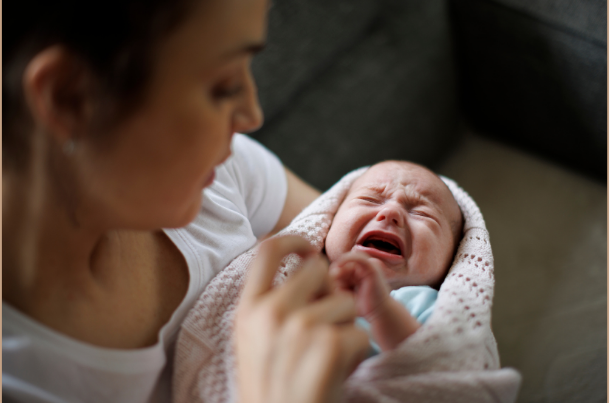
There is something about having a newborn that makes you notice every tiny detail. A little red mark, an unusual sound, or even a small change around their mouth can have you wondering whether everything is okay. So, if you have spotted a newborn lip blister, it is completely understandable to feel concerned.
The reassuring news is that many lip blisters in newborns are related to feeding and the incredible amount of sucking babies do in those early weeks. They can look surprising, especially when you were not expecting them, but they are often harmless.
Still, not every blister should automatically be ignored. Knowing what a typical feeding-related blister looks like, how to care for your baby’s delicate lips, and which changes deserve a call to your pediatrician can make those early days feel a little less uncertain.
From one mom to another, here is what I would want to know if I noticed a tiny blister on my newborn’s lip.

What Is a Newborn Lip Blister?
A newborn lip blister is a small raised area, thickened patch, or peeling spot that usually appears on the upper lip, although it can sometimes affect other parts of the lips.
You may hear people call these sucking blisters, nursing blisters, or sucking calluses. They develop because newborn babies spend a lot of time sucking, whether they are breastfeeding, bottle-feeding, or soothing themselves.
A baby’s skin is incredibly delicate. Repeated rubbing and pressure against the lip during feeding can create a small blister or callus-like area.
Some babies even arrive with one. Babies practice sucking before birth, and occasionally the repetitive movement can leave a little mark on their lips before you have even had your first proper feed together.

What Does a Newborn Lip Blister Look Like?
Feeding-related lip blisters do not always look exactly the same.
You might notice a pale, whitish, or slightly clear bump in the middle of your baby’s upper lip. In other babies, it looks more like a small area of dry or peeling skin rather than a fluid-filled blister.
Sometimes the upper lip develops a thicker little pad that comes and goes during the newborn stage.
If your baby seems comfortable, feeds normally, has the expected number of wet diapers, and the area does not appear inflamed or painful, the blister may simply be the result of all that newborn sucking.
However, appearance alone cannot always tell you what caused a blister. If you are unsure about something on your newborn’s mouth, especially if it is worsening or accompanied by other symptoms, it is worth having a healthcare professional look at it.
Why Do Newborn Babies Get Lip Blisters?
There is not one single reason a baby can develop a blister on the lip. Feeding friction is common, but sometimes the way your baby attaches to the breast or bottle can contribute too.
Here are a few possibilities parents may encounter.
1. Normal Sucking and Feeding Friction
Think about how much work your baby’s little mouth is doing.
Newborns may feed frequently around the clock, and sucking creates repeated pressure on the lips. With such delicate skin, that friction can leave behind a blister or thickened area.
This does not necessarily mean anything is wrong with your feeding routine. A baby who feeds effectively can still develop one.
If the blister is small and your baby otherwise seems perfectly content, watching it for changes may be all that is needed.
2. Breastfeeding Latch
Sometimes a lip blister appears alongside breastfeeding difficulties.
If your baby is attaching shallowly or struggling to maintain a comfortable latch, their lips may experience more friction during feeds. You might also notice clicking sounds, milk leaking from the sides of the mouth, very long or frustrating feeds, or nipple pain.
A blister by itself does not prove that your baby has a latch problem. But when it appears together with feeding concerns, getting the latch checked can be worthwhile.
A lactation consultant, pediatrician, midwife, or another qualified feeding professional can watch an entire feed and help you work out whether any adjustments would make feeding more comfortable.
If you’re still finding your rhythm with feeding, this gentle breastfeeding guide for new moms can also help you understand latch, feeding frequency, and some of the common challenges that come with those early feeds.
3. Bottle Feeding
Breastfed babies are not the only ones who can develop sucking blisters.
Bottle-fed babies use their lips, tongue, and jaw repeatedly too. The nipple shape, milk flow, positioning, and the way your baby seals their mouth around the bottle can all influence how feeding feels.
Try to keep your baby comfortably supported and avoid forcing the bottle nipple deeply into their mouth.
If feeds regularly involve coughing, choking, leaking milk, pulling away, or obvious frustration, speak with your baby’s healthcare professional about whether the nipple flow or feeding technique needs adjusting.
4. Sucking for Comfort
Newborns do not suck only because they are hungry.
Sucking is also comforting. Some babies love sucking their hands, fingers, or a pacifier between feeds, adding even more repetitive movement to those tiny lips.
That extra sucking can sometimes contribute to irritation.
There is usually no reason to stop normal, safe soothing habits simply because you see a small feeding-related blister. Instead, keep an eye on the area and make sure it is not becoming increasingly sore or damaged.
Does a Lip Blister Mean My Baby Has a Tongue-Tie?
This is one of those questions that can send a tired parent down a very long internet rabbit hole.
You may see lip blisters mentioned online alongside tongue-tie or lip-tie. While feeding difficulties can sometimes occur in babies with restricted oral tissues, a lip blister alone cannot diagnose a tongue-tie or lip-tie.
There are many reasons babies develop sucking blisters, including completely normal feeding friction.
Rather than focusing on the blister alone, look at the bigger feeding picture. Is feeding comfortable? Can your baby stay attached? Are they swallowing milk? Are they growing appropriately? Are you experiencing persistent nipple pain or damage?
If something does not feel right, ask a qualified professional to assess your baby’s feeding rather than trying to diagnose the problem from one physical sign.
Should I Pop a Newborn Lip Blister?
No. As tempting as that loose little piece of skin may be, leave it alone.
Do not pop, peel, squeeze, pick, or scrape your baby’s blister. Doing so can damage the delicate skin underneath and potentially create an opportunity for infection.
The same goes for peeling skin. Let it loosen and come away naturally rather than pulling it off.
Your baby’s body is usually quite capable of healing minor feeding-related irritation when the area is protected from unnecessary interference.
Sometimes the kindest care really is doing very little.
How to Care for a Newborn Lip Blister at Home
When the blister appears to be caused by sucking and your baby is otherwise well, care is usually wonderfully simple.
Leave the Area Alone
Clean hands and a hands-off approach are a good starting point.
You do not need to scrub the blister or repeatedly wipe it. In fact, too much cleaning can irritate delicate newborn skin even further.
During normal washing, gently clean around your baby’s mouth as needed and pat rather than rub.
Check How Feeding Is Going
Instead of looking only at the lip, pay attention to the entire feeding experience.
Watch whether your baby seems relaxed during feeds and whether you can hear or see swallowing. If breastfeeding, notice whether feeding is comfortable for you too.
With bottles, make sure the nipple flow is appropriate and your baby has time to pause and breathe.
If something consistently looks or feels difficult, getting feeding support may help address the source of the friction rather than simply waiting for the blister to return.
Avoid Random Creams and Home Remedies
A newborn’s lips are not the place to experiment with products.
Avoid applying creams, oils, balms, herbal remedies, or other products to your newborn’s lips unless your baby’s healthcare professional recommends them.
Even products labelled “natural” are not automatically appropriate for a newborn, particularly around the mouth where they may be swallowed.
When in doubt, ask before applying anything.
Keep Feeding Your Baby Normally
A small sucking blister usually does not mean feeding needs to stop.
If your baby is feeding comfortably, continue breastfeeding or bottle-feeding according to their needs. Newborns need frequent feeding, and the presence of a harmless sucking blister is generally not a reason to reduce feeds.
If your baby appears to be in pain or suddenly refuses to feed, however, that is different and deserves medical advice.
How Long Does a Newborn Lip Blister Last?
There is no exact timetable because every baby’s skin and feeding pattern are different.
A minor sucking blister may shrink, peel, disappear, and occasionally return while your baby is feeding frequently. Some parents notice the area looks more prominent immediately after a feed and less noticeable later.
As babies grow and their feeding skills mature, these little friction spots may become less common.
Instead of worrying about the precise number of days, watch the overall trend. A simple blister should not become increasingly red, swollen, painful, or surrounded by spreading irritation.
If it is getting worse rather than settling, contact your baby’s healthcare provider.
When a Lip Blister May Be Something Else
Although feeding friction is common, not every blister or sore around a newborn’s mouth is a sucking blister.
That distinction matters because newborn babies can become unwell quickly.
A blister that is clustered with other blisters, spreading, very red, crusted, oozing, bleeding without an obvious reason, or accompanied by sores elsewhere should be assessed.
You should also pay attention to your baby’s overall behavior. A baby who is unusually sleepy, difficult to wake, feeding poorly, or generally seems unwell needs more attention than the appearance of the lip alone might suggest.
If you cannot confidently tell whether a spot is an ordinary sucking blister, calling your pediatrician is always reasonable.
When Should You Worry About a Newborn Lip Blister?
Most feeding-related blisters are minor, but there are situations where I would not simply watch and wait.
Contact your baby’s healthcare professional if:
- The blister is becoming red, swollen, warm, or increasingly irritated.
- You notice pus, drainage, bleeding, crusting, or several new blisters.
- There are blisters or sores elsewhere on your baby’s skin, around the mouth, or inside the mouth.
- Your baby seems to be in pain when sucking.
- Your baby suddenly feeds much less than usual or refuses feeds.
- Feeding is consistently difficult or you are concerned about weight gain or hydration.
- The area keeps worsening or you simply cannot tell what it is.
And because fever in a newborn requires special attention, And because fever in a newborn requires special attention, if your baby is younger than 3 months and has a rectal temperature of 100.4°F (38°C) or higher, contact a healthcare professional promptly.
Do not wait for the lip blister to improve if your newborn has a fever or appears seriously unwell.
Do not wait for a lip blister to improve if your newborn has a fever or appears seriously unwell.
A Special Note About Cold Sores and Newborns
This is worth talking about because newborns are particularly vulnerable to the herpes simplex virus, the virus that commonly causes cold sores.
An ordinary sucking blister and a herpes-related blister are not the same thing.
If your newborn develops suspicious blisters or sores, particularly multiple or clustered ones, or has been exposed to someone with an active cold sore, contact your baby’s healthcare provider promptly for advice.
People with active cold sores should avoid kissing a newborn and should carefully follow hygiene advice to reduce the risk of transmission.
If your baby develops blisters together with fever, poor feeding, unusual sleepiness, irritability, breathing difficulty, or seems unwell, seek urgent medical care.
This is not meant to frighten you. It is simply one of those newborn precautions that is important for parents and visitors to know.

Making Feeding More Comfortable for You and Baby
One thing I learned in those early baby days is that feeding is not supposed to be a test you have to pass alone.
Sometimes one tiny physical clue, such as a blister, leads you to notice that feeds have actually been difficult for both of you.
If you breastfeed and are experiencing cracked or painful nipples, pinching, repeated loss of latch, or clicking during feeds, ask someone experienced in breastfeeding support to observe a feed.
If you bottle-feed and your baby coughs, gulps, struggles with milk flow, or repeatedly loses their seal around the nipple, ask your pediatrician or feeding professional for guidance.
Getting help does not mean you are doing anything wrong.
Babies are learning how to feed at exactly the same time we are learning how to feed them. Sometimes both sides of that little partnership simply need time and support.
Things I Would Avoid Doing
Avoid popping, peeling, or scrubbing the blister, and do not apply unapproved creams, oils, balms, or home remedies. If feeding seems consistently difficult, get individual guidance from a qualified feeding or healthcare professional rather than repeatedly changing techniques based on online advice.
Trust What You Notice as a Parent
There is a funny thing that happens when you bring home a newborn.
Suddenly, you know every curve of their face. You notice the tiniest patch of dry skin and can somehow tell the difference between their hungry cry and the cry that says, “Please just hold me.”
That attentiveness is valuable.
You do not need to panic over every tiny change, but you also do not need to dismiss something simply because somebody tells you it is “probably nothing.”
If your baby’s lip looks unusual and you are uncomfortable with what you see, take a clear photo for comparison and contact your healthcare provider. Sometimes reassurance from someone who can actually assess your baby is exactly what a tired parent needs.
FAQ
Are lip blisters normal in newborns?
What causes a newborn lip blister?
Should I pop my baby’s lip blister?
How long does a newborn lip blister last?
When should I worry about a newborn lip blister?
Can a lip blister mean my baby has tongue-tie?
A Gentle Word From One Mom to Another
Finding a newborn lip blister can look much more alarming than you expect, particularly when your baby is only days or weeks old and everything still feels so new.
In many cases, that little spot is simply evidence of how hard your baby’s mouth is working during all those feeds. Normal sucking and feeding friction can cause temporary blisters or callused areas that settle without complicated treatment.
Keep the area clean, leave it alone, and pay attention to how feeding is going. If feeding is painful, your baby struggles to stay attached, or the blister keeps returning alongside other feeding difficulties, asking for professional feeding support can give you both some much-needed comfort.
Most importantly, look at your baby as a whole rather than at one tiny spot. If they are feeding well, behaving normally, and the blister is not becoming inflamed or spreading, you can usually take a more reassuring view while continuing to watch it.
But if your newborn develops fever, multiple or spreading blisters, poor feeding, unusual sleepiness, or simply seems unwell, seek medical advice promptly.
Those first weeks are filled with moments when you wonder, Is this normal? Should I worry? Am I doing this right?
You are learning your baby a little more with every feed, cuddle, nappy change, and sleepy middle-of-the-night check.
And sometimes that tiny blister really is just a tiny blister.
For more gentle, practical guidance on newborn care, feeding, baby health, and everyday parenting concerns, explore more helpful resources at Tales of Tots.
Please note: This article is intended for general information and supportive education and is not a substitute for personalised medical advice, diagnosis, or treatment. Newborn symptoms can change quickly. If you are concerned about a blister, feeding, fever, or your baby’s general wellbeing, contact your pediatrician or another qualified healthcare professional.
Trusted Resources
NHS, neonatal herpes
CDC or NHS, cold sores/herpes and newborn exposure
American Academy of Pediatrics / HealthyChildren, newborn fever
Disclaimer
This article is intended for general information and supportive education and is not a substitute for personalised medical advice, diagnosis, or treatment. Newborn symptoms can change quickly. Contact your pediatrician or another qualified healthcare professional if you are concerned about a blister, feeding difficulties, fever, or your baby’s general wellbeing. If your baby is younger than 3 months and has a rectal temperature of 100.4°F (38°C) or higher, or develops multiple or spreading blisters, poor feeding, unusual sleepiness, breathing difficulty, or appears seriously unwell, seek prompt medical care.
About the Author
Geeta Yogi writes warm, practical, and supportive parenting content about newborn care, breastfeeding, feeding concerns, baby health, and early development. She focuses on helping parents understand common newborn changes, recognise warning signs, and feel more confident about when simple observation is enough and when professional guidance may be needed.