One minute you’re celebrating your baby’s first smile, and the next you’re staring into a diaper wondering, “Should my newborn really be pooping this much?” If you’ve found yourself Googling how often should a newborn poop, you’re definitely not alone. From black meconium to mustard-yellow baby poop, every diaper tells a story. Here’s exactly what’s normal by age, feeding type, and when it’s time to call your pediatrician.
If you’ve been asking how often a newborn should poop, you’re not alone. Newborn bowel movements can vary widely depending on age, feeding method, and individual development. Understanding what’s normal can help ease anxiety and make those early weeks feel a little less overwhelming.

What’s Normal for Newborn Poop?
Every baby is different, but there are some general patterns that pediatricians look for in those early weeks. Newborns typically pass their first stool, called meconium, within the first 24 to 48 hours after birth. It’s sticky, black, and tar-like. Totally normal and a sign that your baby’s digestive system is kicking into gear.
By day 3 to 5, their poop will usually start transitioning into a greenish-brown, then eventually to a mustard-yellow if breastfed, or a light brown/tan if formula-fed.
How Often Should a Newborn Poop by Age (Day 1 to Week 6)
Day 1
During the first 24 hours after birth, most newborns pass their first stool, called meconium. This thick, black, tar-like poop is completely normal and shows that your baby’s digestive system is working properly. Most babies have at least one bowel movement on the first day.
Day 2
By the second day, your baby may have two or more bowel movements. The poop often begins changing from black to dark green as the meconium clears from the intestines.
Days 3–5
Around days 3 to 5, newborn poop changes to a greenish-brown and then to yellow or tan, depending on whether your baby is breastfed or formula-fed. During this stage, many babies poop 3 to 6 times a day.
Week 1–2
By the end of the first week, breastfed babies often poop after almost every feeding, which can mean 6 to 10 dirty diapers a day. Formula-fed babies usually have 1 to 4 bowel movements daily.
Weeks 3–6 (Around 1 Month)
As your baby’s digestive system matures, poop frequency may become less predictable. Some breastfed babies continue pooping several times a day, while others may go a few days without a bowel movement. Formula-fed babies generally continue having 1 to 2 bowel movements a day, though some variation is normal.
Quick Answer: Most newborns poop anywhere from 1 to 10 times a day, depending on their age and whether they are breastfed or formula-fed.
Typical Poop Frequency by Feeding Method
- Breastfed Newborns: May have a bowel movement after every feeding, especially in the first few weeks. However, it’s also normal for some breastfed babies to go several days without a bowel movement. [AAP Source]
- Formula-fed Newborns: Typically have 1 to 4 bowel movements per day. Their stools are usually firmer and may be tan to brown in color.
Remember, variations are normal. As long as your baby is feeding well, gaining weight, and seems comfortable, differences in poop frequency are usually not a cause for concern.
Many parents worry when their newborn poops after every feeding, but this is completely normal during the first few weeks. Breast milk is easily digested, so frequent bowel movements are expected.
Baby Poop Color Chart: What Each Color Means
Baby poop can change in color during the first few weeks, and most color changes are completely normal. This baby poop color chart will help you understand which colors are expected and which ones may require a call to your pediatrician.
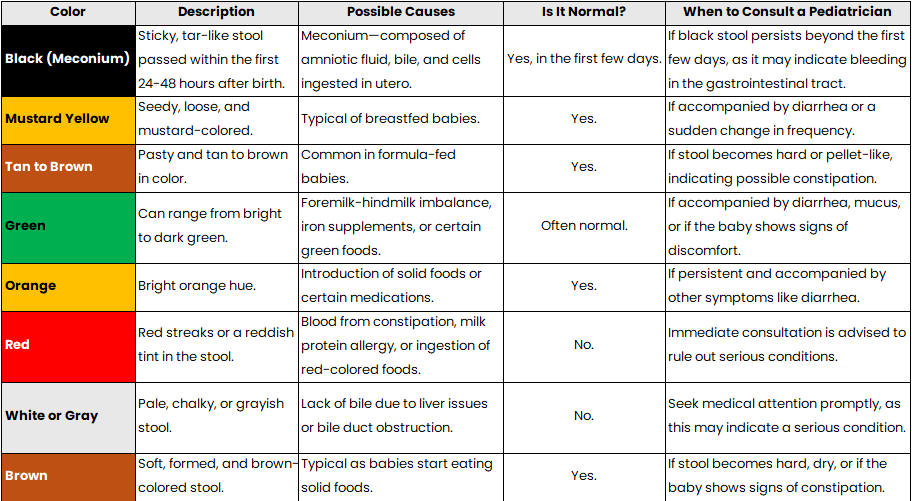
While most newborn poop colors are harmless, always pay attention to your baby’s overall health. Yellow, green, and brown stools are usually normal, while white, gray, or red stools should be evaluated by your pediatrician as soon as possible.
Consistency matters too. Breastfed babies often have soft, seedy stools, while formula-fed babies may have firmer, pasty stools.
What If My Newborn Is Not Pooping but Passing Gas?
If your newborn is not pooping but passing gas, it doesn’t always mean they’re constipated. Gas shows that the digestive system is still working. As long as your baby is feeding well, has a soft belly, and isn’t showing signs of discomfort, this can be normal, especially in breastfed babies.
newborn hasn’t pooped in 24 hours
If your newborn hasn’t pooped in 24 hours, consider your baby’s age and feeding method. During the first few days of life, it’s important that babies pass meconium. After that, some breastfed babies may occasionally go longer without a bowel movement. If your baby seems uncomfortable or has other symptoms, contact your pediatrician.
Is It Normal If Newborn Poop Smells Bad?
Many parents notice that newborn poop smells bad once feeding is established, especially in formula-fed babies. Mild odor is usually normal, but an unusually foul smell combined with diarrhea, fever, or blood in the stool should be discussed with your pediatrician.
When to Be Concerned
Though variations are normal, here are a few signs it’s time to call your pediatrician:
- No bowel movements for more than 3 days.
- Presence of blood or mucus in stools.
- Persistent diarrhea or very watery stools.
- Significant changes in feeding patterns or behavior.
- Stools that are white, gray, or black beyond the first few days. [Parents Source]
If you’re ever in doubt, trust your instincts. Pediatricians would rather get a call for peace of mind than miss something important.
Signs of Newborn Constipation
Newborn constipation is more than simply going a day or two without pooping. It’s usually identified by hard, dry stools, straining, excessive fussiness, or discomfort during bowel movements.
Diaper Duty Tips for New Parents
Let’s face it, newborns go through 8–12 diapers a day. Here’s how to manage the madness:
- Have a stash: Keep at least 2–3 days’ worth of diapers ready.
- Use a barrier cream: Prevent diaper rash before it starts.
- Wipe front to back: Especially for baby girls to prevent infections.
- Track changes: Use an app or journal to note poop color and frequency.
Preventing and Managing Diaper Rash
Diaper rash is a common concern. Here’s how to prevent and treat it:
Prevention
- Change diapers promptly after soiling.
- Allow the baby’s skin to air out regularly.
- Use barrier creams containing zinc oxide.
- Choose diapers that are free from fragrances and dyes.
Management
- Clean the area gently with water; avoid wipes with alcohol.
- Apply a thick layer of diaper rash cream.
- Consult a pediatrician if the rash persists or worsens.
Frequently Asked Questions
Is it normal for my newborn to poop after every feeding?
Yes. Many breastfed newborns poop after nearly every feeding during the first few weeks.
Can a breastfed baby go several days without pooping?
Yes. As long as your baby is feeding well, gaining weight, and seems comfortable, this can be normal.
What does newborn constipation look like?
Constipation is usually identified by hard, dry stools and signs of discomfort rather than simply going a day or two without pooping.
How many dirty diapers should a newborn have each day?
Most newborns have anywhere from 1 to 10 dirty diapers per day, depending on age and feeding method.
Why is my newborn pooping so much?
It’s common for newborns, especially breastfed babies, to poop after nearly every feeding during the first few weeks. Frequent bowel movements are usually a sign that your baby’s digestive system is working well.
Why hasn’t my newborn pooped today?
A newborn may occasionally skip a day without a bowel movement, especially if they’re breastfed and feeding well. However, if your baby seems uncomfortable, has a swollen belly, or hasn’t passed stool during the first days after birth, contact your pediatrician.
Is green poop normal for a newborn?
Yes. Green poop is often a normal part of the transition from meconium to regular stools. It can also occur in babies who are formula-fed or taking iron-fortified formula.
What color should newborn poop be?
Newborn poop changes over time. It starts as black meconium, then turns green, and eventually becomes yellow in breastfed babies or tan to brown in formula-fed babies. White, gray, or red stools should be evaluated by a doctor.
Is watery poop normal for newborns?
Breastfed babies naturally have loose, seedy stools that may look watery. However, frequent watery stools accompanied by fever, poor feeding, or dehydration could be a sign of diarrhea and should be checked by a pediatrician.
When should I call the doctor about my baby’s poop?
Call your pediatrician if your baby has white, gray, or red stools, severe diarrhea, hard stools with signs of pain, persistent vomiting, or hasn’t passed meconium within the first 24 to 48 hours after birth.
Final Thoughts
When it comes to newborn poop, there’s a surprisingly wide range of normal.
Some babies poop several times a day, while others develop different patterns as they grow. Rather than focusing only on the number of dirty diapers, pay attention to your baby’s overall health, feeding habits, comfort, and growth.
The newborn stage comes with plenty of questions, and diaper duty is just one of them. With a little knowledge and a lot of patience, you’ll soon become an expert at decoding what those tiny diapers are trying to tell you.
Medical Sources & References
Centers for Disease Control and Prevention (CDC): Newborn Breastfeeding Basics, Information about newborn feeding and expected wet and dirty diapers.
American Academy of Pediatrics Newborn Poop Questions, Guidance on normal newborn stool frequency and changes during the first weeks.
HealthyChildren.: Baby’s First Days: Bowel Movements and Urination, Pediatrician-reviewed information about early bowel movements, stool colors, and consistency.
HealthyChildrenThe Many Colors of Baby Poop, Information about normal and concerning baby poop colors.