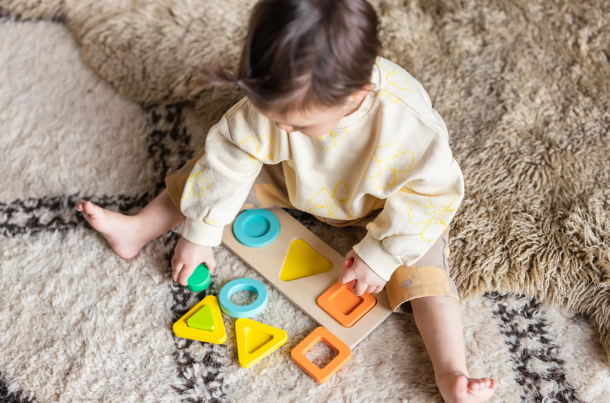
If you’ve been looking for ways to encourage independent play in your toddler, you may be hoping for something quite modest: enough time to finish a cup of tea while your child enjoys their toys beside you. Yet the moment you stop building the tower, a little hand reaches for yours. “Mama, play.”
It is understandable to feel torn. You enjoy being part of their world, but being the entertainment director all day is tiring.
Independent play can begin with you sitting close, available and attentive, while your toddler decides what to do. It doesn’t require leaving them alone or expecting a long stretch of quiet. Small, comfortable beginnings are enough.
Independent Play for Toddlers: What It Really Means
Independent play happens when your child directs their own activity without needing you to participate in every step.
You might be nearby while they stack blocks, look through a board book, or put toy animals into a box. They may glance toward you, show you something, or ask a question before continuing.
Those check-ins don’t cancel the independence.
ZERO TO THREE describes independent play as children playing by themselves with a caregiver nearby. It can exist alongside the shared play and connection your child also needs.
Think of it as giving your toddler room to lead while keeping your support available.
What Can You Realistically Expect?
There is no single amount of solo play every toddler should manage. Age, temperament, interest, tiredness, and familiarity with the activity all influence what happens.
A child may spend several absorbed minutes with blocks one morning and need much more company the next.
Start with the amount they can comfortably manage, even if it’s brief. You don’t need to turn a few pleasant moments into a longer session just because a timer is running.
For context, checking that a caregiver is still nearby is part of typical exploration. The CDC includes moving away and looking back to check for a parent among its 18-month milestones.
Your toddler can be interested in exploring and still need reassurance.
What Progress Can Look Like
| What happens | Why it can still be a useful beginning |
|---|---|
| Your toddler plays while you sit beside them | They are choosing the activity, even though your presence helps. |
| They stop to show you something | Sharing interest can be part of play, rather than a failure to continue alone. |
| They ask for help with one difficult step | Brief assistance may let them return to their own idea. |
| They explore one day but need more company the next | Comfort, energy, and interest can vary. |
None of these examples is a developmental test. They are ways to notice participation beyond counting uninterrupted minutes.
Why Your Toddler May Keep Asking You to Join
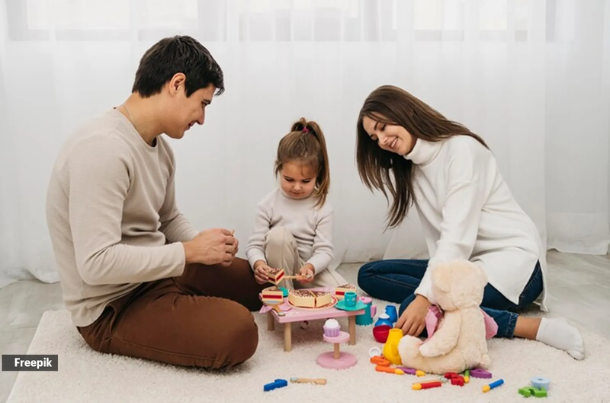
Your toddler may keep inviting you into their play because your presence makes the experience feel familiar, enjoyable, and reassuring. They might want help getting started, someone to share a discovery with, or simply the comfort of having you close. Sometimes the activity is too difficult, or they’re tired and need more support. Noticing what they need can help you gradually step back from directing the play while remaining available.
Playing Together Is Familiar
If you usually demonstrate each toy or keep an activity moving, your child may naturally expect that pattern to continue.
You haven’t done anything wrong. Shared play offers enjoyable connection.
You can begin changing the pattern gradually by leaving a little space for your toddler’s ideas instead of withdrawing all your participation at once.
The Activity May Need Too Much Help
A puzzle that is too difficult or a construction toy with fiddly pieces may lead to repeated requests for assistance.
Watch what your child can already manage. An activity with familiar, achievable steps may be a better starting point than something new and challenging.
You can save more demanding tasks for playing together.
They May Need Something Before They Can Settle
Hunger, tiredness, discomfort, or an unsettled moment can make independent activity harder.
If your toddler has just returned from childcare or is adjusting to a change, they may want closeness first.
Try responding to that need rather than assuming they lack the ability to play. Another opportunity may work better later.
You May Be Moving Away Too Quickly
Your toddler might happily explore while you sit beside them but become upset when you leave.
Start where they feel comfortable. Independent activity and separation are different things.
You can remain close while stepping back from directing the play.
Gentle Ways to Get Started
Choose a time when you can remain present and respond. If you are already rushing, cooking at a hot stove, or trying to complete an urgent work call, it may not be a realistic moment to introduce something new. Start with the circumstances you have, rather than creating an elaborate routine you cannot repeat.
1. Begin With a Little Time Together
Sit down and join your toddler’s chosen activity for a short while.
Notice what interests them. Perhaps they’re lining up vehicles rather than building the garage you imagined.
Follow that idea. Then gradually do less: stop adding pieces, allow pauses, and watch what they choose next.
2. Choose One Simple Setup
You don’t need a room full of activities.
Try a small basket of large blocks and a clear patch of floor. Or a few toy animals beside an empty box.
Make the invitation easy to understand without giving a list of instructions. Your toddler can decide whether the box is a house, a bus, or somewhere to put everything.
If they ignore the setup, you can leave it for another suitable time. An invitation is not an instruction to complete an activity. Avoid adding several new options immediately; first consider whether they need connection, food, rest, or a simpler choice.
3. Stay Nearby and Say What You’re Doing
Be clear rather than slipping away unnoticed.
“I’m going to sit here and fold these clothes. You can keep building.”
Choose something you can do while supervising appropriately. A task involving hot liquids, sharp tools, or divided attention may not suit the moment.
Your child should still be able to get help when they need it.
Nearby does not simply mean listening from another room while you become absorbed in a task. Choose a position where you can see what your toddler is doing and respond appropriately. If your task prevents that, pause it or arrange another caregiver.
4. Pause Before Offering a Solution
If a block falls, give your toddler a moment to respond.
They may try again, change the design, or choose another activity. You don’t need to repair every small problem immediately.
If frustration builds, offer help. “Would you like me to hold the bottom?” gives support without taking over the whole project.
5. Let Repetition Happen
Your child may fill and empty the same container many times.
You might feel ready to introduce something else, but they may still be interested. There’s no need to make the activity more complicated just to keep it educational.
Allow them to repeat what they enjoy, provided it is safe.
You can keep the same materials available across several opportunities rather than constantly rotating toys to extend play. If interest fades, allow them to stop. The purpose is room for their choices, not keeping one setup going for as long as possible.
6. Keep Your Return Predictable
If you need to stop participating, use a clear, manageable explanation.
“I’ll read this page, then I can look at your tower.”
Follow through when possible. Avoid promising an exact return you’re unlikely to manage.
You can also acknowledge them during the pause: “I see you’ve added another block.” Keep it brief if they’re comfortably absorbed, and avoid commenting at all when it would interrupt their concentration.
7. End Before Everyone Is Exhausted
A short, pleasant experience is a useful beginning.
If your toddler comes back for connection, you can respond and decide what comes next. You don’t need to keep sending them away to complete a target.
Over time, notice whether they become more comfortable initiating or continuing activities. Progress may look like less prompting rather than more minutes.
Simple Activities to Try
Choose play materials that match your toddler’s age, abilities, and how they use objects. Large blocks, sturdy board books, or a familiar puzzle may let them explore without needing help at every step. Check for damage, sharp edges, and small parts, especially if your child still puts things in their mouth.
Large Blocks and Stacking Cups
Put out a manageable collection and let your toddler build, arrange, or knock things down.
Avoid correcting how the pieces are used unless safety is involved. A line of blocks is just as much their idea as a tower.
Board Books
Place a few familiar books within reach.
Your toddler may turn pages, point, or make up their own sounds. You can read together afterward without making the solo moment a reading task.
Toy Animals or Vehicles
Offer a few large, sturdy toys without small removable parts.
A box or an appropriate container can give them somewhere to put things. You don’t need to supply a storyline.
Easy Puzzles
Choose one your child can mostly manage already.
If they repeatedly need help, save it for shared play and offer something simpler during independent time.
Safe Household Containers
Large, unbreakable bowls or containers may invite stacking, nesting, or pretend cooking.
Inspect them for sharp edges and detachable parts. Keep plastic bags, cords, magnets, batteries, and small objects out of the play area.
Water, food, and small-part activities require closer involvement; they aren’t suitable ways to leave a toddler occupied while you step away. Water play needs continuous, close adult supervision, even with a shallow container.
Check household containers individually rather than assuming kitchen items are toys. Avoid lids that can trap fingers, brittle plastic, and anything that previously held medicines or cleaning products. If your child mouths materials, take that into account when deciding what to offer.
What If They Ask You to Play Every Few Seconds?
Try answering warmly without immediately taking over.
“You want me to build. I’m sitting beside you while you try.”
Offer a small starting point if needed: “Which block will you choose first?” Then pause rather than adding more questions.
If the requests become distressed, reconnect and reassess. Perhaps the activity is difficult, the timing is poor, or your toddler needs a shorter attempt.
You can have a boundary while remaining kind. “I can sit with you, but I’m not building right now” may be more workable than either full participation or leaving the room.
What If They Say They Are Bored?
You can acknowledge the feeling without immediately supplying a whole new activity: “You’re not sure what to do next.” Offer one small choice if it helps, then allow a pause.
For a toddler, boredom may also mean the task is unclear, the materials are difficult, or they need company. Do not treat staying bored as a lesson they must endure. Remain available, help them begin if needed, and distinguish mild uncertainty from growing distress.
Avoid Turning Play Into Another Performance
Constant praise, questions, or photographs can interrupt a child who is absorbed.
You don’t need to ask what they’re making every minute or congratulate them for leaving you alone.
A simple observation can be enough: “You worked out where that piece goes.”
Avoid comparing siblings or friends. A toddler who wants company isn’t deliberately preventing your break.
If you need uninterrupted time for work or rest, arrange appropriate childcare where possible. Independent play is not a substitute for supervision or dependable support.
Set Up the Space for Safety
Look at the area from your toddler’s height.
Secure furniture and televisions, keep windows and stairs protected, and remove accessible cords, medicines, cleaning products, and choking hazards.
Check toy age guidance and condition, especially when older siblings have small pieces nearby.
Stay close enough to respond and supervise according to the activity. Don’t assume a childproofed room means a toddler can be left unattended.
If siblings are playing together, an older child should not be treated as the responsible supervisor.
Recheck the area as your toddler learns to climb, open containers, and reach higher surfaces. A space that worked last month may need changes now. Keep hot drinks away from the play area, including the cup you hope to finish while they play.
When to Ask for Support
Wanting a caregiver nearby does not by itself indicate a developmental problem.
However, speak with your pediatrician if you have broader concerns about play, communication, movement, or interaction, or if your child loses skills they previously used.
Persistent distress that prevents ordinary activities is also worth discussing.
Describe what happens: “She explores happily when I sit beside her but becomes very upset if I stand.” That gives more useful information than saying your child isn’t independent.
You can also ask for help with your own exhaustion. Needing a break is a practical family need, not something your toddler must solve.
For the appointment, describe what your child enjoys, how they seek help, and what makes the situation difficult. Include strengths as well as concerns. A clinician can consider the wider developmental picture rather than drawing conclusions from independent play alone.
Frequently Asked Questions
How can I encourage independent play in my toddler?
Start nearby with a familiar activity. Join briefly, then reduce your involvement while staying available. Keep expectations small and respond when your child genuinely needs help.
What are some easy toddler independent play ideas?
Try large blocks, stacking cups, familiar board books, simple puzzles, or sturdy toy animals. Choose materials your child can manage safely without repeated adult assistance.
What if my toddler won’t play alone?
Begin with playing independently beside you rather than expecting separation. Check their needs, simplify the activity, and try another time if they become distressed. Persistent or broader concerns can be discussed with their clinician.
How long should a toddler play independently?
There is no universal target. Begin with a brief period your child manages comfortably and let interest guide you. Don’t use an attention-span formula as a requirement they must meet.
Should I leave when my child becomes absorbed?
Stay within appropriate supervision and tell them if you’re moving. Independent activity doesn’t require disappearing. You can support their focus while remaining available.
Do I need to buy new toys?
Not necessarily. Start with safe materials your child already enjoys. Familiarity may make it easier for them to begin without needing a demonstration.
Is it okay if they return for a cuddle?
Yes. A check-in doesn’t erase their independent play. Offer reassurance and see whether they want to return to the activity or need something else.
Should I use a timer for independent play?
A timer is optional. Some children find a simple cue helpful; others become focused on the alarm or distressed by it. Do not use the countdown to require a toddler to continue when they need help, comfort, or a change. Their response matters more than reaching a time target.
Does independent play replace playing together?
No. Children benefit from different kinds of play and responsive interaction. Independent moments can sit alongside shared books, conversation, and play with caregivers. You do not need to choose one approach for the whole day.
Can I work or sleep while my toddler plays independently?
Only choose tasks that still allow appropriate supervision and prompt responses. Sleeping or becoming absorbed in demanding work does not provide that supervision. If you need protected time to rest or work, arrange a capable caregiver rather than relying on your toddler to stay occupied.
Final Thoughts
Helping your toddler play more independently can begin with small, comfortable moments while you stay nearby. You don’t need to direct every activity or expect play to last a certain amount of time.
Choose one familiar activity, give your child room to explore, and respond when they need you. A brief moment of following their own ideas is enough for today.
Your need for breathing room matters too. Keep expectations gentle, maintain suitable supervision, and allow shared play and independent exploration to sit alongside each other.
For more gentle parenting ideas and everyday toddler support, explore Tales of Tots and find a small next step that fits your family.
Resources
U.S. Consumer Product Safety Commission: Anchor It! Furniture and TV Safety
ZERO TO THREE: At Home Activity Guide