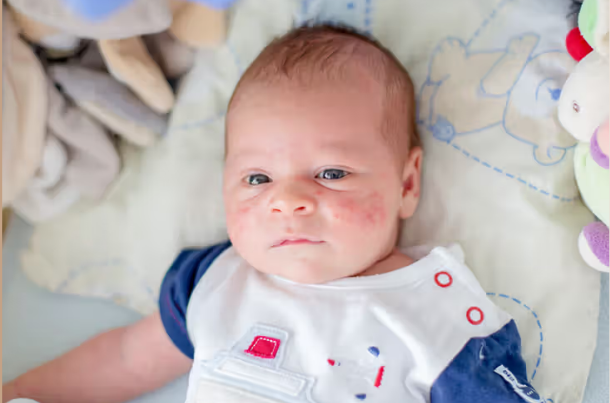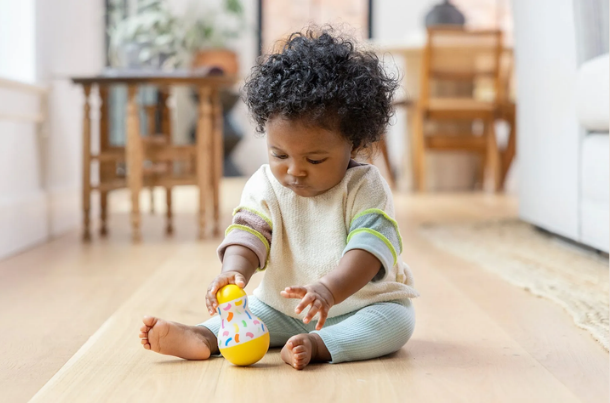
5 month old sitting skills can vary widely. Some babies briefly balance or sit with support, while many still need plenty of help at this age.
If you’ve recently noticed your little one trying to lift their head, lean forward, or sit taller in your lap, you may be wondering, can a 5 month old baby sit yet? It’s such an exciting stage.
At 5 months, some babies can sit for short periods with support, while others still need plenty of help. Both can be completely normal. Sitting is a skill that develops gradually as your baby gains strength, balance, and body control.
So, if your baby is wobbling, tipping sideways, or showing no interest in sitting just yet, try not to compare. Babies have their own developmental timelines, and five months is still early in the sitting journey.
Can a 5 Month Old Baby Sit Without Support?
Most 5-month-old babies are not expected to sit steadily on their own for long periods. Some may briefly balance in a sitting position, especially when leaning forward and supporting themselves with their hands, but independent sitting generally develops later.
So, should a 5 month old baby sit independently? Not necessarily. At this age, it is much more common for babies to need your hands, your body, or another safe form of support while sitting.
You may notice your baby balancing for a few seconds and then starting to tip. Stay close and support them before they fall; repeated falls are not necessary practice. Wobbling alone does not mean something is wrong. Their muscles and balance are still developing, and every little wobble is part of learning how their body works.

When Do Babies Sit Independently?
Parents often wonder when do babies sit independently, especially after seeing another baby of a similar age sitting beautifully in photos or videos.
Many babies develop independent sitting during the second half of their first year, although timing varies. For reference, the CDC lists leaning on the hands for support while sitting as a six-month milestone. Its nine-month milestones include sitting without support and getting into a sitting position independently. These are different skills, not a requirement to sit alone at five months. Sitting isn’t something babies suddenly know how to do one morning. It usually develops through lots of smaller skills.
First comes stronger head control. Then your baby becomes better at controlling their upper body and trunk. They may begin sitting with your support, progress to balancing with their hands in front of them, and eventually learn to sit without using their hands for stability.
Think of sitting as a developing skill, while still using milestones to guide conversations with your clinician. A chart cannot diagnose a delay, and you do not need to wait for the next milestone age if something concerns you.
Being able to stay seated after an adult places a baby there is different from getting into sitting independently. Notice both, rather than assuming a photograph of a seated baby shows every part of the skill.
Signs Baby Is Ready to Sit
Watching babies develop often means noticing small hints that a new skill may be coming. Your little one often starts practising the building blocks of sitting before you realise what they are doing.
Some common signs baby is ready to sit include:
- Holding their head upright with good control
- Having better control of their neck and upper body
- Pushing up strongly during tummy time
- Trying to lift their chest from the floor
- Sitting more upright when held on your lap
- Reaching for toys while supported
- Attempting to steady themselves with their hands
Your baby doesn’t need to show every one of these signs at exactly five months. Development is wonderfully individual.
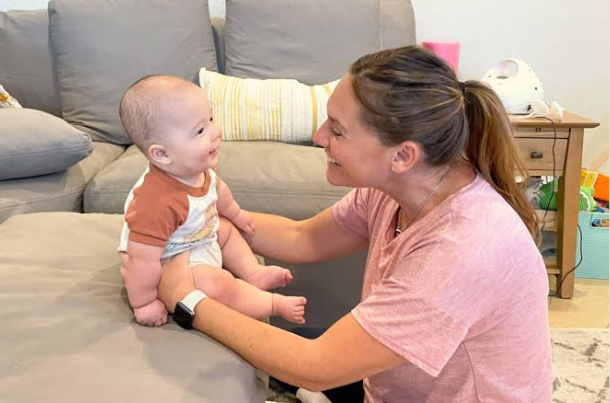
What Does 5 Month Old Sitting With Support Look Like?
At this stage, 5 month old sitting with support may look adorably wobbly.
Your baby might sit between your legs while you keep your hands around their trunk, moving support lower only as their control improves. They may sit on your lap with their back against your chest or practise sitting on the floor while you stay close enough to catch them.
Some babies also begin “tripod sitting.” This is when they lean slightly forward and place one or both hands on the floor to help themselves balance.
It may not look graceful, but it is useful practice. Your baby is learning where their body is in space and how to make tiny adjustments to remain upright.
Is It Safe to Sit a 5 Month Old Up?
If you’re wondering is it safe to sit a 5 month old up, supported sitting is generally fine when your baby can hold their head steady with your support and seems comfortable. Match support to their needs; some babies need your hands higher around the trunk rather than only at the waist.
The important thing is not to force the position.
If your baby repeatedly slumps forward, cannot comfortably hold their head up, becomes upset, or seems exhausted, give them a break. Sitting practice should be a short, playful experience rather than something your baby has to “work” at for long periods.
Always stay within arm’s reach during sitting practice. At this age, babies can tip over surprisingly quickly.
Practising at floor level on a firm surface with a thin play mat is safer than placing a baby on a sofa, bed, countertop, or other raised surface.
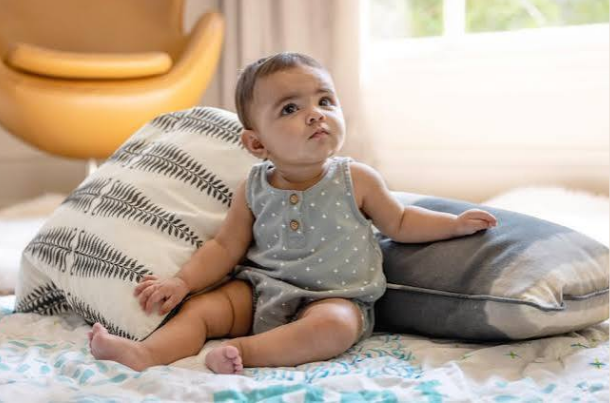
Supported Sitting for Babies: Simple Ways to Practise
You don’t need expensive equipment to help your baby learn this skill. In fact, some of the sweetest practice happens while you’re simply sitting together on the floor.
For supported sitting for babies, sit behind your little one and gently support their trunk at the level they need. Keep your hands ready even if they briefly seem steady. Place an interesting toy in front of them so they have something to look toward or reach for.
You can also sit your baby on your lap facing outward while supporting their body. This gives them a wonderful view of what’s happening around them while allowing them to practise keeping their head and upper body upright.
Keep sessions short. A few happy minutes can be more useful than a long session with a tired or frustrated baby.
How to Help a Baby Learn to Sit Naturally
If you’re wondering how to help a baby learn to sit, you don’t need to rush straight into sitting practice. Many of the skills babies need for sitting are developed while they are playing in other positions.
Give Your Baby Plenty of Tummy Time
Supervised tummy time helps strengthen your baby’s neck, shoulders, back, and upper body.
These muscles eventually contribute to sitting control. If your baby dislikes tummy time, try shorter sessions several times throughout the day rather than one long session.
Getting down on the floor face-to-face can make it more enjoyable too. Tummy time is for awake, supervised play. If your baby falls asleep, move them to an appropriate infant sleep space and place them on their back.
Encourage Reaching and Turning
Place a favourite toy slightly in front of or beside your baby during supervised play.
Reaching encourages your baby to shift their weight and use different muscles to maintain balance. These small movements can help develop the coordination needed for sitting.
Let Your Baby Play on the Floor
Floor play gives babies freedom to kick, roll, push, stretch, and explore.
A safe, firm surface provides opportunities for natural movement that highly restrictive baby equipment cannot always offer.
A clear floor area, a thin play mat, a few suitable toys, and you nearby can be enough. If you use a blanket during awake play, keep it smooth and away from your baby’s face. This is a supervised play setup, not a sleep surface.
As your little one explores these movements, you may also be thinking about how to set up their play area. Our baby play mat guide offers ideas for choosing a mat for supervised floor play. Keep the setup simple, with a firm surface, room to move, and you close by as your baby practises.
Follow Your Baby’s Mood
Babies learn best when they are comfortable and interested.
If your little one starts fussing, arching backward, rubbing their eyes, or repeatedly collapsing forward, sitting practice can wait.
There is always another opportunity after a nap, a feed, or a cuddle.
Sitting Milestones for Babies Aren’t a Competition
It is incredibly easy to compare babies.
You may hear another parent say, “Mine was sitting at five months,” and immediately wonder whether your baby should be doing the same thing.
But sitting milestones for babies naturally happen across a range of ages. One baby may focus on rolling first, another may be fascinated by reaching and grabbing, while another seems determined to sit upright as quickly as possible.
A milestone chart can be useful as a general guide, but it isn’t a race schedule.
Your baby’s development deserves to be viewed as a whole rather than judged by one skill on one particular day.
My Baby Cannot Sit at 5 Months, Should I Worry?
If your baby cannot sit at 5 months, that alone is usually not a reason to panic.
Five months is still early for independent sitting. Your baby may simply need more time to build the strength and balance required.
Instead of focusing only on sitting, notice their overall development. Are they gaining better head control? Moving both sides of their body? Reaching for objects? Becoming stronger during floor play?
Those smaller changes matter too. If your baby is not sitting without support by around nine months, discuss it with their clinician and ask about developmental assessment. Earlier concerns about head control, movement, or lost skills deserve attention sooner.
For a baby born prematurely, use corrected age when discussing early milestones. For example, a five-month-old born about eight weeks early has a corrected age of roughly three months. Your care team can help calculate this and explain the appropriate follow-up; corrected age does not mean dismissing concerns.
If your baby has very poor head control, seems unusually floppy or stiff, loses a skill they previously had, moves one side very differently from the other, or you have any concerns about their development, contact your pediatrician or healthcare professional promptly rather than simply increasing sitting practice.
You know your baby’s everyday movements better than anyone, so it’s always reasonable to ask for professional guidance when something doesn’t feel right.
A Few Sitting Safety Tips Every Parent Should Know
Once babies discover sitting, they can become wonderfully ambitious before their balance catches up with their confidence.
Stay close during practice because a baby who looks perfectly stable can suddenly tumble sideways or backward. Floor-level practice on a firm, clear surface is usually the safest option.
Keep hard toys, furniture corners, cords, and other hazards away from the practice area. Do not use beds, couches, changing tables, or counters for sitting practice. Supervision does not remove the fall risk of an elevated surface. Pillows placed around a baby are not a replacement for your hands and can introduce hazards if the baby slumps into them.
And don’t feel that you need to prop your baby upright for long stretches just to help them reach the milestone sooner. Babies benefit from having opportunities to move freely and develop strength naturally.
Sitting and Sleep Are Two Very Different Things
Learning to sit is exciting during awake time, but sleep safety follows different rules.
The safe sleeping position for babies is to place your baby on their back for every sleep, including naps and nighttime sleep, on a firm, flat sleep surface intended for infants. Keep soft bedding, pillows, loose blankets, stuffed toys, and positioning products out of the baby’s sleep space.
Don’t use pillows or other props to keep your baby sitting or positioned during sleep.
If a baby falls asleep in a sitting device, swing, or bouncer, move them to their appropriate sleep space. Keep them on their back for sleep rather than allowing sleep in a supported sitting posture.
As your baby becomes more mobile, they may begin changing positions themselves. Continue putting your baby down on their back at the beginning of each sleep and follow current safe-sleep recommendations from your pediatrician and local health authorities.
What If My Baby Keeps Trying to Sit Up?
Some babies are extremely determined.
You may place your baby in a slightly reclined position only to watch them repeatedly pull their head and shoulders forward as though they’re doing tiny crunches.
This can simply be your baby’s way of experimenting with movement. Give them safe opportunities for supervised floor play and supported sitting rather than repeatedly pulling them into a sitting position by their arms.
Your baby is building many of the necessary muscles through everyday movement.
Don’t Rush the Moment
There is something irresistible about seeing your baby sitting upright for the first time. Suddenly they look less like a tiny newborn and more like a little person ready to explore.
But there is no need to hurry them there.
Offer tummy time, floor play, reaching games, cuddles, and short periods of supported sitting. Then give your baby the space and time to put those pieces together.
Some days they may seem close to sitting independently. The next day they may tumble over every few seconds. Progress with babies isn’t always a straight line.
Do Babies Need a Sitting Seat or Special Equipment?
A seat is not required to learn to sit, and holding a baby upright in equipment is not the same as independent balance. Free movement during supervised floor play gives them opportunities to use their body in different ways.
If you use a seat, follow its developmental requirements, weight limits, and safety instructions. Keep it at floor level, supervise continuously, and stop if your baby slumps or seems uncomfortable. Do not use it to hold a baby upright before they can manage the required head control, or as a sleeping place.
A bath seat also does not make a baby safe to leave in water. Keep hands-on supervision during bathing; sitting ability does not replace an adult’s attention.
Does Sitting Mean My Baby Is Ready for Solid Foods?
Not by itself. Brief supported sitting at five months is not a reason to start solids automatically. Readiness around six months involves staying upright with steady head control, coordinating food toward the mouth, and swallowing rather than pushing food out.
A baby does not necessarily need to get into sitting independently before beginning solids, but they do need an appropriate upright feeding position. Ask your clinician if you are unsure, particularly for premature babies or children with feeding or developmental concerns.
Frequently Asked Questions
1. Is it normal for my baby not to sit at five months?
2. What is the difference between supported and independent sitting?
3. When should I ask about a sitting delay?
4. How long should sitting practice last?
5. Should I pull my baby up by their hands?
6. Are pillows a safe way to teach sitting?
7. Does an early sitter develop faster in every area?
8. How does premature birth change the timeline?
9. Can sitting practice replace tummy time?
10. Can my baby sleep sitting up if they seem comfortable?
Final Thoughts
So, can a 5 month old baby sit? Some babies can sit briefly with support or even balance independently for a few moments, while many 5-month-olds still need plenty of help. Both experiences can fit within normal development.
Rather than worrying about exactly when your baby “should” sit, look for the little signs of growing strength and control. Every push during tummy time, every attempt to balance, and every wobbly reach is helping them learn.
Keep giving your little one safe opportunities to practise, stay close when they’re sitting, and allow development to unfold at their own pace.
Before long, you may find yourself remembering those wobbly sitting days while chasing a very mobile little explorer around the room.
For more practical tips and gentle encouragement as your little one grows, explore Tales of Tots. From those first wobbly sits to new everyday discoveries, find support for each stage of your parenting journey.
Resources
American Academy of Pediatrics: Safe Infant Sleep
American Academy of Pediatrics: Your Preemie’s Growth and Developmental Milestones
NHS: Keeping Your Baby or Toddler Active
Disclaimer
This article is for general educational and parenting information only and does not replace individualized medical or developmental advice. Babies develop sitting skills at different rates. Speak with your pediatrician or healthcare professional if your baby has very poor head control, seems unusually floppy or stiff, moves one side differently from the other, loses a skill they previously had, or you have concerns about their overall development. If your baby is not sitting without support by around nine months, discuss their development with their clinician. For premature babies, ask your care team about using corrected age when reviewing early milestones.
About the Author
Geeta Yogi writes warm, practical parenting content about baby development, milestones, sleep, feeding, safety, and everyday family concerns. She focuses on clear, supportive guidance that helps parents understand normal developmental variation while recognizing when professional advice may be useful.