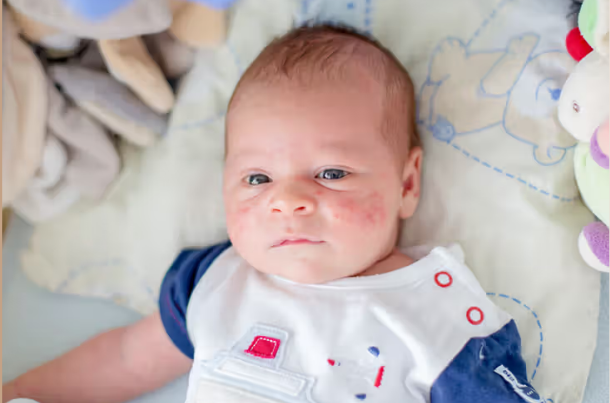
If you’ve just noticed tiny red bumps, dry patches, or little spots on your newborn’s beautiful skin, it is understandable for your mind to start racing. You may find yourself checking the rash every few minutes and wondering, is it normal for newborns to have rashes, or is something wrong?
When your baby is so tiny, even a small change can feel enormous.
The reassuring news is that newborn rashes are incredibly common. A baby’s skin is brand new, delicate, and still adjusting to life outside the womb. Many spots and bumps that look worrying to us are temporary and harmless.
That said, not every rash should be ignored. Knowing what common newborn skin rashes look like, how to care for your baby’s sensitive skin, and which warning signs deserve medical attention can make those early weeks feel much less frightening.
Let’s go through it together.
Is It Normal for Newborns to Have Rashes?
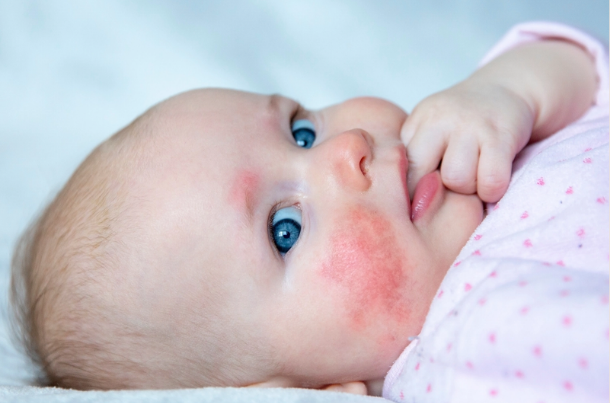
Yes, it can be completely normal for newborns to develop rashes during their first days and weeks of life.
Your baby’s skin has spent months surrounded by amniotic fluid. Suddenly, it is exposed to clothing, diapers, temperature changes, moisture, milk, saliva, and everything else in the outside world.
That’s quite an adjustment for such delicate skin.
Some babies develop little spots almost immediately after birth, while others may develop a newborn rash on the face or body several weeks later.
Many of these skin changes disappear naturally as your baby’s skin matures.
Still, “common” doesn’t mean you have to diagnose every rash yourself. If something about your baby’s skin doesn’t seem right, particularly if your baby seems unwell, calling your pediatrician is always reasonable.
A parent’s concern matters.
Why Do Newborn Babies Get Rashes So Easily?
Newborn skin is much more delicate than adult skin. Its protective barrier is still developing, which means it can be more sensitive to heat, moisture, friction, and irritating products.
Hormonal changes can also affect your baby’s skin after birth. Some early facial eruptions have several possible contributors, and similar-looking bumps can have different causes. They may appear even when you have not changed anything in your baby’s routine.
Other newborn rashes can appear when sweat becomes trapped, when skin stays damp for too long, or simply as part of the normal transition after birth.
In other words, a rash doesn’t automatically mean you’ve used the wrong soap, washed your baby’s clothes incorrectly, or done something to cause it.
Sometimes newborn skin simply does newborn things.

Common Newborn Skin Rashes Parents May Notice
There are several types of newborn rashes, and many look surprisingly dramatic compared with how harmless they actually are.
Here are some of the ones parents commonly come across.
1. Baby Acne
Those tiny pimples on your newborn’s cheeks can be quite a surprise.
Baby acne usually appears as small red or white bumps, particularly on the cheeks, forehead, nose, or chin. It often develops within the first several weeks after birth.
It may look like your little one has suddenly entered the teenage years a bit early, but baby acne usually doesn’t require special treatment.
Try not to squeeze or pick at the bumps. Gentle cleansing and patience are usually all that’s needed, although persistent or unusual-looking spots should be checked by your baby’s healthcare provider.
2. Erythema Toxicum
The name sounds much scarier than the rash usually is.
Erythema toxicum is a very common newborn rash that can appear during the first few days after birth. It may look like red blotches with tiny white or yellowish bumps in the middle.
You might see it on your baby’s face, chest, back, arms, or legs.
It generally doesn’t bother babies and usually disappears on its own. No scrubbing, squeezing, or special creams are normally necessary.
3. Milia
Have you noticed tiny pearly-white dots around your baby’s nose, cheeks, or chin?
These may be milia.
Milia are tiny bumps that occur when keratin becomes trapped beneath the skin. They’re common in newborns and typically disappear without treatment.
As tempting as it might be, don’t squeeze them. Your baby’s skin will usually take care of them naturally.
4. Heat Rash
Babies can develop heat rash when sweat becomes trapped under the skin.
It may appear as clusters of tiny red, pink, or sometimes clear bumps, especially around the neck, upper chest, back, armpits, or areas covered by clothing.
Newborns can’t regulate their body temperature as efficiently as adults, so overdressing can make overheating easier.
Keeping your baby comfortably cool, using lightweight clothing, and avoiding too many layers can often help.
5. Diaper Rash
A red, irritated bottom is something almost every parent encounters eventually.
Diaper rash can develop because of prolonged contact with urine or stool, friction, diarrhea, or irritation from certain products.
Frequent diaper changes can make a big difference. Gently clean the area, allow it to dry when possible, and use an appropriate protective barrier cream if recommended.
If the rash is severe, develops blisters or sores, spreads, or doesn’t improve, your pediatrician should take a look. Some diaper rashes are caused or complicated by yeast or bacterial infections and may need specific treatment.
6. Cradle Cap
Cradle cap usually appears as greasy, flaky, or scaly patches on a baby’s scalp.
Although those flakes can look uncomfortable, cradle cap often bothers parents much more than it bothers babies.
Gentle washing with unperfumed baby shampoo and a soft brush may help loosen scales. Ask a pharmacist or pediatrician about a suitable emollient if softening is needed. Avoid scratching or forcefully pulling scales away from your baby’s scalp.
If the skin becomes very red, swollen, weepy, or spreads significantly, ask your baby’s doctor for guidance.
7. Dry or Peeling Skin
Seeing a newborn’s hands, feet, ankles, or wrists peeling can make you immediately reach for the moisturizer.
But some peeling after birth is normal, particularly during the first weeks.
Your baby’s skin is transitioning to a completely different environment, and the outer layers may naturally shed.
Usually, gentle bathing and avoiding harsh or fragranced products are enough. If your baby’s skin becomes cracked, inflamed, weepy, or extremely dry, mention it to your pediatrician.
What Causes a Newborn Rash on the Face?
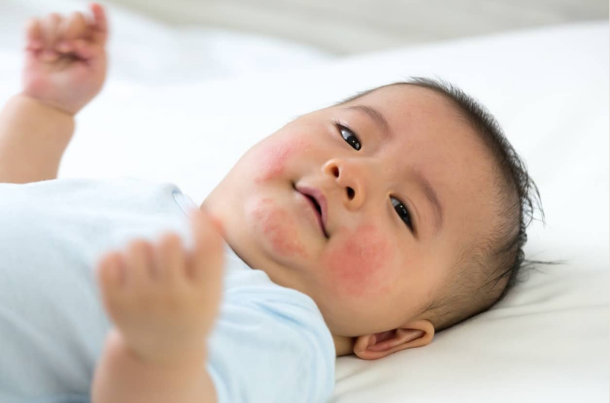
Your baby’s cheeks are probably one of your favorite places to kiss, which makes discovering a rash there especially noticeable.
A rash on your newborn’s face, including the cheeks, forehead, nose, and chin may have several possible causes, including baby acne, milia, heat rash, irritation from saliva or milk, or another skin condition.
Before applying creams, oils, powders, or home remedies, consider keeping things simple.
Gently clean your baby’s face with lukewarm water and avoid rubbing the skin. Pat it dry with a soft cloth instead.
If the rash keeps spreading, becomes crusty or weepy, looks infected, or seems uncomfortable for your baby, have a healthcare professional examine it.
What About a Newborn Rash on the Body?
A rash on your newborn’s body, including the chest, tummy, back, arms, legs, or diaper area can also have many explanations.
Sometimes it’s heat rash. Sometimes it’s temporary newborn skin changes. Sometimes the skin is reacting to moisture, friction, or a product.
The location alone usually isn’t enough to tell you exactly what’s happening.
Instead, pay attention to how the rash looks, whether it’s changing quickly, and, most importantly, how your baby is behaving.
A baby who is feeding normally, waking normally, and generally acting like themselves is very different from a newborn with a rash who is unusually sleepy, difficult to wake, refusing feeds, or showing other signs of illness.
Baby Acne vs Heat Rash: How Can You Tell the Difference?
It isn’t always easy to distinguish baby acne vs heat rash, especially when you’re looking at a collection of tiny red bumps.
Baby acne often appears mainly on the face, particularly the cheeks, forehead, and chin. The bumps can look like little pimples.
Heat rash is more closely related to sweating and overheating. It often develops in warm, covered, or folded areas such as the neck, chest, back, or armpits, although it can appear elsewhere too.
Rather than trying to make a perfect diagnosis from pictures online, look at the bigger picture.
Has your baby been warm or sweaty? Is the rash concentrated under clothing? Is it mainly on the cheeks? Does your baby seem comfortable?
And if you’re still unsure, there’s nothing wrong with asking your pediatrician. That’s exactly what they’re there for.
How to Treat Newborn Rash Gently at Home
If you’re wondering how to treat newborn rash, the answer often starts with doing less rather than more.
Newborn skin usually doesn’t need an overflowing bathroom shelf of lotions, oils, powders, and cleansers. In fact, introducing too many products can sometimes make irritation harder to understand.
For a mild rash when your baby otherwise seems completely well, gentle care is usually the safest approach:
- Keep your baby’s skin clean and comfortably dry.
- Use lukewarm rather than very hot water for bathing.
- Choose mild, fragrance-free products made for sensitive baby skin.
- Dress your baby in breathable clothing and avoid overheating.
- Change wet or dirty diapers promptly.
- Do not squeeze pimples, bumps, or white spots.
- Avoid loose powders, which can be inhaled, and keep skincare away from the eyes and mouth.
- Avoid scrubbing or rubbing irritated skin.
- Don’t apply medicated creams, essential oils, herbal remedies, or adult skincare products without professional advice.
If a product seems to make your baby’s skin worse, stop using it and ask your healthcare provider what would be appropriate instead.
Newborn skin is delicate. Gentle and simple usually wins.
If bath time feels a little daunting while your baby’s skin is sensitive, our guide on how to bathe a newborn step by step walks you through gentle washing, drying, and preparing for those early baths.
Should You Put Lotion on a Newborn Rash?
It depends on what’s causing the rash.
A simple, fragrance-free moisturizer may be useful for certain types of dry skin, but a lotion isn’t the correct treatment for every newborn rash.
Some conditions don’t require anything at all.
Others may need a specific treatment recommended by a healthcare professional.
The instinct to apply something is understandable because waiting can feel uncomfortable as a parent. But sometimes giving your baby’s skin time to settle is exactly what it needs.
When you’re uncertain, ask before applying.
Things to Avoid When Your Newborn Has a Rash
One of the hardest parts of caring for a baby’s skin is resisting the urge to try every remedy someone recommends.
Your friend may swear by one cream. Grandma may have a traditional remedy. Social media may offer ten more solutions before breakfast.
But newborn skin deserves extra caution.
Avoid heavily fragranced skincare, harsh soaps, vigorous scrubbing, picking at bumps, and using medications that haven’t been recommended for your baby.
Be especially careful with essential oils and homemade mixtures. “Natural” doesn’t automatically mean gentle or safe for newborn skin.
When you’re dealing with a mystery rash, simpler care makes it easier to notice whether things are actually getting better or worse.
When to Worry About Newborn Rash
Most newborn rashes are harmless, but knowing when to worry about newborn rash is just as important as knowing which ones are common.
Get urgent medical advice for a newborn rash with blisters, open sores, rapidly spreading inflammation, swelling, oozing, or pus, even if there is no fever. Do not assume blisters are ordinary baby acne. Some infections can start with subtle symptoms, and a young baby can become unwell quickly.
You should also seek medical advice if your baby isn’t feeding normally, seems unusually sleepy or difficult to wake, is very irritable, has breathing difficulties, or simply appears unwell.
A fever in a very young baby deserves special attention. For a baby younger than 3 months, a rectal temperature of 100.4°F (38°C) or higher generally requires immediate medical evaluation.
Don’t simply assume that the fever is related to a harmless skin rash.
Get Urgent Medical Help for a Rash That Doesn’t Fade Under Pressure
One warning sign parents should know about is a rash made up of red, purple, or bruise-like spots that do not fade when pressed.
This type of non-blanching rash can sometimes occur with serious illness, particularly when a baby also has fever or seems unwell.
A new non-blanching rash in a newborn needs emergency assessment, even without fever. Do not wait to see whether it disappears or repeatedly test it at home. On darker skin, changes may be harder to see; look at the whole baby rather than relying on redness alone.
Likewise, get emergency help if your baby has difficulty breathing, swelling around the lips or face, becomes floppy or unresponsive, has a seizure, or develops blue, grey, unusually pale, or blotchy skin.
When a newborn looks seriously unwell, seek help immediately. Serious infection can occur without a visible rash or fever; a reassuring-looking spot does not override poor feeding, abnormal responsiveness, or breathing difficulty.
Can You Prevent Newborn Rashes?
You can’t prevent every rash, and that’s worth remembering.
Even with beautifully clean clothes, carefully chosen products, and all the love in the world, your newborn may still wake up with mysterious little bumps.
There are, however, a few ways to support healthy newborn skin.
Keep baths gentle and not unnecessarily long. Choose simple products without strong fragrances. Wash new clothes and bedding before use when appropriate, and keep sweaty or damp areas clean and dry.
Most importantly, don’t overdress your baby.
A newborn doesn’t need to be bundled into endless layers simply because they’re small. Dress them appropriately for the environment and regularly check that they aren’t becoming too hot.
How Long Do Newborn Rashes Last?
There isn’t one answer because it depends entirely on the type of rash.
Some newborn skin changes disappear within days. Others take weeks to improve, and cradle cap may persist for several months. A longer duration is not automatically dangerous, but worsening or uncertain rashes need assessment.
Try taking a photo when you first notice the rash. That gives you something concrete to compare with later and can also be helpful if you need to show your pediatrician how the rash has changed.
What matters isn’t only how long the rash has been there, but what it is doing.
A rash that’s slowly fading while your baby is otherwise thriving is generally less concerning than one that suddenly spreads, changes appearance, or arrives alongside signs of illness.
Frequently Asked Questions About Newborn Rashes
Is a Rash Normal in a 1-Week-Old Baby?
Yes, several harmless skin changes can appear during a baby’s first week.
Newborn peeling, milia, and erythema toxicum are examples of common early skin changes. However, you shouldn’t assume every rash in a one-week-old is harmless.
Because babies this young can become unwell quickly, contact your healthcare provider if the rash concerns you or your baby has any other symptoms.
Can Breast Milk Cause a Rash on a Baby’s Face?
Milk that remains on the skin can sometimes contribute to irritation around the mouth, chin, or skin folds, but a facial rash can have many other causes.
Gently clean milk or spit-up from your baby’s skin and pat the area dry rather than rubbing it.
If irritation continues despite gentle care, ask your pediatrician about it.
Does Newborn Rash Mean My Baby Has an Allergy?
Not necessarily.
Many common newborn rashes have nothing to do with allergies. Baby acne, milia, heat rash, and normal newborn skin changes can all occur without an allergic trigger.
Because allergic reactions can sometimes be serious, however, seek urgent medical attention if a rash occurs with breathing difficulty, facial or lip swelling, repeated vomiting, or other signs of a severe reaction.
Should I Bathe My Baby When They Have a Rash?
For many mild skin conditions, gentle bathing is perfectly fine.
Use comfortably warm water, keep the bath relatively short, and avoid aggressive scrubbing.
If your doctor has diagnosed a particular skin condition, follow their bathing and skincare recommendations instead.
Should I Take a Picture of My Baby’s Rash?
Yes, this can be surprisingly helpful.
Take a clear photo in good natural light and another later if the rash changes. It can help you track whether the redness is spreading, fading, or changing appearance.
Just remember that photographs aren’t a substitute for medical evaluation when your baby seems unwell.
Can I Use Adult Acne Cream on My Baby?
Do Blisters Need Checking Even Without Fever?
Is a Rash That Fades Under Pressure Always Safe?
Can I Put Breast Milk on the Rash?
Does Cradle Cap Mean My Baby Is Not Being Washed Enough?
A Little Note for Parents
Those first weeks with a newborn can make you notice everything.
One new bump.
One strange sound.
One different-looking diaper.
One patch of red skin that definitely wasn’t there at 9 a.m.
It is easy to stare at something tiny and imagine the worst possibility.
So if you’ve arrived here asking, is it normal for newborns to have rashes, take some comfort in knowing that many newborn skin changes really are a normal part of those early weeks.
Your baby’s skin is learning how to live in a whole new world.
You don’t need to identify every spot perfectly, and you don’t need to solve every rash with a cream. Keep your baby’s skincare simple, watch how the rash changes, and pay attention to how your little one is feeling overall.
And when your parenting instinct tells you that something isn’t quite right, call your baby’s healthcare provider.
There is never anything silly about asking a question when it comes to your newborn.
Final Thoughts
Seeing a rash on that soft little face can be unsettling, especially when you’re still getting to know what’s normal for your baby.
Thankfully, many common newborn skin rashes are temporary and settle as your baby’s delicate skin adjusts and matures. Gentle skincare, breathable clothing, avoiding overheating, and a little patience may be all that’s needed.
But you also don’t have to sit at home worrying and trying to figure everything out alone.
If the rash looks unusual, is getting worse, or your baby has a fever or seems unwell, reach out for medical care. With newborns, it’s always okay to be cautious.
Until then, keep those cuddles coming.
Wash hands before handling your newborn. Anyone with a current or recent cold sore should not kiss your baby; avoid kisses near the mouth, nose, or eyes. Comfort and closeness can continue while you protect their delicate skin.
For more gentle guidance on baby care and everyday parenting, explore Tales of Tots and find practical tips to help you care for your little one with confidence.
Trusted & Authoritative Resources
American Academy of Pediatrics: Fever and Your Baby
NHS: Neonatal Herpes and Warning Signs in Young Babies
Disclaimer
This article is for general educational and parenting information only and does not replace individualized medical advice. Newborns can become unwell quickly, so contact your baby’s healthcare provider if a rash is worsening, spreading, blistering, oozing, or accompanied by poor feeding, unusual sleepiness, irritability, or other signs of illness. A baby younger than 3 months with a rectal temperature of 100.4°F (38°C) or higher needs immediate medical evaluation. Seek emergency care for a new non-blanching rash, difficulty breathing, swelling of the lips or face, seizures, unusual unresponsiveness, or blue, grey, unusually pale, or blotchy skin.
About the Author
Geeta Yogi writes warm, practical parenting content about newborn care, baby skin, feeding, sleep, development, and everyday family concerns. She focuses on clear, reassuring guidance that helps parents understand common newborn changes while recognizing when medical advice may be needed.