Feeding your baby isn’t just a routine, it’s one of the most intimate ways you connect with your little one. Still, real life doesn’t always follow a perfect schedule, and every parent’s journey looks a little different. That’s where flexibility becomes important.
A feeding pump (breast pump) can be a quiet source of support during this phase. It allows you to express and store breast milk so your baby can continue receiving your milk even when you’re not able to nurse directly.
Whether you’re preparing to return to work, sharing feeding responsibilities with a partner or caregiver, dealing with latching challenges, or simply needing a moment to rest, a feeding pump gives you options without taking anything away from your role as a parent. It helps you care for your baby while also caring for yourself.
The right feeding pump should feel comfortable, easy to use, and suited to your daily routine.. When chosen thoughtfully, pumping doesn’t have to feel stressful or overwhelming, it can become a calm, manageable part of your day.
In this guide, we’ll gently walk through what a feeding pump is, how it can help, the different types available, and simple tips to use it safely and with confidence.
What Is a Feeding Pump (Breast Pump)?
A feeding pump is a small but very helpful device that allows a mother to express milk from her breast. There are times when you may not be able to be with your baby for every feed, or you may simply need some rest. In those moments, a feeding pump (breast pump) can be a real support.
The pump works with gentle suction that feels similar to how a baby naturally sucks, so it doesn’t feel harsh or uncomfortable. The milk you express can be collected in a clean bottle or container and stored safely in the refrigerator or freezer, ready to be fed to your baby whenever needed.
The World Health Organization (WHO)also recognizes expressed breast milk as a safe and nutritious option when direct breastfeeding isn’t possible.
In simple terms, a feeding pump helps you continue giving your baby your milk, even when you can’t be there for every feeding, offering reassurance, flexibility, and peace of mind.
Why Parents Use Feeding Pumps
Every family’s situation is different, and feeding doesn’t always look the same for everyone. There are moments when direct breastfeeding isn’t possible all the time, and that’s completely okay. This is where a feeding pump (breast pump) can be truly helpful.
Parents choose to use feeding pumps for many everyday reasons, such as:
- Returning to work or school
- Sharing feeding responsibilities with a partner or caregiver
- Relieving fullness or discomfort and helping maintain milk supply
- Supporting babies who have trouble latching or sucking
- Building a small milk stash for those moments when flexibility is needed
Using a feeding pump doesn’t mean you’re breastfeeding less.
It’s simply another loving way to nourish your baby and support your family’s rhythm.
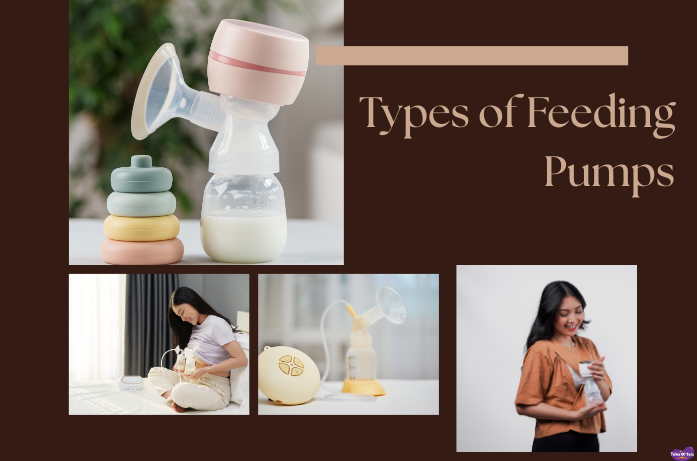
Types of Feeding Pumps
1. Manual Breast Pump
Best for: This pump is perfect for parents who only need to express milk occasionally. It’s lightweight and portable, making it easy to carry, and simple to use during short breaks or while traveling. Quick, convenient, and hassle-free, a comfortable option for on-the-go parents.
Pros:
- Affordable and easy on the budget
- Lightweight and easy to carry anywhere
- Quiet during use
Cons:
- Requires hand effort, which can get tiring
- Can feel slow for daily or long-term use
2. Electric Breast Pump
Best for: This pump is great for parents who need to pump often or rely on it as their main way to feed their baby. It’s faster, more efficient, and easier on your hands, making it a comfortable choice for moms who pump several times a day or exclusively use expressed milk.
Pros:
- Faster and easier milk expression
- Suction can be adjusted to your comfort
- Less effort on your hands
Cons:
- More expensive than a manual pump
- Requires power or charging to use
3. Double Electric Pump
Best for: This pump is perfect for parents who need to express milk frequently or save time. It’s especially helpful for working moms or anyone who wants to build a small milk stash, making pumping easier, more convenient, and reliable.
Pros:
- Expresses milk from both breasts at the same time, saving time
- Fast and convenient, especially for working moms
- Helps maintain a steady milk supply
The American Academy of Pediatrics supports pumping as a helpful way to continue providing breast milk when direct feeding isn’t always possible.
4. Wearable / Hands-Free Pump
Best for: Multitasking parents means parents who want to keep up with their daily tasks while pumping.
This pump is perfect for them. You can wear it and continue caring for your baby, get light chores done, or move around comfortably, letting pumping fit smoothly into your daily routine.
Pros:
- Discreet and portable, easy to carry anywhere
- Fits comfortably inside a bra
- Allows you to move around or do light tasks while pumping
Cons:
- Holds a smaller amount of milk
- Can be a bit more expensive
How to Choose the Right Feeding Pump
When picking a pump, keep a few things in mind:
- How often you’ll be pumping, occasionally or daily
- Comfort, the right flange size really matters
- Noise level
- Portability, easy to carry around
- Ease of cleaning
Parent tip: A properly sized flange prevents pain and improves milk flow, bigger isn’t always better.
Safe Pumping & Milk Storage Tips
Pumping Hygiene
- Always wash your hands before pumping
- Clean all pump parts after each use
- Sterilize regularly, especially during the first few months
Milk Storage Basics
- Room temperature: up to 4 hours
- Refrigerator: up to 4 days
- Freezer: up to 6 months (for best quality)
Label your milk with the date and always use the oldest milk first, an easy, safe, and stress-free way to store breast milk.
Making Pumping More Comfortable
- Pumping shouldn’t hurt. Here are some tips to stay comfortable:
- Start with low suction and increase it gradually
- Sit upright and relax your shoulders
- Look at your baby or a photo to help encourage let-down
- Pump in a calm, private space
Remember, stress can affect milk flow, being gentle and relaxed really helps.
FAQs: Feeding Pumps (Breast Pumps)
Q1. What’s the difference between manual and electric breast pumps?
Manual pumps are great for occasional use and are portable, while electric pumps are faster and better suited for frequent pumping. A double electric pump expresses milk from both breasts at once, saving time.
Q2. How often should I pump?
The frequency of pumping depends on your needs. If you’re going back to work or need to build a milk stash, pumping 3-4 times a day is common. For occasional use, a manual pump might be sufficient.
Q3. Can pumping replace breastfeeding?
Pumping is a great way to provide breast milk when direct breastfeeding isn’t possible, but it doesn’t replace the bonding and comfort that direct feeding provides. It’s a supportive tool, not a replacement.
Q4. How should I store pumped milk?
Breast milk can be stored at room temperature for up to 4 hours, in the refrigerator for up to 4 days, or in the freezer for up to 6 months for best quality. Label your milk with the date to use the oldest first.
Q5. Does pumping hurt?
Pumping should not be painful. If it is, ensure the flange size is correct, and try starting with a low suction setting. Relaxing while pumping also helps improve milk flow.
Final Thoughts: A Tool That Supports, Not Replaces
A feeding pump is not a replacement for bonding, it’s a support tool that helps you feed your baby in a way that fits your life. Whether you pump occasionally or daily, what matters most is that your baby is nourished and you feel supported.
There’s no right way, only what works for you and your baby.
At Tales of Tots, we believe feeding choices should come with confidence, flexibility, and compassion, because a supported parent raises a well-nourished child.
Disclaimer
This article is for informational purposes only and does not replace medical or lactation advice. Consult your pediatrician or a certified lactation consultant if you experience pain, low supply, or feeding concerns.