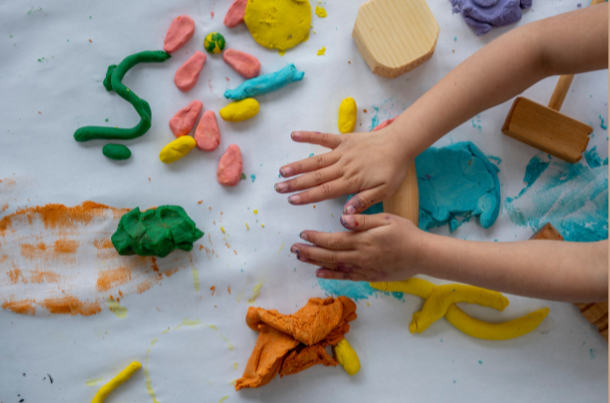
Looking for fun clay activities for kids that are simple enough to set up at home? Clay is one of those wonderfully open-ended materials that children can squeeze, roll, flatten, cut, stamp, and shape into almost anything they imagine.
Clay play can also give children useful opportunities to practise hand and finger movements, coordination, creativity, problem-solving, storytelling, and sensory exploration. NAEYC specifically includes clay and playdough among activities that can help children practise fine motor skills through rolling, pressing, shaping, and using simple tools.
Whether you have a toddler who simply wants to squash and roll or an older child ready to build detailed models, these easy clay projects can be adapted to different ages and abilities.
If you are building a wider screen-free play routine for a younger child, these no-screen-time activities for 2-year-olds offer more simple ideas for learning and play at home.
Why Is Clay Play Good for Children?
Clay is more than a craft material. The process of shaping it gives children repeated opportunities to use their hands in different ways.
When children roll, pinch, press, pound, and mould clay, they practise small-muscle movements used in everyday tasks such as drawing, writing, buttoning clothes, using utensils, and handling scissors. NAEYC also notes that repeated clay experiences can encourage children to solve problems, represent familiar objects and shapes, and talk about what they are creating.
Some possible benefits of clay play include:
- Practising fine motor skills and hand strength
- Supporting hand-eye coordination
- Encouraging creativity and imaginative play
- Exploring shapes, sizes, patterns, and textures
- Providing opportunities for sensory exploration
- Practising patience and problem-solving
- Encouraging storytelling and language during pretend play
- Giving children freedom to experiment without needing a perfect result
The finished animal, bowl, or monster can be fun to keep, but much of the value comes from the rolling, reshaping, experimenting, and trying again.
Which Type of Clay Is Best for Kids?
The best material depends on your child’s age, ability, and what you want to make.
Soft modelling clay or playdough is often easiest for younger children because it is simple to squeeze, roll, and reshape. Air-dry clay can work well for keepsakes, ornaments, and projects that children want to paint after they harden.
Older children may enjoy polymer clay, but it needs to be cured according to the manufacturer’s instructions, and an adult should handle any oven or heating step.
Always choose an age-appropriate product and follow the manufacturer’s safety instructions. The U.S. Consumer Product Safety Commission treats modelling clay marketed to children as a children’s art material subject to applicable safety and labelling requirements.
Craft clay is not food. Supervise younger children closely, particularly if they still put objects in their mouths, and avoid small decorations that could create a choking hazard.
15 Fun Clay Activities for Kids
You do not need professional pottery tools for these activities. Depending on your child’s age, simple items such as a child-safe rolling pin, cookie cutters, blunt craft tools, leaves, bottle caps, and stamps can provide plenty of possibilities.
1. Make Cute Clay Animals
Clay animals are an easy place to begin because children can build them from basic shapes.
Roll one larger ball for the body and smaller pieces for the head, ears, eyes, or feet. Long clay ropes can become tails, antennae, or legs.
Younger children might enjoy making snails, caterpillars, turtles, fish, or ladybugs. Older children can try dogs, dinosaurs, farm animals, or imaginary creatures.
There is no need to correct proportions. If your child’s elephant has tiny ears and six legs, it can stay exactly that way.
2. Create Miniature Clay Food
Mini food makes one of the most playful easy clay projects for kids.
Children can create:
- Pizzas
- Cupcakes
- Fruit
- Burgers
- Doughnuts
- Sandwiches
- Ice cream cones
Once the food is ready, extend the activity into pretend play. Open a miniature café or bakery, make a menu, take orders, count the food pieces, and invent prices.
Clay can therefore become both an art activity and a starting point for language, counting, and imaginative play.
3. Make Nature Prints in Clay
Take a short walk outside and collect a few interesting natural materials such as leaves, twigs, shells, or seed pods.
Choose clean materials you can identify, and avoid unknown plants that could irritate your child’s skin.
Flatten the clay, gently press each object into the surface, and lift it away to reveal the imprint.
Children can compare veins, lines, edges, and textures. If you use air-dry clay, the finished pieces can later be painted or turned into simple ornaments.
4. Build Funny Clay Faces
Ask your child to create faces showing different feelings.
They might make someone who looks:
- Happy
- Sleepy
- Surprised
- Angry
- Worried
- Excited
- Very silly
As they work, you can casually talk about the expressions.
For example:
“What do you think made this character feel surprised?”
This kind of activity can give children an opportunity to practise naming feelings and talking about emotions without turning the craft into a formal lesson.
5. Practise Letters and Numbers
Clay can make early letter and number practice more hands-on.
Ask your child to roll the clay into thin ropes and shape them into letters or numbers. Younger children can start with the first letter of their name, while older children can make short words.
You can also press large alphabet or number shapes into flattened clay.
This works particularly well for children who enjoy learning through touch and movement.
6. Design Silly Clay Monsters
Clay monsters have one major advantage: there is no correct way to make one.
Give your child permission to create a monster with:
- Five eyes
- Three noses
- Giant ears
- Curly horns
- Ten legs
- A tiny hat
- Spots everywhere
Older children can use age-appropriate craft decorations if desired.
For younger children, skip buttons, beads, googly eyes, and other small pieces that could pose a choking hazard.
Once the monster is complete, ask your child to name it and tell you where it lives or what it likes to eat.
7. Make Clay Beads and Jewellery
This activity is better suited to older children who no longer put small objects in their mouths.
Roll clay into small balls, cubes, hearts, or other shapes. Make a hole through each piece before the clay hardens.
Once air-dry beads are completely dry, children can paint them and thread them onto string to create bracelets, necklaces, or keyrings.
Because the finished pieces are small, keep them away from babies and younger siblings.
8. Create Dinosaur Fossils
Dinosaur fans may love making pretend fossils.
Flatten brown, grey, or white clay into discs and press in:
- Toy dinosaur feet
- Shells
- Leaves
- Safe plastic dinosaur pieces
Lift the object away and look at the impression left behind.
Once hardened, hide the pretend fossils in a tray of sand and let your child carefully uncover them with a small brush.
9. Make a Simple Coil Pot
Coil pots are classic clay modelling ideas for kids.
Start with a flat clay circle for the base.
Then roll several long clay “snakes.” Place one around the edge of the base and continue stacking coils until the pot reaches the desired height.
Gently join the coils together.
If using air-dry clay, let the project dry completely according to the manufacturer’s instructions before decorating or using it as a display piece.
10. Build a Clay Garden
Create a miniature world with clay flowers, mushrooms, insects, stones, trees, and pretend vegetables.
A shallow tray or cardboard box can become the garden base.
Children can combine the clay pieces with safe natural materials such as larger pebbles and twigs.
This is also a nice sibling activity because each child can create one part of the shared garden.
11. Make Handprint or Thumbprint Keepsakes
Roll a thick piece of age-appropriate air-dry clay and gently press your child’s hand into it.
Alternatively, use thumbprints to make:
- Flowers
- Hearts
- Bugs
- Balloons
- Little animals
Add the child’s name and date before drying.
Follow the clay manufacturer’s drying instructions, then paint the keepsake if desired.
These simple air-dry clay crafts for kids can make sweet gifts for parents or grandparents.
12. Create Clay Story Characters
Ask your child to make clay figures inspired by a favourite story or completely new characters from their imagination.
Once they are ready, use the figures to tell a story.
You might create a simple cardboard stage or make a clay village where the characters live.
This type of play gives children opportunities to practise vocabulary, storytelling, sequencing, and creative expression.
13. Design Seasonal Decorations
Clay crafts can easily follow the seasons.
Children might make:
- Flowers and butterflies for spring
- Leaves and pumpkins for autumn
- Stars and snowmen for winter
- Hearts for Valentine’s Day
- Birthday ornaments
- Family keepsakes
For simple shapes, flatten air-dry clay and use age-appropriate cookie cutters.
If the decoration will hang from ribbon, make the hole before the clay dries.
14. Make a Clay Tic-Tac-Toe Game
Turn craft time into game time.
Create five clay pieces in one design and five in another, such as:
- Bees and flowers
- Cats and mice
- Stars and moons
- Two different coloured discs
Draw the board on cardboard or make a larger flat clay board.
Because game pieces can be small, keep them away from babies and younger children who may put them in their mouths.
15. Try Clay Colour Mixing
Give your child small pieces of modelling clay in different colours and ask what they predict will happen when they combine them.
Try combinations such as:
- Red + yellow
- Blue + yellow
- Red + blue
The exact shade will vary depending on the material and pigments, which can become part of the experiment.
This simple clay activity for preschoolers provides a playful way to explore colour and prediction.
Clay Activities for Toddlers and Preschoolers
For younger children, the process matters far more than creating something recognisable.
Simple activities may include:
- Squeezing and squashing soft modelling material
- Rolling large balls
- Making long clay snakes
- Pressing large cookie cutters
- Flattening clay with their palms
- Making marks with toy wheels
- Pressing textures using safe household objects
Stay close throughout the activity.
Avoid beads, buttons, googly eyes, small stones, and other loose decorations if your child might put them in their mouth.
Toddlers do not need a complicated craft. Simply exploring how the material changes when they push, roll, or flatten it can be enough.
How to Make Clay Time Easier for Parents
Clay play does not need to turn your kitchen into a craft explosion.
Cover the work area with a reusable mat or old tablecloth and give each child a tray or board.
Keep a damp cloth nearby for hands and spills.
Instead of putting every tool on the table at once, offer a small selection. Too many options can sometimes distract younger children.
Store reusable modelling clay according to the manufacturer’s instructions, usually in a sealed container.
Place air-dry projects somewhere they can remain untouched while hardening.
Most importantly, try not to take over.
NAEYC encourages adults to support children’s art without controlling the finished product; open-ended making gives children opportunities to experiment, make decisions, and work with materials independently.
Frequently Asked Questions
What can children make with clay?
Children can make animals, food, bowls, flowers, fossils, ornaments, story characters, games, jewellery, and imaginary creatures. Clay can also be used for letters, numbers, colour exploration, texture play, and pretend-play activities.
What is an easy clay project for beginners?
Simple snails, caterpillars, faces, monsters, and basic coil or pinch pots are good starting points because they rely on easy movements such as rolling, pressing, squeezing, and pinching.
Is air-dry clay suitable for children?
It can be, provided the product is intended for your child’s age and you follow the manufacturer’s instructions. Children should be supervised, the clay should not be eaten, and finished air-dry projects should generally be treated as decorative unless the manufacturer specifically states otherwise.
Is clay safe for toddlers?
Choose an age-appropriate modelling material and supervise closely. Toddlers who still put objects in their mouths need especially close supervision, and small decorations such as beads, buttons, and googly eyes should be avoided.
How long does air-dry clay take to dry?
Drying times vary according to the product, project thickness, humidity, and room conditions. Small projects may take a day or several days, so always follow the instructions on the specific clay you are using.
How does clay support fine motor development?
Rolling, squashing, pinching, pressing, and shaping clay give children opportunities to practise the small-muscle control and coordination used in many everyday hand tasks. NAEYC specifically recommends playdough and clay activities as ways children can practise fine motor skills.
Final Thoughts
The best fun clay activities for kids do not require perfect models, expensive tools, or complicated instructions.
A child may begin with one small lump of clay and turn it into a dinosaur, pretend cupcake, flower garden, or character with an entire story behind it.
Along the way, they are experimenting with materials, making decisions, practising hand movements, solving little creative problems, and learning that they can squash something and try again.
Set out an age-appropriate clay, accept a little mess, and give your child room to lead the activity.
The finished creation does not need to look perfect. What matters most is the imagination and exploration that happened while making it.
Looking for more simple ways to keep little hands busy? Explore more creative crafts, sensory activities, and easy at-home play ideas from talesoftots