If your newborn cries a lot and nothing seems to help, you are not alone. This is often due to colic in babies , a common phase that many healthy babies go through.
Colic usually starts around 2–3 weeks and often improves on its own by 3–4 months. Babies may cry intensely, seem uncomfortable, and may not calm down even after feeding, changing, or cuddling.
The good news: colic in babies is harmless and not caused by anything you’re doing wrong. It can happen due to gas, a sensitive tummy, or just an immature digestive system.
Simple strategies like gentle tummy massages, burping, a calm environment, and lots of soothing cuddles can help your baby feel better, and give you some peace of mind too.
Remember: this stage is temporary, and with patience and love, you can get through it.
What Is Colic?
Colic in babies is a condition in which an otherwise healthy baby cries excessively and for long periods without any clear reason. While it is not considered an illness, it can be physically and emotionally exhausting for both the baby and the parents. Babies with colic often cry for at least three hours a day, three days a week, and for three weeks or longer.
Colic in babies usually begins in the early weeks of a baby’s life. It commonly starts around 2 weeks of age and tends to peak between 6 and 8 weeks. This is a temporary phase that gradually improves on its own with time.
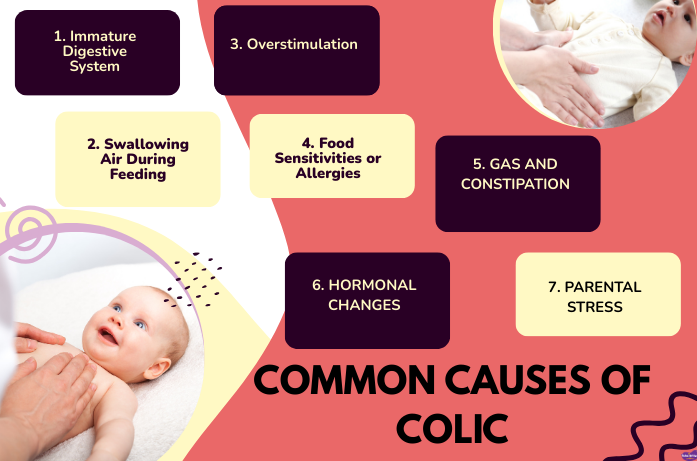
Common Causes of Colic in Babies
Although the exact cause of colic in babies is still not fully understood, it’s believed that a few common factors may play a role. Let’s take a gentle look at some of the most likely reasons behind colic.
1. Immature Digestive System
One of the most common reasons behind colic in babies is a baby’s still-developing digestive system. A newborn’s stomach and intestines are learning how to handle and digest milk, and this adjustment can sometimes cause gas, bloating, or mild discomfort. When babies feel uncomfortable and don’t yet know how to express it, crying becomes their way of communicating.
This is why colic often shows up during the weeks when babies start digesting milk more actively. Some babies may experience:
- Gas buildup in the stomach
- Difficulty passing gas
- A bloated or uncomfortable tummy
When this discomfort builds up, babies may cry more intensely, which can be very hard for parents to watch. The reassuring part is that as your baby’s digestive system matures, these symptoms usually ease on their own.
2. Swallowing Air During Feeding
Another common cause of colic in babies is when babies swallow air while feeding. This can happen if they feed too quickly, if the nipple flow is fast, or if they’re already upset during a feed.
When air gets trapped in the stomach, it can cause gas and discomfort, making babies fussy after feeding. Gently burping your baby after each feed can often help release this trapped air and ease their discomfort.
3. Overstimulation
Newborns are very sensitive to their surroundings. Loud noises, bright lights, or too much handling and play can easily overwhelm them. When a baby becomes overstimulated, they can get fussy and cry, which is sometimes mistaken for colic.
Here are a few simple ways to help your baby stay calm:
- Keep the environment quiet and peaceful
- Use soft lighting and gentle, soothing sounds
- Avoid overly stimulating toys or activities that might tire your baby
4. Food Sensitivities or Allergies
Sometimes, babies may be sensitive to something in their diet. For breastfed babies, certain foods in the mother’s diet, like dairy, caffeine, or spicy foods, can cause discomfort. For formula-fed babies, sensitivities to ingredients like lactose or cow’s milk protein may lead to colic-like symptoms.
If you suspect this, you can try:
- Adjusting your diet if you’re breastfeeding and avoiding potential trigger foods
- Switching to a formula made for sensitive tummies, such as hypoallergenic or lactose-free options
5. Gas and Constipation
Gas and constipation can make babies uncomfortable and fussy. Signs of constipation may include straining, pulling their legs up to the belly, or having hard, infrequent stools.
To help your baby:
- Give gentle tummy massages
- Move their legs in a bicycle motion to relieve gas
- Consult your pediatrician if constipation persists
According to the Mayo Clinic, mild gastrointestinal issues like gas and constipation often cause discomfort that may trigger colicky behavior in babies.
6. Hormonal Changes
Hormonal changes in both the baby and mother may contribute to colic. A baby’s nervous system and digestive tract are still maturing, which can lead to temporary discomfort and crying. Over time, as the baby’s body adjusts, these episodes usually decrease.
7. Parental Stress
While colic isn’t caused by parental stress, feeling overwhelmed can make a baby’s crying feel harder to handle. This stress can affect both parent and baby.
To cope:
- Take short breaks and let a trusted adult care for the baby
- Seek support from a partner, family member, or counselor
- Practice self-care and relaxation to manage stress
The NHS outlines common factors such as gas, an immature digestive system, or overstimulation as potential causes for colic, though the exact cause is still under research.
When to Seek Help
In most cases, colic eases on its own by the time your baby is 3 to 4 months old, but this period can still be very challenging for both you and your little one. If your baby’s crying is intense, persistent, or accompanied by symptoms like fever, vomiting, or diarrhea, it’s important to consult your pediatrician.
A pediatrician can properly assess your baby’s health and guide you toward the best ways to soothe them and improve their comfort. Remember, seeking help is completely normal and can bring relief, not just for your baby, but for you as well.
Tips for Soothing a Colicky Baby
While there’s no cure for colic in babies, there are several gentle ways you can help comfort your baby during their fussy periods:
1. Swaddle Your Baby
Wrapping your baby snugly (but not too tight) can provide a sense of security, similar to the warmth and comfort of the womb.
2. Use Gentle Motion
Rocking, swaying, or a gentle baby swing can help soothe your little one and may ease gas or tummy discomfort.
3. Try Soft Sounds or White Noise
Soft, continuous sounds, like a white noise machine, hair dryer, or vacuum, can be surprisingly comforting. These noises resemble what babies hear in the womb and can help them feel calmer.
4. Offer a Pacifier
Sucking on a pacifier can help some babies self-soothe, which may help calm them when they are upset.
5. Try a Warm Bath
A warm bath can provide comfort and relaxation, especially if your baby is gassy or dealing with abdominal discomfort.
Remember, every baby is different, what works for one may not work for another. Patience, calmness, and gentle care go a long way in helping your baby feel safe and comforted.
Frequently Asked Questions About Baby Colic
Q1: When does baby colic usually start?
Colic in infants typically begins around 2–3 weeks of age and often peaks at 6–8 weeks. Early recognition can help parents manage symptoms more effectively.
Q2: How long does colic last in babies?
Most babies outgrow colic by 3–4 months of age. Symptoms gradually improve as the baby’s digestive system matures.
Q3: Is colic harmful to my baby?
No, colic is temporary and not harmful. It doesn’t affect your baby’s overall growth, development, or long-term health.
Q4: Can colic in babies be prevented?
There’s no guaranteed way to prevent colic. However, strategies like gentle feeding, frequent burping, and reducing overstimulation can help minimize discomfort and soothe your baby.
Final Thoughts
While colic in babies can be tough on both you and your baby, remember that it is typically a phase that will pass. The crying, although distressing, is usually a sign that your baby’s body is adjusting and developing as it should. With time and patience, your baby will begin to outgrow this period of excessive crying.
If you’re struggling with your baby’s colic, don’t hesitate to seek support from healthcare professionals or your pediatrician. You’re not alone in this journey, and there are ways to help your baby through this challenging time.
Parenting can be overwhelming, especially with colicky babies. Explore more gentle, expert-backed tips for newborn care, sleep, and soothing techniques at Tales of Tots, where every small moment matters.
Disclaimer
This article is for informational purposes only and should not replace professional medical advice. If you have concerns about your baby’s health, crying, or colic, always consult with your pediatrician for guidance and support.