
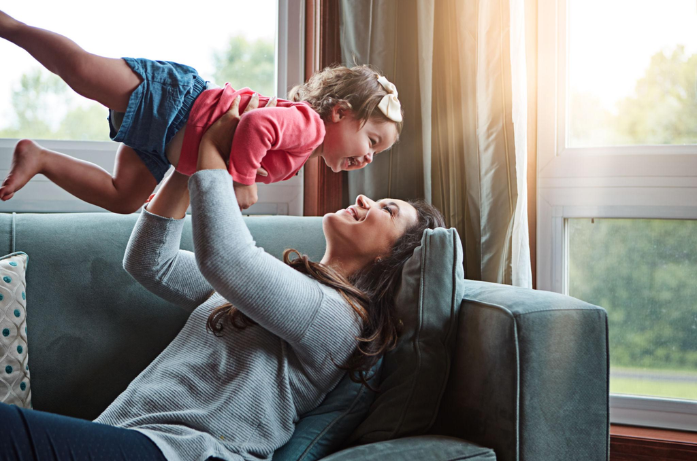
Watching your child grow brings so many little surprises. One day, they reach for your finger. Later, they point at a dog, build a crooked tower, or tell you why a friend made them sad.
These moments may look different, but each tells you something about your child’s development.
When parents search for the stages of child development, they often find age groups such as infancy, toddlerhood, and preschool. Those categories help explain when changes commonly happen. But understanding what is developing can make everyday parenting clearer too.
Your child is learning to move, communicate, think, connect with others, and understand feelings. These skills influence one another, and they do not always develop at the same speed.
In this guide, we’ll explore physical, language, cognitive, social, and emotional development, with practical ways to support each area and guidance on when to ask for help.
You don’t need to turn every moment into a lesson, mama. You can notice your child’s progress, enjoy your time together, and seek support when something concerns you.
Understanding the Stages of Child Development
Child development describes how children gain abilities as they grow. It includes much more than getting taller or reaching a birthday.
Learning to hold a spoon is development. Understanding a simple request is development. Finding a different way to fit a puzzle piece, inviting someone to play, and naming a feeling are development too.
For this guide, we’ll look at five connected areas:
| Development area | What it involves | Everyday example |
|---|---|---|
| Physical | Body growth, movement, coordination, and hand skills | Reaching for a toy or drawing with a crayon |
| Language | Understanding and expressing messages | Pointing, using words, or following a request |
| Cognitive | Thinking, learning, remembering, and solving problems | Sorting objects or working out how a toy functions |
| Social | Interacting and building relationships | Taking turns or joining a game |
| Emotional | Recognizing feelings and learning to manage them | Asking for comfort or describing frustration |
Different resources group these areas differently. For example, social and emotional development are often discussed together. These five areas are developmental domains, rather than five age stages that children complete one after another.
1. Physical Development: Learning to Move and Use the Body
Physical development includes body growth and the skills children use to move through their surroundings and handle objects.
Think about a child reaching for a ball. They need to notice it, coordinate their arm, open their hand, and grasp it. What looks like a small action involves several developing abilities.
Gross Motor Skills
Gross motor skills use larger muscles and involve movements such as sitting, walking, running, and jumping.
Fine Motor Skills
Fine motor skills involve smaller, more precise movements, such as picking up objects, turning pages, using a spoon, and drawing.
The American Academy of Pediatrics explains these differences in its guide to physical development and motor milestones.
How to Support Physical Development
Make room for safe movement and hands-on play. An infant might enjoy reaching for a suitable toy during supervised floor play. A toddler might practise rolling a large ball. An older child might enjoy drawing, dancing, or playground activities suited to their abilities.
Choose materials that match your child’s age and avoid small objects that could be choking hazards.
Let your child try manageable tasks, such as turning a book page or feeding themselves with an appropriate utensil. Offer help when needed without making every attempt a performance.
Try this: Put a few large, age-appropriate blocks in a container and invite your child to take them out and put them back. Keep the activity playful rather than counting how many they can manage.
2. Language Development: Understanding and Being Understood
Language development involves both understanding messages and expressing them. Communication begins before clear spoken words appear.
A baby’s sounds, a toddler’s pointing, and a child’s conversation can all be parts of communication.
Receptive Language
Receptive language means understanding language, such as recognizing familiar words or understanding a request.
Expressive Language
Expressive language means communicating a message through words, gestures, signs, or other communication methods.
Speech is related to language, but it specifically involves producing spoken sounds. A child may need help with speech, language, or both.
The NIDCD’s speech and language development guide explains these distinctions and provides age-related information. It also describes how hearing assessment can be part of evaluating communication concerns.
How to Support Language Development
Talk during ordinary routines. You might say, “Your shoes are by the door,” or “We’re washing the red cup.” Pause to give your child an opportunity to respond in their own way.
Share books without treating every page as a quiz. Describe a picture, follow what catches your child’s attention, and enjoy familiar stories together.
When your child uses a word, you can gently add to it. If they say “dog,” you might respond, “Yes, a little dog!” They do not need to repeat the longer phrase for the interaction to be worthwhile.
Try this: During snack time, name two available choices and let your child communicate their preference through a look, gesture, sign, or word. Respond to their message without insisting on perfect pronunciation.
If you are concerned about your child’s understanding, speech, or hearing, discuss it with their healthcare provider rather than relying only on home activities.
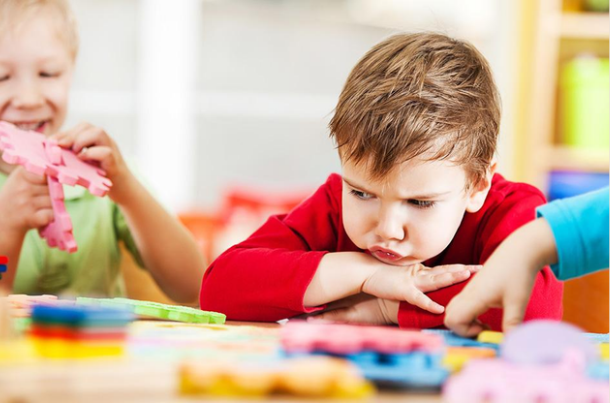
3. Cognitive Development: Thinking, Learning, and Solving Problems
Cognitive development involves how children explore information, remember experiences, and make sense of their surroundings.
It is broader than knowing letters or numbers. A child figuring out how to open a toy container is thinking. So is a child sorting socks or inventing a pretend shop.
What Cognitive Growth Can Look Like
Children gradually develop skills such as remembering, comparing, noticing patterns, understanding cause and effect, and solving problems.
Pretend play offers another window into thinking. A cardboard box may become a bus, or a toy animal may become a patient in an imaginary clinic.
How to Support Cognitive Development
Offer opportunities to explore with age-appropriate puzzles, blocks, books, and everyday objects used safely.
Sometimes wait briefly before solving a problem for your child. If a puzzle piece does not fit, you could ask, “What happens if we turn it?” Then offer enough help to keep the experience manageable.
Make space for their ideas too. A pretend game does not need to follow an adult’s storyline.
Try this: Invite your child to sort large objects by a visible feature, such as colour. Then ask whether they can find another way to group them. Younger children may simply explore the materials, and that can be enjoyable too.
4. Social Development: Building Relationships With Others
Social development involves how children interact, participate, and build relationships.
It does not mean every child must become outgoing. Children can have different preferences for company, group activities, and quiet time.
Social skills include learning how to join play, take turns, communicate needs, and work through disagreements.
Sharing and Cooperation Take Practice
Playing near another child and playing together are different experiences. As children grow, games may involve more shared ideas and cooperation.
Even when children are learning these skills, they may still need adult help during conflicts.
How to Support Social Development
Start with manageable opportunities to interact. One familiar playmate or a simple family game may be easier to enjoy than a busy group.
Model useful phrases, such as “Can I have a turn?” or “I’m still using this.” If your child communicates differently, help them make their needs understood in a way that works for them.
Guide disagreements calmly. You can acknowledge that two children want the same toy while helping them choose a practical next step.
Try this: Take turns adding a block to a shared tower. Use short comments such as “Your turn” and “My turn,” and finish before the activity becomes frustrating.

5. Emotional Development: Understanding Feelings and Finding Support
Emotional development involves recognizing feelings, expressing them, and gradually learning ways to manage them.
Your child may feel disappointed long before they can explain why. They may understand a rule while still finding it difficult to stay calm when the rule interrupts something they enjoy.
Feelings and Behaviour Need Different Responses
You can accept a feeling while setting a boundary around behaviour.
For example: “You’re angry because playtime ended. I won’t let you hit. I’m here to help.”
The AAP’s guide to emotional development in preschoolers explores developing feelings, confidence, and awareness of other people’s emotions.
How to Support Emotional Development
Name feelings in simple language. “That was disappointing,” may help your child connect a word with an experience.
When they are overwhelmed, keep your response calm and brief where possible. You can discuss what happened and practise another response once they are ready.
Offer comfort without demanding that they stop feeling upset immediately. Some children want closeness; others appreciate a little space with an adult nearby.
Try this: While reading a story, notice a character’s expression and wonder aloud, “They look worried. What might help?” Keep it conversational, with room for different answers.
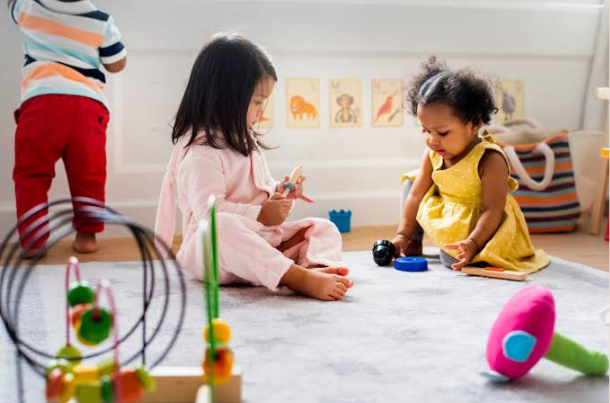
How the Stages of Child Development Connect Across Different Areas
A single activity can involve several areas at once.
When your child builds a tower with someone else, they may use hand coordination, plan where blocks belong, ask for a piece, negotiate turns, and cope when the tower falls.
That is physical, cognitive, language, social, and emotional development within one ordinary game.
The AAP’s Power of Play resources explain how play supports multiple developmental skills and relationships.
You do not need five separate lessons each day. Shared routines and play can offer opportunities to practise several skills together.
Understanding Milestones Without Constant Comparison
Developmental milestones help parents notice how children are progressing. They are useful for conversations with healthcare professionals, rather than for ranking children against one another.
A child may show different strengths across different areas. Still, individual variation does not mean every delay should be dismissed.
The CDC’s developmental milestone resources provide age-specific checklists for young children. These help with monitoring; they do not replace a professional assessment.
Keep brief notes about skills you observe and questions you want to ask. Concrete examples are often more useful than a general feeling that your child is “behind.”
When Should You Talk to a Pediatrician?
Contact your child’s healthcare provider if your child is missing expected milestones, loses skills they previously had, or you have concerns about their development.
Describe what you have noticed, when it started, and whether it affects daily activities. Ask whether developmental screening or a further evaluation is appropriate.
The AAP recommends standardized general developmental screening at 9, 18, and 30 months, and autism screening at 18 and 24 months. Screening should also happen when concerns arise; families do not need to wait for a scheduled screening age.
Seeking guidance is a way to understand your child’s needs. A developmental difficulty is not evidence that you have failed as a parent.
FAQs
1. What are the five main areas of child development?
2. Are developmental areas the same as age stages?
3. Can children develop differently across these areas?
4. How can I support development at home?
5. Does a quiet child necessarily have a language delay?
6. Does my child need expensive educational toys?
7. Should I wait if my child loses a skill?
Final Thoughts: Supporting the Whole Child
Understanding the stages of child development becomes more useful when you can see the different abilities growing within them.
Your child is learning how to move through the world, make themselves understood, solve problems, build relationships, and live with feelings that can sometimes seem very big.
Some moments will be easy to celebrate. Others will bring questions, frustration, or a need for extra support.
Make room for both. Enjoy the small discoveries, keep offering manageable opportunities to practise, and reach out when something concerns you.
And mama, remember that supporting development does not mean filling every hour with activities. A conversation over breakfast, a shared book, or a patient response after a difficult moment can all be part of caring for your growing child.
For more practical parenting ideas and gentle encouragement, explore Tales of Tots and find support for the everyday moments of raising your little one.
Disclaimer
This article is for general educational and parenting information only and does not replace individualized medical, developmental, speech-language, hearing, or educational advice. Children develop at different rates, but concerns about missed milestones should not be dismissed simply because development varies. Contact your child’s healthcare provider if your child is missing expected milestones, loses skills they previously had, or you have concerns about movement, communication, learning, social interaction, or emotional development. Ask whether developmental screening or further evaluation may be appropriate.
About the Author
Geeta Yogi writes warm, practical parenting content about child development, learning, communication, emotions, behavior, milestones, and everyday family life. She focuses on clear, supportive guidance that helps parents understand their child’s growing abilities while recognizing when professional developmental support may be helpful.