Introducing solid foods for babies is one of those beautiful milestones that feels both exciting and a little overwhelming. For months, your baby has been happily nourished with just breast milk, and then suddenly, it’s time to think about first bites, tiny spoons, and messy mealtimes. It can feel like everything is changing all at once.
You might find yourself hearing questions from family and friends: Have you started solids yet? And along with the excitement, there may be doubts too. When is the right time? Which baby food are safe? How much should your baby actually eat? And perhaps the biggest question of all, am I doing this the right way?
If these thoughts have crossed your mind, please know you’re not alone. Every parent feels a mix of curiosity, anticipation, and uncertainty during this stage. The good news is that introducing solids doesn’t have to be stressful or complicated.
This guide is here to gently support you through the process, with simple, clear information and practical guidance you can trust. Whether you’re just starting to explore the idea or already preparing that first little bowl, you’ll find reassurance, helpful tips, and confidence to make this journey enjoyable for both you and your baby.
When Should Start Solid Foods for Babies?
Most babies are ready to begin solid foods for babies at around 6 months of age. This stage is important because your baby’s digestive system, physical development, and nutritional needs are all evolving. While breast milk or formula continues to be the main source of nutrition, babies begin to require additional nutrients that solids can provide.
That said, readiness isn’t based on age alone. Every baby develops at their own pace, so it’s just as important to look for developmental signs rather than focusing only on the calendar.
Signs Your Baby May Be Ready
Here are some gentle signs to watch for:
- Your baby can sit with minimal support
- They have good head and neck control
- They show interest in food (watching you eat, reaching for your plate)
- The tongue-thrust reflex has reduced (they don’t automatically push food out)
- They can bring objects or food to their mouth
If you notice these signs, your baby may be ready to start exploring solids alongside breast milk or formula.
Remember, this isn’t a race. Every child grows and develops differently. Trust your baby’s cues, take it step by step, and approach this new phase with patience and confidence.
Important Reminder: Milk Still Comes First
As exciting as starting solids foods for babies can be, it’s important to remember that during the first year, breast milk or formula remains your baby’s main source of nutrition. Solid foods do not replace milk right away, and that’s completely normal.
In these early months of introducing solids:
- Breast milk or formula continues to provide essential nutrients and calories
- Solid foods are mainly for learning new tastes, textures, and eating skills
- Mealtimes are more about exploration than quantity
Your baby may only eat a few small spoonfuls at first, and that’s perfectly okay. This stage is about helping them discover food, practice chewing and swallowing, and build a healthy relationship with eating.
Think of solids as a gentle addition to milk, not a replacement. With time, your baby’s intake of solids will naturally increase. Until then, follow their cues, keep offering milk as usual, and enjoy this new learning phase together.
Best First Foods for Babies
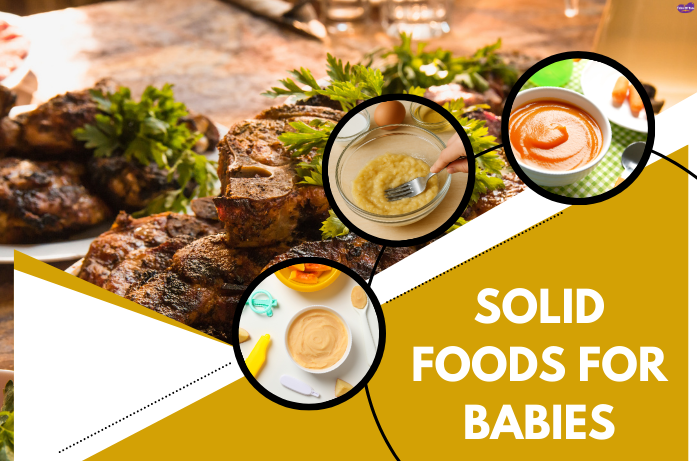
When introducing your baby to solids, keeping it simple is the key. The goal is to offer foods that are soft, easy to digest, and gentle on their tiny stomachs. Start with foods like mashed or pureed banana, naturally sweet and easy to digest, or steamed and pureed carrot, rich in vitamin A for healthy eyes and skin. According to Johns Hopkins Medicine, these are great first foods to introduce. At this stage, mealtimes are more about exploration, tasting, and learning, rather than filling up.
1. Single-Ingredient Purees
Start with one food at a time and give it for a few days before introducing something new. This helps you watch for any signs of allergies or sensitivities.
Good first options include:
- Mashed or pureed banana, naturally sweet and easy to digest
- Steamed and pureed carrot, rich in vitamin A for healthy eyes and skin
- Pureed pumpkin or sweet potato, gentle, creamy, and full of nutrients
- Apple or pear puree, mild, sweet, and easy on the tummy
- Plain rice cereal or oatmeal (iron-fortified), smooth and digestible
Tip: Start with very small spoonfuls (1–2 teaspoons) and gradually increase as your baby gets comfortable.
2. Iron-Rich Foods (Very Important)
Around 6 months, babies need extra iron to support brain development and healthy growth, because milk alone may not provide enough. Iron-rich options like iron-fortified cereals or mashed lentils are perfect for this stage, as recommended by KidsHealth. Additionally, pairing these foods with a little vitamin C, such as mashed fruit, helps your baby absorb iron better.
Iron-rich options:
- Iron-fortified cereals (rice, oatmeal)
- Mashed lentils or beans, cook well and puree for easy digestion
- Well-cooked, finely pureed meats (chicken, turkey, or beef)
Tip: Pair iron-rich plant foods with a little vitamin C (like mashed fruit) to help your baby absorb iron better.
A Gentle Reminder
- Introduce new foods one at a time and wait 3–5 days before trying another.
- Observe your baby for any reactions like rash, vomiting, or diarrhea, contact your pediatrician if anything unusual occurs.
- Keep textures smooth at first, then gradually make them thicker as your baby learns to chew and swallow.
Starting solids is a wonderful journey of discovery, for your baby and for you. Approach it with patience, enjoy the tiny tastes, and celebrate each new bite as a step toward healthy eating habits!
How to Introduce Solid Foods Safely
Introducing your baby to solids is an exciting step, but it’s important to do it gently and safely. Start with just 1–2 teaspoons once a day, and gradually increase the quantity and frequency as your baby becomes comfortable. This gradual approach aligns with the recommendations from Mayo Clinic’s Guide to Starting Your Baby on Solid Foods. Every baby is unique, so a slow and mindful approach helps make mealtimes enjoyable and stress-free for both of you.
1. Start Slow
- Begin with just 1–2 teaspoons once a day.
- Gradually increase the quantity and frequency as your baby becomes comfortable.
Tip: Let your baby set the pace, there’s no rush. Even a few bites at a time are enough in the beginning.
2. One Food at a Time
Introduce one new food at a time, waiting 3–5 days before offering another. This allows you to carefully watch for any allergic reactions, such as:
- Rash
- Vomiting
- Diarrhea
- Swelling
If you notice any reaction, stop the food immediately and contact your pediatrician for guidance.
3. Pay Attention to Texture
- Start with smooth purees that are easy to swallow.
- As your baby gains control over chewing and swallowing, gradually move to thicker textures.
- By around 8–9 months, most babies can handle mashed foods and soft finger foods.
Tip: Let your baby explore textures at their own pace. Playing with food and self-feeding are important parts of learning to eat.
With patience, observation, and a gentle approach, introducing solids can become a fun, stress-free journey for both you and your baby. Celebrate every little bite, it’s a step toward healthy eating habits and new discoveries!
Baby-Led Weaning vs Spoon-Feeding
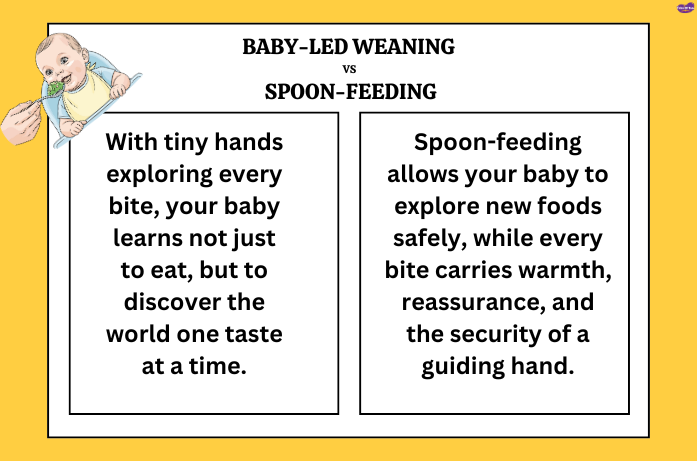
When it comes to introducing solid foods for babies, there is no single right way. Every baby is unique, and the best approach is the one that works for your family and your baby’s pace of learning.
Spoon-Feeding
- Parents feed the baby purees with a spoon.
- Makes it easier to track how much your baby is eating.
- Works well for babies who need extra support or guidance at mealtimes.
Baby-Led Weaning (BLW)
- The baby feeds themselves using soft finger foods.
- Encourages independence and self-confidence.
- Helps the baby develop chewing skills and hand-eye coordination.
A Gentle Approach
Many parents find a mix of spoon-feeding and self-feeding works best. It lets your baby explore food at their own pace while getting enough nutrition.
Tip: Follow your baby’s cues and enjoy each small step, whether a spoonful of puree or a tiny finger-food bite!
Foods to Avoid in the First Year
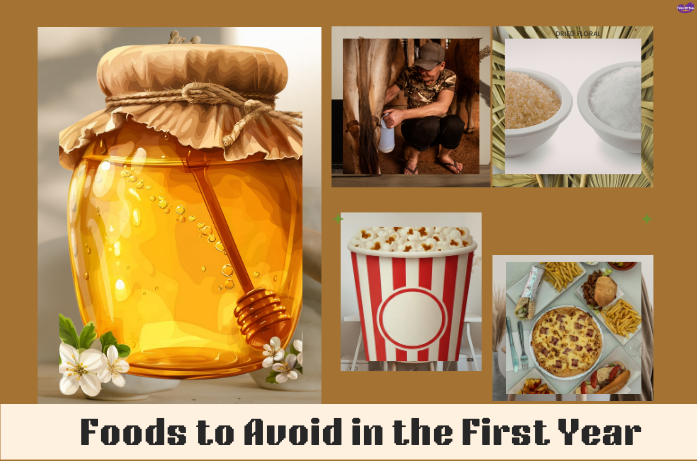
Some foods can be unsafe for babies under 1 year:
- Honey (risk of botulism)
- Cow’s milk as a main drink
- Added salt or sugar
- Hard or small foods (nuts, grapes, popcorn)
- Fried or processed foods
Tip: Always offer soft, small, age-appropriate foods and supervise mealtimes.
Common Concerns Parents Have
Introducing solids brings up many common questions, and it’s normal to feel unsure. If your baby rejects new foods, don’t worry. As CDC notes, babies often need 10-15 exposures to a new food before they accept it. Stay patient and keep offering variety without forcing them to eat.
My baby eats very little.
This is normal. At first, babies may only take a few bites. Exploration and learning to eat matter more than quantity.
My baby makes faces or spits food out.
Totally normal. Babies often need 10–15 exposures to a new food before they accept it. Patience is key.
What about water?
After 6 months, small sips of water in a cup are fine. But milk remains the primary drink during the first year.
Tip: Trust your baby’s cues, go slow, and remember that learning to eat is a journey, every little step counts!
Creating a Healthy Mealtime Routine
Building a positive mealtime routine helps your baby enjoy food and develop healthy eating habits from the start.
- Sit with your baby during meals to offer comfort and guidance
- Eat together whenever possible, babies learn by watching you
- Keep mealtimes calm and pressure-free, avoid forcing bites
- Let your baby explore and get messy, it’s part of learning
Tip: Early positive experiences with food make mealtimes enjoyable and set the foundation for a lifetime of healthy habits!
Progressing with Solids: What Comes Next?
As your baby grows, solid foods for babies journey naturally evolves. Every child progresses at their own pace, so use these as gentle guidelines rather than strict rules.
6–7 Months
- Offer smooth purees
- Start with once-daily meals
8–9 Months
- Introduce thicker textures
- Offer soft finger foods
- Increase to 2–3 meals per day
10–12 Months
- Begin family foods that are soft and lightly seasoned
- Encourage self-feeding
- Introduce a variety of tastes and textures
Tip: Celebrate each step of progress. The goal is to help your baby learn, explore, and enjoy food, not rush through stages!
Frequently Asked Questions (FAQs)
1. When should I start introducing solid foods to my baby?
Most babies are ready around 6 months of age, but readiness is based on developmental signs too, such as sitting with support, good head control, and showing interest in food. Always follow your baby’s cues.
2. How much solid food should my baby eat at first?
Initially, 1–2 teaspoons once a day is enough. The focus is on exploration, tasting, and learning, not quantity. Gradually increase as your baby gets comfortable.
3. Can I give my baby water along with solids?
Yes, small sips of water are fine after 6 months. However, milk (breast milk or formula) remains the primary source of nutrition during the first year.
4. What are the best first foods for babies?
Start with soft, single-ingredient foods like mashed banana, pureed carrot, pumpkin, sweet potato, apple, pear, and iron-fortified rice cereal. Introduce one food at a time and wait 3–5 days before trying another.
5. Should I use baby-led weaning or spoon-feeding?
Both approaches are safe. Spoon-feeding works well for early exposure to purees, while baby-led weaning (BLW) encourages self-feeding, independence, and motor skill development. Many parents use a mix of both methods.
6. Which foods should I avoid in the first year?
Avoid honey, cow’s milk as a main drink, added sugar or salt, hard foods (nuts, grapes, popcorn), and fried/processed foods. Always supervise mealtimes and offer age-appropriate, soft foods.
7. What if my baby refuses a new food?
It’s normal for babies to reject new tastes initially. Repeated exposure (10–15 times) often helps. Stay patient, offer variety, and keep mealtimes stress-free.
Final Thoughts
Introducing solid foods for babies is not a race. Some days your baby will eat eagerly, other days they may refuse everything, and that’s okay. Trust your baby, stay patient, and focus on creating a positive relationship with food.
Remember, the goal in the first year is not perfect eating, it’s learning, exploring, and growing.
At Tales of Tots, we believe every small milestone matters. Starting solids is one of them, and you’re doing a great job navigating it.
Disclaimer
This article is for informational purposes only and does not replace professional medical advice. Always consult your pediatrician before introducing solid foods, especially if your baby was born prematurely or has health concerns.