Bringing a newborn home is a beautiful and emotional moment, filled with joy, love, and a fair share of new challenges. In those early days, one of the most common concerns for parents is understanding their newborn sleep patterns.
Newborns sleep a lot, but their sleep doesn’t follow a predictable schedule. They wake often, sleep in short stretches, and may rest at times that feel completely unexpected. This can be tiring, but it’s also completely normal. Knowing what to expect can be reassuring and helps parents feel more confident during this tender stage.
In this article, we’ll gently walk through typical newborn sleep cycles, share simple tips to create a calm and comfortable sleep environment, and help you understand which sleep behaviors are perfectly normal, so you can worry a little less and enjoy these precious early moments a little more.
Understanding Newborn Sleep Patterns in the First Few Months
Newborns spend a large part of their day sleeping, usually around 14 to 17 hours, and sometimes even a little more. But this sleep doesn’t come in long, peaceful stretches. Instead, it happens in short naps spread across the day and night.
Unlike adults, newborns don’t yet understand the difference between day and night. They wake often, usually every few hours, and most of the time it’s because they’re hungry. Their tiny stomachs can’t hold much, so they need to feed frequently.
In the early weeks, waking every 2 to 3 hours is completely normal. As your baby grows, they’re able to stay full for longer, which means those sleep stretches slowly begin to lengthen. It’s a gradual process, one that unfolds at your baby’s own pace, and it’s all part of healthy newborn sleep development.
Newborn Sleep Cycles
Newborn sleep looks very different from adult sleep. Instead of long, deep stretches, babies sleep in shorter cycles. While an adult sleep cycle lasts about 90 minutes, a newborn sleep cycle is much shorter, around 50 minutes.
Each time your baby sleeps, they move through two types of sleep: active sleep (REM) and quiet sleep. This is why your baby may seem deeply asleep one moment and then start moving or making small sounds the next. It’s completely normal and simply part of how their growing body and brain develop.
Active Sleep (REM Sleep)
During this stage, your baby may move, make soft sounds, or gently twitch. It’s completely normal and plays an important role in brain development. Even if your baby looks active, they’re still resting comfortably.
Quiet Sleep
During quiet sleep, your baby’s body becomes calm and their breathing slows down. This is a restorative phase, helping their little body rest and recharge. Babies are more sensitive to sounds or movement during this stage, so it’s normal if their sleep seems light or gets interrupted often. It’s all part of healthy growth.
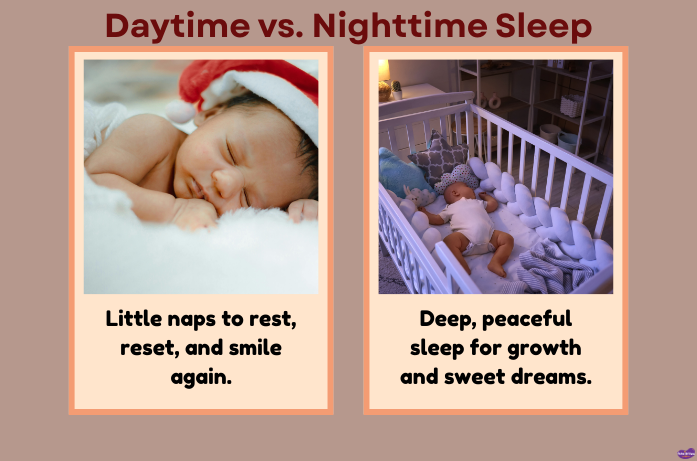
Daytime vs. Nighttime Sleep
- In the early weeks, newborns can’t tell day from night.
- They sleep both during the day and night, often in short bursts.
- Their circadian rhythm (internal biological clock) isn’t fully developed yet.
- By around 3–4 months, you may notice their nighttime sleep gradually getting longer.
- In the first few months, frequent, fragmented sleep is completely normal, so there’s no need to worry.
Tips for Helping Your Newborn Sleep
While you can’t control everything about your newborn’s sleep, there are a few simple things you can do to make them comfortable and encourage longer stretches of rest:
1. Create a Sleep-Friendly Environment
- Dim the lights: Keep the room dark during night feedings and naps so your baby begins to associate darkness with sleep.
- Soft white noise: Some babies sleep better with gentle background sounds, like a white noise machine or a soft fan.
- Comfortable temperature: Keep the room around 68–72°F and dress your baby in soft, breathable clothing to avoid overheating.
2. Establish a Simple Sleep Routine
Even a small routine can signal that it’s time to wind down. For example: a warm bath, dimmed lights, and gentle cuddling before putting your baby down for the night.
3. Encourage Daytime Sleep
Let your baby nap during the day, but avoid very long sleeps late in the afternoon or evening, as this can interfere with nighttime sleep.
When Should You Be Concerned About Your Newborn’s Sleep?
While the sleep patterns mentioned above are typical for most newborns, some things may still be cause for concern.
1. Inconsistent Sleep (Extreme Disruptions)
If your newborn is constantly agitated or struggling to settle into sleep, it could indicate discomfort. Check for common causes such as:
- Hunger
- A wet diaper
- Reflux
- Illness
If your baby is showing signs of discomfort, and nothing seems to soothe them, it’s important to consult your pediatrician.
2. Excessive Sleepiness or Lethargy
If your newborn is sleeping much more than usual, is hard to wake for feeds, or seems unusually weak or inactive, it’s important to contact your doctor right away. This could be a sign that something isn’t quite right and needs medical attention.
3. Trouble Breathing or Disturbed Sleep
Newborns sometimes have uneven breathing, and that can be normal. But if your baby stops breathing for more than 20 seconds, or if their breathing during sleep seems clearly difficult or unusual, don’t ignore it. It’s important to seek medical advice right away to be safe.
Co-Sleeping vs. Independent Sleep
Many parents wonder if it’s okay to let their newborn sleep in the same bed with them. Co-sleeping can feel comforting for both parents and babies, especially during those early nights. However, safety always comes first.
The American Academy of Pediatrics (AAP) advises against bed-sharing because of the increased risk of suffocation, falls, and SIDS (Sudden Infant Death Syndrome). If parents do choose to co-sleep, it’s very important to follow strict safety guidelines.
A safer and widely recommended option is placing your baby in a bassinet or crib next to your bed. This keeps your baby close for nighttime feedings while providing them with a safe and secure sleep space.
What to Expect in the First Few Months
In the early weeks, it’s completely normal for your baby to wake every 2 to 3 hours for feeding, even though it can feel exhausting. As your baby grows, their sleep slowly becomes a little more predictable.
Here’s a general idea of what many parents notice over time:
- 1–2 months: Babies usually sleep around 14–17 hours a day, but they still wake often to eat.
- 3–4 months: Many babies begin sleeping for longer stretches at night, with fewer nighttime feedings.
- 5–6 months: By this age, some babies are able to sleep through the night, about 6–8 hours, without needing a feed.
Every baby is different, and progress doesn’t always follow a perfect timeline. If your baby wakes frequently or struggles to fall asleep, it may be due to hunger, growth spurts, or developmental changes, all of which are a normal part of growing up.
Frequently Asked Questions (FAQs)
1. Is it normal for newborns to wake every 2–3 hours at night?
Yes, this is completely normal. Newborns have small stomachs and need to feed frequently, which is why they wake often, even during the night.
2. Why does my newborn sleep more during the day than at night?
Newborns don’t yet have a developed day–night rhythm. This usually starts improving naturally around 3–4 months as their internal body clock develops.
3. Should I wake my newborn for feeds?
In the early weeks, yes, especially if your baby sleeps longer than 3–4 hours. Regular feeding supports healthy weight gain. Always follow your pediatrician’s guidance.
4. Is active sleep normal in newborns?
Absolutely. Newborns often move, twitch, or make sounds while
Final Thoughts
Newborn sleep patterns can be challenging, but rest assured, they evolve as your baby grows. Patience and understanding are key. Know that sleepless nights won’t last forever, and soon enough, you’ll find a rhythm that works for both you and your baby.
By providing a soothing environment, creating consistent bedtime routines, and understanding your baby’s unique sleep needs, you can make this precious time a little bit easier. And remember, if you’re ever in doubt about your baby’s sleep, your pediatrician is always the best source of guidance.
At Tales of Tots, we’re here to support you through every stage of parenthood with helpful advice, tips, and stories to guide you on this incredible journey.
Disclaimer
This article is for informational purposes only. If you have concerns about your baby’s sleep or health, please consult with your pediatrician for professional advice tailored to your specific situation.