By a fellow mama navigating the messy but magical journey of newborn life – for Tales of Tots
In the whirlwind of feeding, burping, and swaddling, there’s one thing that catches every new parent off guard — poop frequency. You’re staring at that tiny diaper wondering: “Is this normal?” Don’t worry. If you’ve just come back from your baby’s first doctor visit and you’re unsure whether your little one is pooping enough (or too much), you’re not alone.
What’s Normal for Newborn Poop?
Every baby is different, but there are some general patterns that pediatricians look for in those early weeks. Newborns typically pass their first stool — called meconium — within the first 24 to 48 hours after birth. It’s sticky, black, and tar-like. Totally normal and a sign that your baby’s digestive system is kicking into gear.
By day 3 to 5, their poop will usually start transitioning into a greenish-brown, then eventually to a mustard-yellow if breastfed, or a light brown/tan if formula-fed.
Typical Poop Frequency by Feeding Method
- Breastfed Newborns: May have a bowel movement after every feeding, especially in the first few weeks. However, it’s also normal for some breastfed babies to go several days without a bowel movement. [AAP Source]
- Formula-fed Newborns: Typically have 1 to 4 bowel movements per day. Their stools are usually firmer and may be tan to brown in color. [Healthline Source]
Remember, variations are normal. As long as your baby is feeding well, gaining weight, and seems comfortable, differences in poop frequency are usually not a cause for concern.
Understanding Baby Poop Colors and Consistency
Baby poop comes in a variety of colors and textures, each telling a story about your baby’s health. Here’s a helpful chart to guide you:
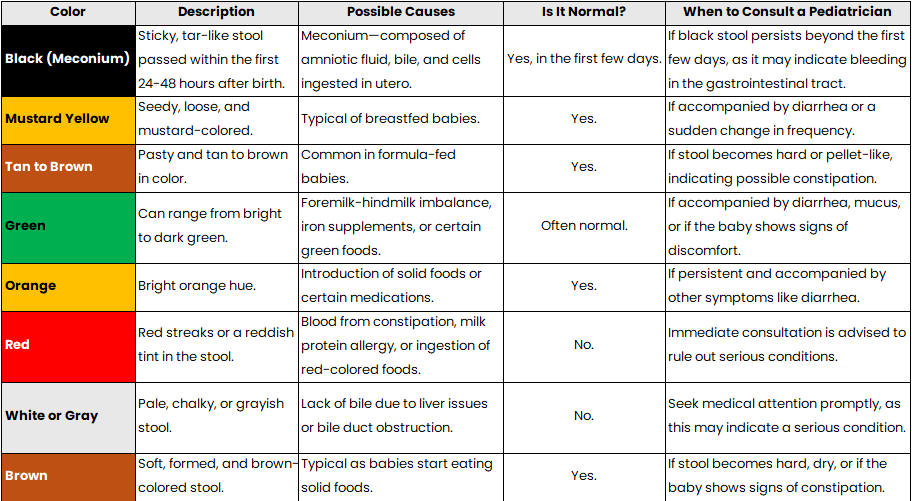
Consistency matters too. Breastfed babies often have soft, seedy stools, while formula-fed babies may have firmer, pasty stools. [Healthline Source]
When to Be Concerned
Though variations are normal, here are a few signs it’s time to call your pediatrician:
- No bowel movements for more than 3 days.
- Presence of blood or mucus in stools.
- Persistent diarrhea or very watery stools.
- Significant changes in feeding patterns or behavior.
- Stools that are white, gray, or black beyond the first few days. [Parents Source]
If you’re ever in doubt, trust your instincts. Pediatricians would rather get a call for peace of mind than miss something important.
Diaper Duty Tips for New Parents
Let’s face it — newborns go through 8–12 diapers a day. Here’s how to manage the madness:
- Have a stash: Keep at least 2–3 days’ worth of diapers ready.
- Use a barrier cream: Prevent diaper rash before it starts.
- Wipe front to back: Especially for baby girls to prevent infections.
- Track changes: Use an app or journal to note poop color and frequency.
Preventing and Managing Diaper Rash
Diaper rash is a common concern. Here’s how to prevent and treat it:
Prevention
- Change diapers promptly after soiling.
- Allow the baby’s skin to air out regularly.
- Use barrier creams containing zinc oxide.
- Choose diapers that are free from fragrances and dyes. [KidsHealth Source]
Management
- Clean the area gently with water; avoid wipes with alcohol.
- Apply a thick layer of diaper rash cream.
- Consult a pediatrician if the rash persists or worsens. [KidsHealth Source]
<img src=”https://www.verywellhealth.com/thmb/3X5pGZ6vY3Wk1Zz6u3Y8v1yZK9M
::contentReference[oaicite:45]{index=45}