Your baby’s first year is filled with small yet meaningful milestones, those first smiles, rolling over, sitting up, and discovering the world with wide-eyed curiosity. During this stage, toys for newborn and infants are more than simple entertainment. The best toys for first year support your baby’s natural desire to explore and help them learn new skills little by little. From reaching and holding to listening and watching movement, every experience plays a role in development. When toys are chosen with care and suited to your baby’s age, they encourage growth at a comfortable pace, turning everyday play into gentle learning moments that feel natural, joyful, and reassuring for both baby and parent.
You don’t need cupboards full of toys. A few well-chosen, age-appropriate ones are more than enough. Here’s a parent-friendly guide, broken down by age, to help you choose toys you can truly trust.
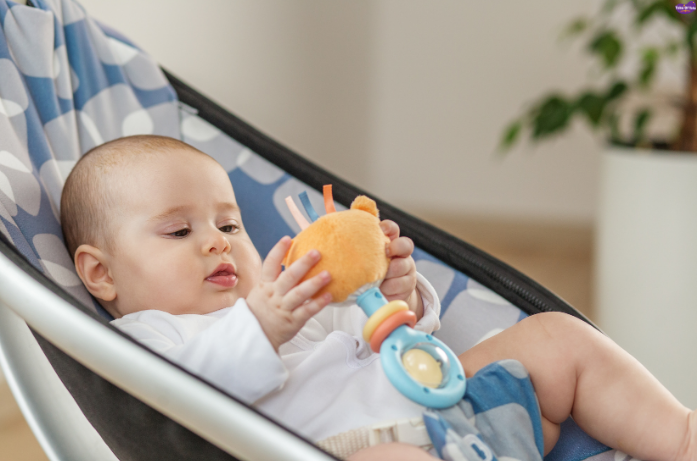
0–3 Months: Gentle Sensory Play
In the first few months, your baby is slowly discovering the world around them, learning to focus on shapes, react to sounds, and understand new sensations through touch. Every little experience helps them feel safe, curious, and connected.
Best toy choices:
• Soft rattles : These are lightweight and gentle, making them easy for tiny hands to hold. The soft sound grabs your baby’s attention and supports early listening and hand-eye coordination.
• High-contrast black-and-white toys : Newborns can see strong contrasts more clearly than bright colors. Black-and-white toys help develop focus and strengthen early visual skills.
• Soft cloth books : Made from fabric, these books are safe for babies to touch, squeeze, and even chew. They encourage sensory exploration and early curiosity.
• Tummy-time mats with mirrors : These mats make tummy time more engaging while helping strengthen neck, shoulder, and upper body muscles. The mirror encourages babies to lift their head and stay active longer.
Why they help:
These toys support early vision, hearing, and neck strength, without overstimulation.
The CDC explains that early sensory experiences, such as seeing high-contrast images and hearing gentle sounds, help build foundational brain connections in infancy.
Tip: Choose soft, lightweight toys your baby can grasp without effort.
According to the American Academy of Pediatrics (AAP), simple, age-appropriate toys that encourage interaction and exploration support healthy brain development during the first year.
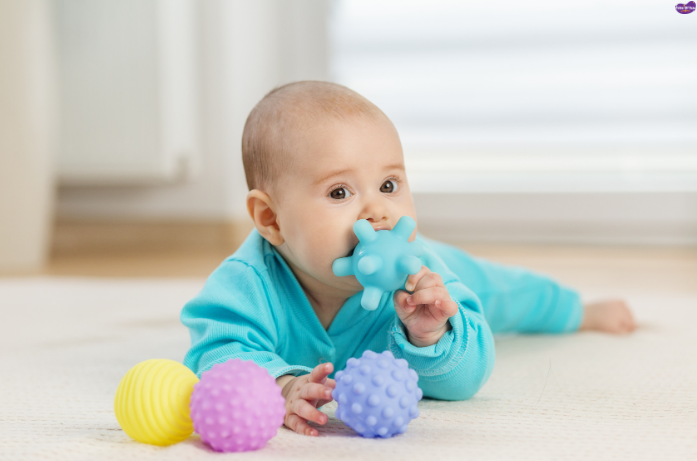
3–6 Months: Reaching, Grabbing & Teething
At this stage, your baby is eager to explore everything within reach, grabbing, squeezing, and usually bringing it straight to their mouth. This is why choosing the right toys for 6 month old babies is important, they support learning, curiosity, and provide comfort as teething begins.
Best toy choices:
• Silicone or rubber teething toys : Best teething toys for babies are soft yet durable and safe for chewing. They provide gentle pressure on sore gums, helping to soothe discomfort during teething.
• Crinkle toys : When squeezed, these toys make a light crinkling sound that captures your baby’s attention. They support early hearing skills and encourage active hand movement.
• Soft balls : Lightweight and easy to grasp, soft balls help babies practice holding, rolling, and passing, which builds hand-eye coordination and motor skills.
• Textured sensory toys : With different surfaces and patterns, these sensory toys for babies give babies new touch experiences, supporting sensory development and natural curiosity.
Why they help:
They strengthen hand-eye coordination and soothe sore gums during teething.
Tip: Always check toys are BPA-free and non-toxic.
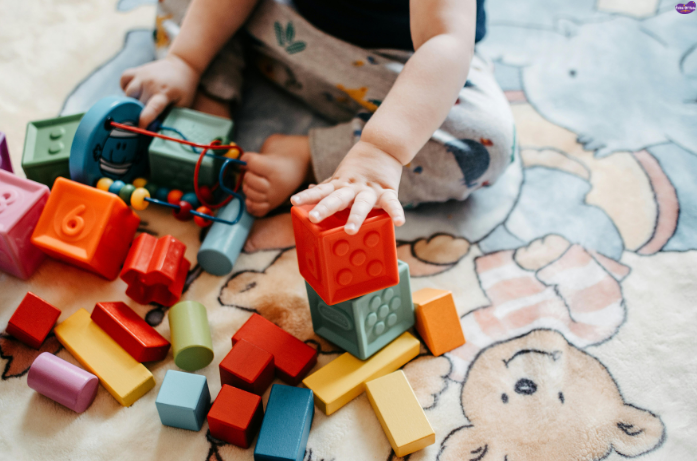
6–9 Months: Sitting & Exploring
At this stage, babies are naturally curious and love discovering how things work. They enjoy seeing the results of their actions, like stacking, pressing, or shaking toys, which helps them understand cause and effect while having fun.
Best toy choices:
• Stacking cups or rings : These toys help babies learn about size, order, and coordination. Stacking and arranging them in different ways builds fine motor skills and hand-eye coordination.
• Activity cubes : With spinning parts, doors, and buttons, activity cubes encourage problem-solving, exploration, and curiosity.
• Soft blocks : Lightweight and soft, these blocks are easy to grasp, stack, and knock over, helping develop motor skills and creative play.
• Musical toys with buttons : Pressing buttons to create sounds or music teaches cause and effect while also enhancing listening skills and responsiveness.
Why they help:
They improve fine motor skills, problem-solving, and curiosity.
Tip: Toys that can be used in more than one way grow with your baby.
The NHS recommends simple toys like stacking cups, blocks, and activity toys to help babies develop coordination, curiosity, and problem-solving skills.
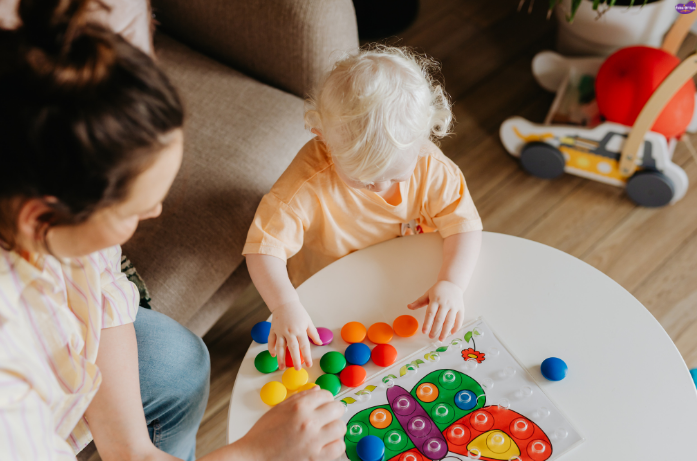
9–12 Months: Movement & Imitation
Around this age, your baby is full of energy and curiosity, learning to crawl, pull themselves up, and maybe even take those exciting first steps. Every movement is a new way to explore the world and build confidence.
Best toy choices:
• Push-and-pull toys : These toys help babies build balance and strengthen leg muscles as they move. Pushing or pulling them is fun and boosts confidence in walking.
• Baby walkers (used safely) : When used safely, baby walkers allow little ones to practice standing and taking steps, supporting balance and leg strength.
• Shape sorters : These toys help babies recognize shapes and colors. Placing blocks in the correct slots enhances problem-solving skills and hand-eye coordination.
• Board books with pictures : Thick, sturdy pages make these books easy for babies to hold and turn. Looking at pictures and colors supports early language and visual development.
Why they help:
They support balance, coordination, and early learning through imitation.
Tip: Avoid toys that move too fast or make loud, sudden noises.
What to Look for When Buying Toys for the First Year
Safe, non-toxic materials
No sharp edges or small parts
Easy to clean
Simple design (less is more!)
Age-appropriate labels
Remember: the best toys for toddlers and babies are those that encourage imagination, not overstimulation.
The U.S. Consumer Product Safety Commission advises choosing toys that are non-toxic, free from small parts, and appropriate for a baby’s age to reduce choking and injury risks.
Toys You Don’t Really Need
- Overly noisy electronic toys
- Toys with screens
- Very heavy or complicated toys
- Anything with loose strings or tiny detachable parts
Often, household items like bowls, spoons, and boxes are just as exciting!
FAQs for Parents
1. How many toys does a baby really need in the first year?
Only a few well-chosen toys. Babies benefit more from variety in play than quantity.
2. Are electronic toys good for babies?
Simple toys are better. Too much noise or light can overwhelm babies.
3. Is it okay if my baby prefers one toy?
Yes! Repeating play helps babies learn and feel secure.
4. When should I rotate toys?
Every 1–2 weeks is enough to keep things fresh without overstimulation.
5. Are wooden toys better than plastic ones?
Both are fine if they are safe, non-toxic, and age-appropriate.
Final Thoughts
The best toys for the first year are the ones that support your baby’s natural curiosity, without overwhelming them. Soft, safe, simple toys paired with your love, talk, and attention make the biggest difference.
Your baby doesn’t need more toys.
They need the right ones, and you.
Looking for more calm, practical parenting guidance like this?
Explore more baby care and development articles on Tales Of Tots, where parenting advice stays real, gentle, and parent-first.
Disclaimer
This article is for general informational purposes only. It does not replace professional medical or developmental advice. Always supervise playtime and consult your pediatrician if you have concerns about your baby’s development or toy safety.