School is not only a place where children read textbooks, complete worksheets, and prepare for examinations. It is also where they learn how to communicate, cooperate, solve problems, express themselves, and become more confident.
This is why activities are an important part of school life. A thoughtfully planned activity can make a lesson easier to understand while giving students an opportunity to use their knowledge in a practical way.
But what is the best activity for students in school?
There is no single activity that suits every child or every subject. However, collaborative project-based learning is one of the most beneficial choices because it combines learning, creativity, teamwork, communication, and problem-solving. Along with projects, students also benefit from reading, sports, art, science experiments, debates, educational games, and outdoor activities.
The best approach is to provide a balanced variety of activities that supports students academically, physically, socially, and emotionally.
Why Are School Activities Important?
Children do not all learn in the same way. Some understand a topic by reading about it, while others need to see an example, discuss the idea, or try it themselves.
School activities make learning more active. Instead of simply listening to information, students participate in the learning process. They may build something, solve a problem, perform a role, explain an idea, or work with classmates.
Along with making lessons more engaging, carefully chosen activities to improve memory and concentration in kids can support attention, recall, problem-solving, and other skills students use throughout the school day.
These experiences can help students:
- Understand difficult concepts more easily
- Remember information for longer
- Develop communication skills
- Learn how to work in a team
- Become more confident
- Discover their interests and talents
- Improve creativity and critical thinking
- Stay physically and mentally active
- Build positive relationships with classmates
Activities also make the school day more enjoyable. When students are interested and involved, they are more likely to pay attention and take responsibility for their learning.
What Is the Best Activity for Students in School?
One of the best activities for students is project-based group learning.
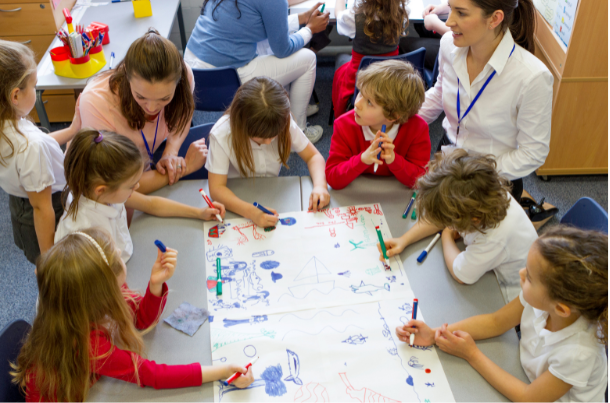
In this activity, students work individually or in small groups to explore a question, solve a problem, or create something connected to a lesson. The project might continue for one class period, several days, or even a few weeks.
For example, students could:
- Create a model of the solar system
- Design a poster about saving water
- Build a simple bridge using craft materials
- Prepare a presentation about local history
- Conduct a basic science experiment
- Develop a small school garden
- Write and perform a short play
- Create a class newspaper
- Plan a pretend shop to practise mathematics
- Research ways to reduce waste at school
Project-based learning is effective because it brings several skills together. Students must plan their work, divide responsibilities, discuss ideas, make decisions, and present the final result.
A science project, for instance, does more than teach science. It may also involve reading instructions, recording observations, calculating results, creating a display, and speaking in front of the class.
Why Are School Activities Important?
Group activities give students a chance to learn from one another. A child who is confident in writing might help prepare the report, while another student may be good at drawing, building, researching, or presenting.
This helps students understand that people have different strengths and that every group member can make a useful contribution.
Collaborative learning can also teach children how to:
- Listen without interrupting
- Explain their ideas clearly
- Respect different opinions
- Share materials and responsibilities
- Handle disagreements calmly
- Ask for and offer help
- Work toward a common goal
However, group work should be planned carefully. If the instructions are unclear, one student may do most of the work while others remain uninvolved.
Teachers can prevent this by giving each student a specific responsibility. Roles such as researcher, writer, materials manager, timekeeper, designer, and presenter can make participation more balanced.
10 Best Activities for Students in School
Although project-based learning is highly valuable, students need different types of activities throughout the school day. Here are some engaging options that can support different areas of development.
1. Reading and Storytelling
Reading is one of the most useful activities for students of every age. It builds vocabulary, improves comprehension, supports writing, and introduces children to new ideas and experiences.
Reading activities do not always have to involve silently reading a textbook. Teachers can make them more engaging through:
- Read-aloud sessions
- Partner reading
- Book discussions
- Story sequencing
- Character role-play
- Alternative story endings
- Book review presentations
- Classroom reading challenges
After reading a story, students could discuss why a character made a particular decision or what they might have done differently. Questions like these encourage deeper thinking rather than simple memorisation.
Storytelling is equally valuable. When students tell a story in their own words, they practise organising ideas and speaking clearly.
2. Science Experiments
Science becomes more meaningful when students can observe a process directly.
Simple experiments can help children understand topics such as gravity, light, sound, plant growth, magnets, weather, and changes in materials. Depending on their age, students might grow seeds, create a basic electrical circuit, test which objects float, or observe how different liquids mix.
Before beginning an experiment, teachers can ask students to make a prediction. Afterward, they can compare the prediction with what actually happened.
This approach encourages curiosity and teaches students that an unexpected result is not necessarily a failure. It can become an opportunity to ask new questions.
Experiments should always be appropriate for the students’ ages and completed with suitable adult supervision.
3. Educational Games and Quizzes
Games can turn revision into an active and enjoyable experience. They are especially helpful when students need to practise vocabulary, spelling, multiplication, general knowledge, or problem-solving.
Memory games, puzzles, and other activities to improve memory and concentration in kids can also help students practise focus, recall, and problem-solving in an enjoyable way.
Useful classroom games include:
- Word-matching games
- Number puzzles
- Flash-card challenges
- Classroom treasure hunts
- Memory games
- Subject-based bingo
- Team quizzes
- Logic puzzles
The purpose should be learning rather than simply winning. Teachers can use mixed-ability teams, rotate team members, and recognise effort as well as correct answers.
A short quiz can also help teachers identify which topics students understand and which ones need further explanation.
4. Art and Craft Activities
Art gives students a way to express ideas that they may find difficult to communicate through words. Drawing, painting, model-making, collage, and paper crafts can improve concentration, creativity, and fine motor skills.
Art can also be connected to academic subjects. Students could:
- Illustrate a scene from a story
- Create a map for a geography lesson
- Build a model of a historical structure
- Draw the life cycle of a plant
- Make shapes and patterns during mathematics
- Design posters about health or the environment
The goal does not need to be a perfect final product. The process of making choices, experimenting, and creating something independently is equally important.
5. Sports and Physical Games
Students need regular opportunities to move. Physical activities can support fitness, coordination, balance, teamwork, and emotional well-being.
Schools can offer activities such as:
- Running and relay races
- Football
- Cricket
- Basketball
- Badminton
- Skipping
- Yoga
- Dance
- Stretching exercises
- Traditional playground games
Not every student enjoys competitive sports. Some children may prefer walking, yoga, dance, or simple movement challenges. Offering different options helps more students participate comfortably.
Teachers should encourage fair play, cooperation, and personal improvement rather than focusing only on the fastest or most athletic students.
6. Debates and Public Speaking
Speaking activities can help students organise their thoughts and communicate with greater confidence.
Younger students may begin with simple topics, such as whether homework should be given every day or whether school uniforms are helpful. Older students can discuss environmental issues, technology, social responsibility, or topics related to their subjects.
A classroom debate teaches students to support an opinion with reasons. It also helps them recognise that people can disagree respectfully.
Children who are uncomfortable speaking in front of the entire class can begin by talking to a partner or participating in a small group. Confidence usually develops gradually, so students should not be embarrassed or pressured.
7. Role-Playing Activities
Role-play allows students to explore situations from another person’s point of view.
In a language class, children could act out a conversation between a customer and a shopkeeper. During a history lesson, they might portray important people or recreate an event. A teacher could also use role-play to practise handling bullying, resolving disagreements, or welcoming a new student.
Role-playing can improve:
- Speaking and listening
- Imagination
- Empathy
- Social awareness
- Decision-making
- Emotional understanding
A short discussion after the activity can help students reflect on what happened and what they learned from the experience.
8. Outdoor and Nature-Based Activities
Not every lesson has to take place inside the classroom. School grounds can provide opportunities for observation, exploration, and practical learning.
Students might:
- Identify leaves, flowers, or insects
- Record daily weather changes
- Measure shadows at different times
- Collect natural materials for art
- Practise measurement outdoors
- Participate in a school clean-up
- Grow vegetables or flowers
- Create a nature journal
Outdoor learning can refresh students’ attention and make lessons feel more connected to everyday life. It also encourages children to notice and care for their environment.
Clear boundaries and safety instructions should always be provided before an outdoor activity begins.
9. Problem-Solving Challenges
Problem-solving activities encourage students to think before expecting the teacher to provide an answer.
Teachers can give students puzzles, building challenges, real-life mathematical questions, or situations with several possible solutions.
For example, students could be asked to design a container that protects an egg from breaking, plan a class event within a fixed budget, or find the most effective way to reduce paper waste in school.
The final answer is not always the most important part. Students also learn from planning, testing an idea, making mistakes, and improving their approach.
10. Community and Responsibility Activities
Students should also have opportunities to contribute to their classroom and school community.
They could:
- Organise classroom books
- Care for plants
- Welcome new students
- Help create a noticeboard
- Participate in a recycling project
- Write thank-you notes to school staff
- Collect useful items for a community cause
- Plan an awareness campaign
These activities teach responsibility, kindness, cooperation, and respect for shared spaces. Small responsibilities can also make students feel that they are trusted and valued.
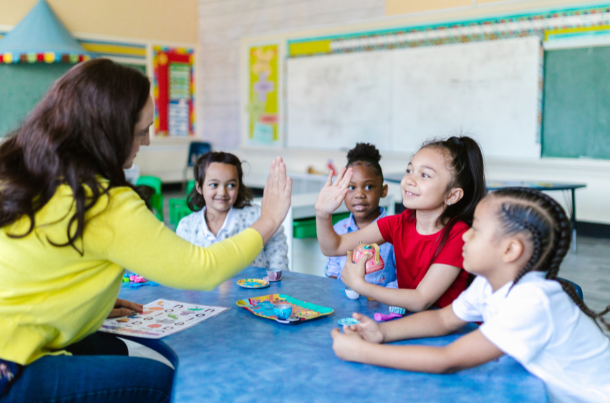
How Can Teachers Choose the Right Activity?
The best activity depends on what students need to learn and how the activity supports that goal.
Before planning one, teachers can consider the following questions:
What is the learning objective?
Every activity should have a clear purpose. If students are creating posters, the purpose might be to understand a topic, organise information, or communicate an important message.
An enjoyable task without a clear learning goal may keep students busy, but it may not help them make meaningful progress.
Is it suitable for the students’ ages?
Younger children generally need shorter instructions, more movement, and hands-on materials. Older students may be ready for independent research, detailed discussions, and longer projects.
The complexity of the activity should match students’ abilities without making the task too easy.
Can everyone participate?
A good activity should not exclude students because of confidence, physical ability, language level, or learning needs.
Teachers can provide different roles, additional instructions, visual examples, or alternative ways to complete the task. Inclusion does not mean every child must do exactly the same thing in exactly the same way.
Are the instructions clear?
Students are more likely to participate successfully when they know:
- What they need to do
- Which materials they can use
- How much time they have
- Whether they will work alone or in groups
- What the finished work should include
- How their work will be assessed
Showing a short example can be particularly useful, but students should still have enough freedom to develop their own ideas.
Is there time for reflection?
After an activity, students should have a chance to think about what they learned.
Teachers might ask:
- What did you discover?
- What was the most difficult part?
- How did your group solve the problem?
- What would you change next time?
- Where could you use this knowledge in real life?
Reflection turns an enjoyable experience into a more meaningful lesson.
Should School Activities Always Be Fun?
Activities should be engaging, but they do not have to feel like entertainment every minute.
Learning sometimes requires patience, effort, repetition, and concentration. A student may find part of a project challenging or become frustrated when an idea does not work immediately. These experiences can still be valuable when the task is manageable and appropriate support is available.
The aim is not to remove every difficulty. It is to create activities that encourage students to keep trying, think carefully, and feel proud of their progress.
How Often Should Students Participate in Activities?
Activities work best when they are part of regular learning rather than occasional rewards.
This does not mean that every lesson needs a large project. Teachers can include short activities throughout the day, such as:
- A five-minute discussion
- A quick movement break
- A partner problem
- A short reading response
- A practical demonstration
- A drawing or concept map
- An end-of-lesson quiz
Longer projects can be introduced when the topic and timetable allow. The right balance will depend on students’ ages, the subject, available materials, and the learning objective.
What Activities Help Shy Students?
Shy students may understand the lesson well but feel uncomfortable speaking in front of a large group.
Activities that can help them participate include:
- Working with a trusted partner
- Writing ideas before speaking
- Taking a behind-the-scenes project role
- Presenting as part of a group
- Using drawings or models to explain an idea
- Recording a presentation instead of performing live
- Answering questions in a small group
Confidence should be built gradually. Forcing a nervous student to perform without preparation may increase anxiety rather than improve participation.
Teachers can recognise small steps, such as contributing one idea to a group or reading a short sentence aloud.
What Is the Teacher’s Role During an Activity?
The teacher remains an important guide even when students are working independently.
A teacher may:
- Explain the objective
- Demonstrate the task
- Arrange students into suitable groups
- Provide materials
- Ask questions that encourage deeper thinking
- Support students who are struggling
- Observe participation
- Manage time and behaviour
- Give constructive feedback
The teacher does not need to solve every problem immediately. Sometimes asking, “What have you tried?” or “What else could you do?” helps students become more independent thinkers.
Frequently Asked Questions
What is the most useful classroom activity?
Collaborative project-based learning is one of the most useful classroom activities because it develops subject knowledge alongside teamwork, communication, creativity, and problem-solving.
Which activities improve students’ concentration?
Reading, puzzles, drawing, hands-on experiments, memory games, mindful breathing, and short physical movement breaks can all support concentration. The activity should be suitable for the students’ ages and should not continue for longer than they can reasonably stay engaged.
What are some simple activities that require few materials?
Teachers can use storytelling, debates, role-play, mental maths games, group discussions, vocabulary challenges, observation exercises, and question-and-answer games. Many effective activities require little more than paper, pencils, and thoughtful instructions.
Are extracurricular activities important for students?
Yes. Sports, music, drama, art, clubs, and community projects can help students discover interests and build skills that may not be fully developed during regular lessons. However, children also need enough time for rest, family life, and unstructured play.
How do activities support weak students?
Activities offer students different ways to understand and demonstrate learning. A child who struggles with written work may be able to explain an idea through a model, drawing, demonstration, or group discussion. Teachers can also divide a complex task into smaller, manageable steps.
What activities improve teamwork in school?
Group projects, team problem-solving, role-play, cooperative games, and shared classroom responsibilities can help students practise communication, listening, and working toward a common goal.
Frequently Asked Questions
What is the most useful classroom activity?
Which activities improve students’ concentration?
What are some simple activities that require few materials?
Are extracurricular activities important for students?
How do activities support weak students?
What activities improve teamwork in school?
Final Thoughts
So, what is the best activity for students in school?
Collaborative project-based learning is one of the strongest choices because it connects academic knowledge with creativity, communication, teamwork, and real-life problem-solving. However, no single activity can support every part of a child’s development.
Students benefit most from a balanced combination of reading, experiments, art, sports, discussions, outdoor learning, problem-solving, and community-based activities.
The best school activity is ultimately one that has a clear purpose, includes every student, matches the children’s ages, and encourages them to think, participate, and learn. When activities are planned thoughtfully, the classroom becomes more than a place where information is delivered, it becomes a place where children explore ideas, develop useful skills, and grow in confidence.
When activities are planned thoughtfully, the classroom becomes more than a place where information is delivered; it becomes a place where children explore ideas, develop useful skills, and grow in confidence.
Looking for more meaningful activities, educational ideas, and parenting resources for children? Visit Tales of Tots for practical inspiration to support your child’s learning and development.
Helpful Resources for Teachers and Parents
Disclaimer
This article is for general educational and informational purposes only. School activities should be selected according to students’ ages, abilities, learning needs, available resources, and appropriate safety requirements. Teachers and parents should adapt activities where necessary so that children can participate safely and meaningfully.
About the Author
Geeta Yogi writes practical, parent-friendly content about children’s learning, school life, educational activities, development, and everyday parenting. She focuses on helping parents and educators discover simple ways to support children’s confidence, creativity, concentration, communication, and overall growth.