The day your baby starts to roll, crawl, or take those wobbly first steps is truly special, but it can also bring a bit of worry. All of a sudden, everyday things around the house become fascinating: cabinets, electrical cords, sharp corners, doors, and stairs. What once felt harmless can quickly turn into a safety concern.
This is where baby proofing accessories can really help. They don’t mean turning your home into a fortress. Instead, they create a safer environment where your baby can explore with confidence, and where you can relax knowing you’ve taken thoughtful precautions.
In this guide, we’ll gently walk you through:
- The most useful baby proofing products
- Why they are important for your child’s safety
- How to use them wisely, without going overboard
Because a few smart safety steps can make a big difference in keeping your little one safe and giving you peace of mind.
What Are Baby Proofing Accessories?
Baby proofing accessories are simple yet essential safety tools designed to make your home safer for babies and toddlers. They help reduce everyday household risks by preventing falls, protecting little fingers from getting pinched, lowering choking hazards, and blocking access to areas that may not be safe for a child.
Baby proofing usually becomes important around 4–6 months of age, when babies start rolling and moving around on their own. As your little one begins to crawl and eventually walk, their curiosity grows, and so does the need for extra safety.
Using baby proofing accessories at the right time helps create a secure environment where your child can explore freely, while giving parents the comfort and peace of mind they truly need.
The American Academy of Pediatrics’ HealthyChildren.org emphasizes that baby proofing accessories like safety gates and appliance locks play a vital role in creating a safe home for your child to explore.
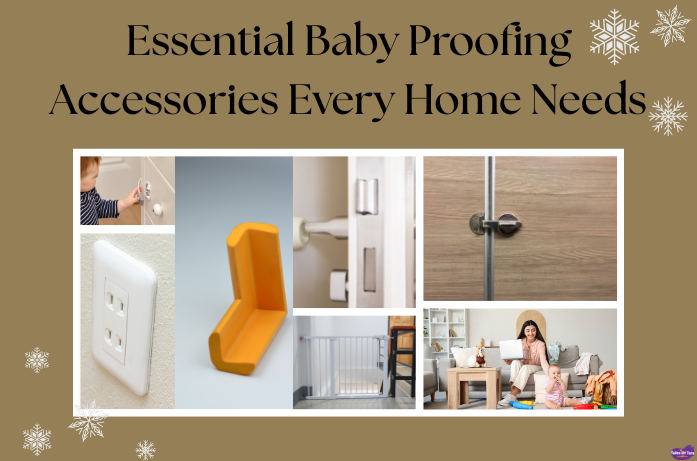
Essential Baby Proofing Accessories Every Home Needs
As your baby starts crawling and exploring, everyday areas of your home can quickly turn into potential hazards. The right baby proofing products help create a safer space for your little one while giving you much-needed peace of mind. Here are the most essential items every home should have:
1. Cabinet & Drawer Safety Locks
Babies are naturally curious, and for them, opening cabinets feels like a little adventure. As soon as they learn to use their hands, kitchen and bathroom cabinets become especially tempting because they’re right at their level. The sound of doors opening, the movement, and the new things inside make it exciting for them, even though these spaces often contain items that aren’t safe for little hands.
Why they matter:
- Keep babies away from cleaning products, medicines, and sharp or dangerous items
- Protect little fingers from getting caught or pinched in doors and drawers
Best places to use them:
- Kitchen cabinets
- Bathroom drawers
- Under-sink storage
Parent tip: Look for baby safety locks that are strong enough to keep curious hands out, but simple enough for adults to open comfortably with one hand, especially when you’re holding your baby.
2. Electrical Outlet Covers
Babies are naturally curious and love exploring with their little hands, but electrical outlets can be very dangerous for them. Tiny fingers might wander toward an open socket or try to poke something inside, without knowing the risk. Even a quick touch can cause an electric shock, which is why covering outlets is such an important step in keeping your little one safe.
Why they matter:
- Help prevent electric shocks
- Reduce choking risks
Types available:
- Plug-in outlet caps
- Sliding outlet covers
Sliding outlet covers are generally safer because they stay securely in place and can’t be easily removed by little hands. Unlike plug-in caps that a curious child might pull out, sliding covers provide a more reliable barrier, reducing the risk of accidental electric shocks.
3. Corner & Edge Guards
Many pieces of furniture, like coffee tables, TV stands, and low shelves, have sharp corners and edges that sit right at a baby’s head or face level. As babies learn to crawl, stand, and walk, these edges become a real risk. A small stumble or fall can lead to bumps, bruises, or even more serious injuries, making it important to protect these areas with soft guards.
Why they matter:
- Protect against head and face injuries during falls
- Especially useful during early walking stages
They are usually made of soft rubber or foam and blend seamlessly with furniture, providing safety without compromising the look of your home.
4. Door Stoppers & Finger Guards
Doors can close suddenly and with unexpected force, and for curious little children, their tiny fingers often end up right in the gap. Even a simple slam can cause painful pinches or injuries, making doors a surprisingly common household hazard for babies and toddlers.
Why they matter:
- Prevent finger pinches
- Stop doors from locking accidentally
These are small accessories, but they are very effective in preventing painful injuries.
5. Safety Gates for Stairs & Rooms
As babies begin to crawl, their world suddenly expands, but so do the dangers around them. Stairs, which might have seemed harmless before, become a serious risk because a small misstep or slip can lead to a dangerous fall. Since babies are still developing balance and coordination, even a short flight of stairs can cause significant injuries, making stair safety a top priority.
Why they matter:
- Prevent serious falls
- Help block off kitchens or balconies
Use gates for:
- Top and bottom of stairs
- Entry to unsafe rooms
Make sure the gate is securely installed, pressure-fit gates are not recommended at the top of stairs.
6. Appliance & Toilet Locks
Babies are naturally curious and love exploring the world around them. Lids, doors, and buttons catch their attention because they can move or make sounds when touched. To a baby, opening a lid, pressing a button, or sliding a door is like discovering something new and exciting, even though these everyday objects can sometimes be dangerous.
Why they matter:
- Prevent access to washing machines, refrigerators, and ovens
- Toilet locks reduce drowning risk
Toilets can be especially risky for toddlers, yet this is one safety measure that many parents often forget to use.
7. Furniture & TV Anchors
As babies learn to pull themselves up and stand, they often grab onto furniture for support. If the furniture is not stable or properly anchored, it can easily tip over, posing a serious risk of injury. Even everyday items like dressers, bookshelves, or TV units can become dangerous if they aren’t secured, making furniture anchoring an essential part of baby-proofing.
Why they matter:
- Prevent heavy furniture from falling
- Reduce risk of serious head injuries
Anchor:
- TV units
- Dressers
- Bookshelves
This is one of the most important baby proofing steps.
According to the National Safety Council, baby-proofing your home from early on can significantly reduce the risks of common injuries that happen when babies start moving around.
When Should You Start Baby Proofing?
Baby proofing is most effective when done before your baby starts moving around on their own. At this stage, babies are less mobile, so it’s easier to identify potential hazards and secure them before they become a risk. Preparing your home in advance helps create a safe environment, reduces accidents, and gives parents peace of mind as their little one begins to explore.
A Simple and Practical Baby Proofing Timeline:
• 3–4 months: Start with basic safety measures.
• 6 months: Secure cabinets, outlets, and furniture corners.
• Crawling stage: Install gates, furniture anchors, and door guards to keep your baby safe while exploring.
• Walking stage: Review your home’s safety and update measures as needed.
Easy rule of thumb: If your baby can reach it, pull it, or put it in their mouth — it needs to be secured.
Smart Baby Proofing Tips (Without Overdoing It)
• Take a moment to get down on the floor and look at your home from your baby’s perspective, you’ll spot risks you may not notice from above.
• Start with high-risk areas like the kitchen, bathroom, and stairs, where accidents are more likely to happen.
• Baby proofing helps improve safety, but it never replaces close and attentive supervision.
• Check safety accessories regularly, as babies grow stronger, more curious, and more determined over time.
Baby proofing isn’t about limiting curiosity, it’s about reducing risks while allowing your little one to explore safely and confidently.
The Consumer Product Safety Commission provides a home safety checklist that includes baby-proofing recommendations to reduce the risks of common household injuries.
Frequently Asked Questions (FAQs)
1. When should I start baby proofing my home?
It’s best to start baby proofing around 3–4 months, before your baby begins rolling or crawling. Preparing early helps prevent accidents once your baby becomes more mobile.
2. Do I need to baby proof the entire house at once?
No. You don’t need to do everything at once. Start with high-risk areas like the kitchen, bathroom, stairs, and electrical outlets, then add more safety measures as your baby grows.
3. Are baby proofing accessories a substitute for supervision?
No. Baby proofing accessories reduce risks, but they never replace active adult supervision. They are meant to support safety, not replace watchful parenting.
4. How often should I check baby proofing accessories?
Check them regularly, especially as your baby grows stronger. Locks, gates, and anchors can loosen over time and may need adjustment or replacement.
5. Are pressure-mounted safety gates safe for stairs?
Pressure-mounted gates are fine for doorways but not recommended at the top of stairs. Always use a hardware-mounted gate for staircases to prevent serious falls.
6. Is baby proofing still needed after my child starts walking?
Yes. As toddlers become more confident and curious, risks change. Baby proofing should evolve with your child’s development, especially around furniture, doors, and climbing areas.
Final Thoughts: Safety That Grows With Your Baby
Baby proofing accessories don’t take away your baby’s freedom, they protectit. They allow your child to explore, learn, and move with fewer dangers standing in the way.
You don’t need to buy everything at once. Start small, observe your baby’s behavior, and adjust as they grow.
At Tales of Tots, we believe a safe home builds confident parents and curious children. Baby proofing isn’t about fear, it’s about love, preparation, and peace of mind.
Disclaimer
This article is for informational purposes only and does not replace professional safety advice. Always supervise your baby, follow manufacturer instructions, and regularly inspect baby proofing accessories for wear or loosening.