When it comes to feeding your baby, paying attention to nipple care and selecting the right baby feeding nipples, whether for breastfeeding or bottle-feeding, can make a big difference in your baby’s comfort, nutrition, and overall feeding experience. Feeding time is not just about nourishment; it is also a special bonding moment between you and your little one. Ensuring that your nipples are well cared for and that the feeding method suits your baby’s needs can help prevent discomfort, reduce feeding challenges, and create a calm and positive routine.
For breastfeeding mothers, proper breastfeeding nipple care is essential to avoid common concerns such as soreness, cracks, or latch difficulties. Gentle care, correct positioning, and allowing time for healing can make breastfeeding more comfortable and enjoyable. On the other hand, if you are bottle-feeding, choosing the right bottle feeding nipples, based on flow rate, shape, and material, can support smooth feeding and help your baby transition easily between breast and bottle if needed.
In this guide, we will thoughtfully cover important nipple care tips for breastfeeding moms, explain the different types of baby feeding nipples available, and share simple, practical suggestions to help ensure a smooth, safe, and comfortable feeding experience for your baby. Our goal is to provide reassuring, easy-to-follow guidance so that feeding time feels relaxed, confident, and full of care for both you and your little one.
Understanding Nipple Care for Breastfeeding
If you are breastfeeding, taking good care of your nipples is important for both your comfort and your baby’s feeding experience. In the early days of breastfeeding, it is quite common for mothers to experience some soreness or minor cracks. According to guidance from the NHS, nipple soreness in the early weeks of breastfeeding is common and often improves with correct latch, gentle care, and proper positioning. With gentle care and the right techniques, this phase usually becomes easier and more comfortable over time. Here are some helpful tips to support proper nipple care.
1. Proper Latch
A correct latch is one of the most important factors in preventing nipple pain or damage. Your baby should take not only the nipple but also a good portion of the areola (the darker area around the nipple) into their mouth.
To help ensure a good latch:
- Gently guide your baby’s mouth toward your breast.
- Make sure your baby’s mouth is wide open, similar to a yawn.
- Check that your baby’s lips are flanged outward, not tucked inward.
If you feel that your baby is not latching properly, it is perfectly okay to seek support from a lactation consultant. Early guidance can make a big difference in comfort and confidence.
Pediatric experts at HealthyChildren.org also highlight that a deep, comfortable latch helps prevent nipple damage and supports effective milk transfer for babies.
2. Sore Nipples: What to Do
Mild soreness during the first few weeks of breastfeeding is common, but it should gradually improve and not remain a constant issue. A few simple measures can help ease discomfort:
- Use a gentle nipple cream, such as lanolin-based or plant-based options that are safe for both mother and baby.
- Allow your nipples to air-dry after each feeding, or gently pat them dry with a clean, soft towel.
- Apply warm compresses or do a light massage to soothe tenderness.
- Wear soft, absorbent breast pads to reduce friction from clothing and keep the area dry.
3. Preventing Nipple Damage
Frequent feeding with an improper latch can sometimes lead to cracked or damaged nipples. Taking small preventive steps can help protect the skin and promote healing:
- Try different breastfeeding positions to avoid putting pressure on the same area each time.
- If your nipples become cracked or start bleeding, consider taking short breaks from direct feeding if needed, and express milk to maintain your supply.
- Use nipple shields only if recommended by a lactation consultant, as they can provide temporary protection while healing.
With patience, gentle care, and the right support, breastfeeding can become a more comfortable and positive experience for both you and your baby.
Choosing the Right Baby Feeding Nipples
If you are bottle-feeding or supplementing with formula, choosing the best baby feeding nipples is just as important for your baby’s comfort and feeding success. Babies often have their own preferences, and the right nipple can help create a more natural feeding experience, especially if you are combining breast and bottle. Selecting a suitable nipple can also help reduce nipple confusion and make feeding time smoother for both you and your little one.
1. Types of Bottle Nipples
Bottle nipples are available in different materials, shapes, and flow rates. Understanding these options can help you choose what best suits your baby’s age and feeding style.
Material
- Silicone: This is the most commonly used material. It is durable, odorless, and easy to clean, making it a practical and long-lasting choice.
- Rubber: Softer and more flexible than silicone, rubber nipples may feel more natural to some babies, though they tend to wear out faster and may need to be replaced more often.
Shape
- Orthodontic Nipples: These are designed to resemble the natural shape of the breast, which can be helpful for babies transitioning between breastfeeding and bottle-feeding.
- Wide-neck Nipples: These allow a wider latch and are made to mimic the natural feel of breastfeeding, helping babies latch more comfortably.
Flow Rate
- Slow Flow: Ideal for newborns or babies who are just starting bottle-feeding, as it prevents them from getting too much milk too quickly.
- Medium and Fast Flow: As your baby grows and feeds more efficiently, you may gradually switch to a faster flow to match their increasing needs.
It’s important to observe your baby’s feeding pace when selecting a nipple. A flow that is too fast may lead to coughing or choking, while one that is too slow could cause frustration. Choosing the right balance will help ensure a calm, comfortable, and satisfying feeding experience for your baby.
2. Anti-Colic Nipples
Anti-colic nipples are designed with special venting systems that reduce the amount of air your baby swallows during feeding. This can help prevent gas, tummy discomfort, and colic symptoms, making feeds more calm and comfortable. If your baby often seems fussy or gassy after feeding, using an anti-colic nipple may provide gentle relief and a smoother feeding experience.
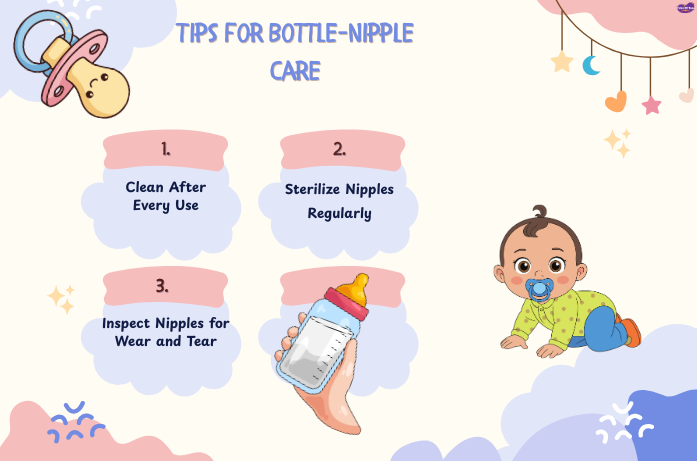
Tips for Bottle-Nipple Care
Taking proper care of baby feeding nipples is just as important as choosing the right one. Clean and well-maintained nipples help keep your baby safe and ensure a smooth feeding experience.
1. Clean After Every Use
Always wash bottle nipples thoroughly with warm water and a mild, baby-safe soap after each feed. Using a bottle brush can help remove any milk residue from hard-to-reach areas.
2. Sterilize Regularly
In the early months, it’s advisable to sterilize bottle nipples frequently to prevent the buildup of harmful bacteria. You can do this by boiling them for a few minutes or using a baby-safe sterilizer.
3. Check for Wear and Tear
Regularly inspect nipples for cracks, tears, or thinning. Damaged nipples can pose a choking risk or disrupt proper feeding. Replace them promptly if you notice any signs of wear.
When to Transition from Breast to Bottle
If you are planning to introduce a bottle, it is usually best to wait until breastfeeding is well established. For many babies, this happens around 4 to 6 weeks, though the exact timing can vary depending on your baby’s readiness and comfort.
To make the transition gentle and stress-free:
- Consider having another caregiver offer the bottle at first, as babies often associate mom with breastfeeding and may resist the bottle initially.
- Be open to trying a few different nipple types to find the one your baby accepts most easily.
- Use a calm feeding position and paced feeding technique to closely mimic the natural rhythm of breastfeeding.
With patience and flexibility, most babies adjust well, allowing feeding to remain a comfortable and reassuring experience.
FAQs: Baby Nipples, Nipple Care & Choosing the Right Feeding Nipple
Q1: Why is nipple care important during breastfeeding?
Proper nipple care helps prevent soreness, cracks, and infections, ensuring a comfortable feeding experience for both mother and baby.
Q2: How can I reduce nipple soreness while breastfeeding?
Ensure a proper latch, allow nipples to air-dry after feeds, use safe nipple creams, and try different feeding positions to reduce pressure on the same area.
Q3: How do I choose the right bottle nipple for my baby?
Select based on your baby’s age, feeding pace, and comfort. Consider flow rate (slow, medium, fast), shape (wide-neck or orthodontic), and material (silicone or rubber).
Q4: What is the best nipple flow for newborns?
Slow-flow nipples are ideal for newborns, as they help prevent choking and allow babies to feed at a comfortable, natural pace.
Q5: When should I replace bottle nipples?
Replace bottle nipples if you notice cracks, tears, thinning, or changes in shape, as damaged nipples can pose a choking risk and affect feeding.
Q6: Can using the wrong nipple cause feeding problems?
Yes. A nipple with too fast a flow may cause gagging or coughing, while a slow flow may frustrate your baby and make feeding difficult.
Q7: Do anti-colic nipples really help?
Anti-colic nipples with vent systems can reduce air intake during feeding, which may help decrease gas, fussiness, and colic symptoms.
Final Thoughts
Whether you’re breastfeeding or bottle-feeding, nipple care is a key part of providing your baby with the nourishment they need. The World Health Organization (WHO) emphasizes that responsive feeding practices and proper nipple care are foundational for healthy infant feeding and overall development. For breastfeeding mothers, making sure your baby latches properly and protecting your nipples from damage will go a long way in ensuring a comfortable experience. For bottle-feeding parents, selecting the right bottle nipple and maintaining it properly will help promote better feeding and reduce any discomfort for your baby.
At Tales of Tots, we’re here to support you through every step of your parenting journey, from choosing the right feeding options to making sure your baby’s health and comfort come first.
Disclaimer
This article is for informational purposes only. For personalized advice regarding breastfeeding, bottle-feeding, or nipple care, please consult your pediatrician or a lactation consultant.