
Children not eating vegetables is a common concern for parents, especially when peas are pushed aside, green foods are refused, or carrots are called “yucky” before being tasted. Although an occasional vegetable-free day is unlikely to harm a healthy child, long-term avoidance may make it more difficult to meet their nutritional needs.
Over time, a very limited diet may increase the risk of constipation and nutrient gaps and, when it forms part of broader restrictive eating, may make it harder to meet the nutritional needs that support normal growth and health.
The goal is not to frighten or force your child. It is to understand what vegetables offer, notice possible warning signs, and help your little one become more comfortable with them, one calm exposure at a time.
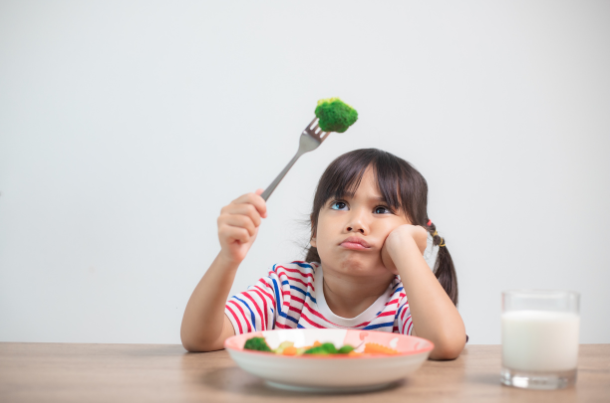
Why Do Children Refuse to Eat Vegetables?
Before worrying about how to get kids to eat vegetables, it helps to understand why they refuse them. Most children are not trying to make mealtimes difficult. Their reactions are usually connected to normal development, sensory preferences, previous experiences, or a desire for independence.
Food Neophobia Is Common in Young Children
Food neophobia means feeling hesitant or afraid to eat unfamiliar foods. It commonly appears during the toddler and preschool years, when children become more cautious about new tastes and textures.
A child who happily tasted broccoli as a baby may refuse it at age two. This does not necessarily mean they will always dislike broccoli. It often means they now recognize it as different from their familiar foods and need more time to trust it again.
Some children need many pressure-free exposures before tasting or accepting a new vegetable. Looking at it, touching it, smelling it, licking it, and taking a tiny bite are all steps toward learning to eat it.
Vegetables Can Taste Bitter
Children may also experience flavors more intensely than adults, while certain vegetables have bitter, earthy, or strong tastes. Broccoli, spinach, Brussels sprouts, kale, and cabbage may be more challenging than naturally sweet vegetables such as carrots, peas, pumpkin, sweet potato, and corn.
Children may also experience flavors more intensely than adults. What tastes mildly bitter to you may taste surprisingly strong to your child.
This is one reason vegetable refusal is not always stubborn behavior. Sometimes the child genuinely finds the flavor difficult.
Many children prefer sweeter, familiar flavours, while bitter or strong-tasting vegetables may be more challenging to accept.
Texture and Smell Matter
Vegetables can feel soft, stringy, slippery, grainy, crunchy, or watery. A child may like raw carrots but dislike cooked carrots because the texture changes. Another may happily eat smooth pumpkin soup but refuse roasted pumpkin pieces.
Smell can also influence acceptance. Steamed broccoli, cabbage, onions, and cauliflower may develop strong aromas that sensitive children find overwhelming.
Trying different preparation methods can help you discover whether your child dislikes the vegetable itself or simply its current texture, smell, or temperature.
Children Prefer Familiar Foods
Crackers, bread, cereal, pasta, chicken nuggets, and other familiar foods usually look and taste consistent. A blueberry may be sweet one day and sour the next. A cucumber can be crisp in one meal and slightly soft in another.
This natural variation can make fruits and vegetables less predictable. Young children often feel safer eating foods that deliver the same experience every time.
Appetite Naturally Changes
Children’s appetites can vary from day to day. Growth spurts, teething, tiredness, illness, activity levels, and emotions can all affect how much they eat.
A child may eat several servings of vegetables one day and refuse them the next. Looking at their eating pattern across a week is usually more helpful than judging one meal.
Mealtime Pressure Can Increase Resistance
When parents are worried, it is natural to encourage “just one more bite.” Unfortunately, repeated pressure, bargaining, punishment, or forcing Repeated pressure, bargaining, punishment, or forcing can increase mealtime stress and resistance for some children.
If every serving of broccoli begins a battle, the child may learn to associate broccoli with stress. A neutral approach, offering the food without demanding that it be eaten, usually supports a healthier long-term relationship with food.
What Nutrients Do Vegetables Provide for Children?
Vegetables are not valuable because they are “good” while other foods are “bad.” They are valuable because they offer a useful combination of nutrients that support a child’s growing body.
Different vegetables provide different nutrients, which is why variety matters.
Dietary Fiber
Fiber helps support regular bowel movements and feeds beneficial bacteria in the digestive system. Beans, peas, sweet potatoes, carrots, broccoli, artichokes, and many other plant foods provide fiber.
Children can also receive fiber from fruit, lentils, beans, oats, whole-grain bread, seeds, and other whole grains. Still, avoiding vegetables may reduce the variety and total amount of fiber in a child’s diet.
Vitamin A
Orange and dark-green vegetables contain carotenoids that the body can convert into vitamin A. This vitamin supports normal vision, immune function, skin health, and growth.
Carrots, sweet potatoes, pumpkin, spinach, and kale are useful sources. Vitamin A can also come from eggs, dairy products, fish, and fortified foods.
Vitamin C
Vitamin C supports immune function, tissue repair, and iron absorption. Bell peppers, broccoli, tomatoes, cabbage, and Brussels sprouts can provide vitamin C.
Children who refuse vegetables may still receive vitamin C from fruits such as oranges, strawberries, kiwi, mangoes, and guava.
Folate
Folate is important for producing new cells and supporting growth. Leafy greens, asparagus, broccoli, peas, beans, and avocado provide folate.
Fortified grains and legumes can also help children meet their needs.
Vitamin K
Green leafy vegetables are rich in vitamin K, which plays a role in normal blood clotting and bone health. Broccoli, spinach, kale, and cabbage are common sources.
Potassium
Potassium supports normal muscle, nerve, and heart function. Potatoes, sweet potatoes, spinach, tomatoes, beans, and squash contain potassium, as do bananas, oranges, yogurt, milk, and other foods.
Protective Plant Compounds
Vegetables also provide naturally occurring plant compounds, including carotenoids and polyphenols. These compounds are one reason nutrition experts encourage families to eat produce in different colors.
A supplement may provide a selection of vitamins, but it generally does not recreate the full combination of fiber, water, nutrients, and plant compounds found in whole foods.
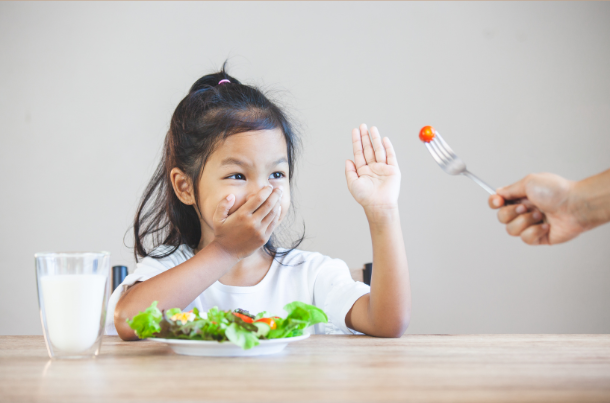
7 Health Consequences for Children Not Eating Vegetables
The effects of not eating vegetables depend on the child’s overall diet. A child who dislikes vegetables but eats a varied selection of fruit, beans, whole grains, proteins, and fortified foods may not develop a deficiency.
The risk becomes more concerning when vegetable refusal is part of an extremely restricted diet.
1. Constipation and Uncomfortable Bowel Movements
Constipation is one of the most noticeable possible effects of a low-fiber diet. A child may pass hard, dry stools, have painful bowel movements, go several days without passing stool, or begin withholding because using the toilet hurts.
Vegetables are not the only source of fiber, but consistently avoiding them can make it more difficult to get enough, especially if the child also avoids fruit, legumes, and whole grains.
Fiber works best with sufficient fluid. Increasing fiber very quickly without offering enough water may make a child feel bloated or uncomfortable, so gradual changes are usually easier.
Ongoing constipation, blood in the stool, severe pain, vomiting, a swollen abdomen, or unexplained weight loss should be discussed with a healthcare professional.
2. Possible Vitamin and Mineral Gaps
A child who eats few vegetables may have a lower intake of vitamin A, vitamin C, vitamin K, folate, potassium, and other nutrients. Whether this develops into a true deficiency depends on what else the child eats and whether foods are fortified.
For example, a child who refuses bell peppers but enjoys oranges may still receive vitamin C. A child who avoids spinach but eats eggs, dairy, beans, avocado, and fortified grains may receive some of the nutrients found in leafy vegetables from other sources.
Vegetable refusal is therefore not an automatic diagnosis of malnutrition. It is a reason to look carefully at the child’s entire eating pattern.
3. Less Dietary Variety
Children who repeatedly avoid an entire food group can become increasingly dependent on a small number of preferred foods. Their safe-food list may gradually shrink, making family meals, school lunches, parties, and travel more difficult.
A limited diet can also reduce opportunities to experience new flavors and textures. The longer foods remain unfamiliar, the more challenging they may feel.
Continuing to serve small, non-threatening portions helps keep vegetables familiar even when the child is not ready to eat them.
4. Reduced Fiber for Gut Health
Fiber does more than soften stool. Certain types of dietary fiber are used by helpful gut bacteria. A varied plant-based diet supports a more diverse food supply for these microorganisms.
Scientists are continuing to study how the gut microbiome affects health. It would be inaccurate to say that refusing vegetables automatically causes poor immunity or disease. However, vegetables, fruits, whole grains, nuts, seeds, and legumes all contribute fiber that supports digestive health.
5. Difficulty Supporting Healthy Growth
Vegetables themselves are not usually a child’s main source of calories or protein. Therefore, simply refusing broccoli does not directly cause poor growth.
The concern arises when vegetable refusal is part of broader restrictive eating. If a child eats only a handful of foods, they may not receive enough total energy, protein, iron, zinc, calcium, or other nutrients needed for growth and development.
Some children with very limited diets may grow more slowly, lose weight, appear unusually tired, or struggle to maintain their expected growth pattern.
Growth should be assessed over time using an appropriate growth chart. Comparing one child with another is far less useful than watching whether your child is following their own expected pattern.
6. A Less Balanced Eating Pattern
Children who do not eat vegetables sometimes fill up on highly processed snack foods, sugary drinks, sweets, or refined carbohydrates. These foods are easy to accept because their flavor and texture are predictable.
This pattern may provide plenty of calories while offering less fiber and fewer micronutrients. A child can consume adequate, or excessive, energy and still have nutritional gaps.
Low vegetable intake alone does not cause childhood obesity. Body weight is influenced by the complete eating pattern, activity, sleep, genetics, health conditions, medications, and environment. Still, regularly replacing nutrient-dense foods with high-calorie, low-fiber choices may make balanced eating more difficult.
7. Fewer Opportunities to Build Lifelong Healthy Eating Habits
Childhood is when children learn what meals look like, how different foods taste, and how to listen to hunger and fullness cues. Regular exposure to vegetables can make them feel like a normal part of family life.
A child does not need to love every vegetable. Most adults do not. The aim is to help the child become comfortable with enough variety to support their nutritional needs.
How Many Vegetables Should Children Eat?
Vegetable needs vary according to age, sex, growth, activity level, and overall energy requirements. General dietary guidance commonly measures vegetables in cup equivalents, but parents do not need to turn every meal into a measuring exercise.
Depending on individual calorie needs, approximate daily amounts may fall within these broad ranges:
- Toddlers aged 12–23 months: around two-thirds to one cup
- Children aged 2–3 years: around one to one-and-a-half cups
- Children aged 4–8 years: around one-and-a-half to two-and-a-half cups
- Older children and teenagers: often around two to four cups
These are general planning ranges rather than pass-or-fail targets. The appropriate amount for an individual child may differ.
Variety across the week is also important. Try to include dark-green vegetables, red and orange vegetables, beans or peas, starchy vegetables, and other vegetables instead of relying on only one type.
Can Fruit Replace Vegetables?
Fruit and vegetables share several nutrients, so fruit can help fill certain gaps. A child who eats berries, oranges, melon, kiwi, mango, or other fruits may receive fiber, vitamin C, potassium, and beneficial plant compounds.
However, fruit and vegetables are not nutritionally identical. Leafy greens, beans, peas, and other vegetables provide combinations of nutrients that may not be present in the same amounts in a fruit-heavy diet.
You do not need to restrict fruit simply to make your child eat vegetables. Continue offering fruit as part of a balanced diet while gently helping vegetables become more familiar.
Juice is not an equal replacement for whole fruit or vegetables. It generally contains less fiber, can be consumed quickly, and may reduce appetite for meals when offered frequently.
How to Encourage a Child to Eat Vegetables Without Pressure
Helping a picky eater accept vegetables usually takes patience. Quick tricks may produce one bite today, but calm and repeated experiences are more likely to create lasting eating habits.
Start With Tiny Portions
A large pile of unfamiliar vegetables can feel overwhelming. Begin with one pea, a thin cucumber slice, or a small piece of roasted carrot.
A tiny portion feels manageable and reduces food waste. Your child can always ask for more.
Pair Vegetables With Familiar Foods
Place a less familiar vegetable beside a food your child already feels comfortable eating. For example:
- Broccoli with pasta and cheese
- Cucumber beside a sandwich
- Peas mixed with rice
- Roasted carrots with chicken
- Bell pepper strips with hummus
- Spinach alongside an omelet
- Corn with beans or a quesadilla
The familiar food makes the meal feel safe. Avoid making the preferred food conditional on eating the vegetable.
If you need fresh ideas for putting those combinations into practice, these healthy toddler meals include simple breakfast, lunch, dinner, and snack options that can make balanced feeding feel more manageable.
Change the Preparation Method
A child who refuses boiled vegetables may enjoy them roasted, grated, mashed, blended, sautéed, or served raw when age-appropriate.
Roasting can bring out natural sweetness. A dip may make raw vegetables more interesting. Soup can offer a softer texture, while lightly cooked vegetables may appeal to children who prefer crunch.
Always prepare food in a shape and texture that is safe for your child’s age and chewing abilities.
Keep Offering Without Forcing
Your responsibility is to decide what food is served, when it is served, and where the meal happens. Your child can decide whether to eat and how much to eat from the available options.
If the vegetable is refused, remove the plate calmly when the meal ends. You can offer that vegetable again another day without reminding your child that they rejected it before.
Let Children Explore
Eating is not always the first step toward accepting an unfamiliar food. A child’s progress does not always follow a fixed order, but becoming comfortable with a food may involve steps such as:
- Tolerate the vegetable on the table
- Allow it on their plate
- Touch or pick it up
- Smell it
- Lick or taste it
- Chew and spit it out
- Eventually swallow and eat it
These steps may look slow, but they show that the child is becoming more comfortable.
Involve Your Child in Food Preparation
Children are often more curious about foods they help choose and prepare. Depending on their age, they can:
- Pick a vegetable at the store
- Wash tomatoes or potatoes
- Tear lettuce leaves
- Arrange cucumber slices
- Stir peas into rice
- Sprinkle seasoning on vegetables
- Help plant herbs or vegetables
- Choose whether carrots are served raw or roasted
Participation does not guarantee that they will eat the food, but it builds familiarity without direct pressure.
Eat Vegetables Together
Children notice what adults do. Let them see you eating vegetables naturally rather than giving a performance or repeatedly announcing how healthy the food is.
A simple comment such as “This carrot is crunchy” is often more helpful than “You need to eat this because it’s good for you.”
Avoid Bribes and Food Labels
Promising dessert in exchange for vegetables can unintentionally teach a child that dessert is valuable while vegetables are an unpleasant task.
It also helps to avoid calling a child “the picky one” or telling relatives that they “never eat vegetables.” Labels can become part of how children see themselves.
Describe the situation as temporary: “You’re still learning to like this food.”
Make Meals Predictable
Regular meal and snack times can help children arrive at the table comfortably hungry. Constant grazing, large amounts of milk, or frequent juice may reduce interest in meals.
Offer meals in a calm environment and, when possible, reduce screens and distractions. Keep mealtimes reasonably brief rather than asking a child to remain at the table until every vegetable is eaten.
Use Hidden Vegetables Carefully
Adding grated zucchini to muffins, spinach to a smoothie, or vegetables to pasta sauce can increase exposure and nutrition. However, hidden vegetables should not be the only strategy.
Continue serving vegetables in recognizable forms as well. Children need opportunities to learn what vegetables look, smell, and taste like.
Deceiving a child about what is in their food can damage trust, particularly if the child has allergies, sensory sensitivities, or significant feeding anxiety. It is usually better to be honest: “This sauce has tomatoes and carrots in it.”
Should Parents Give Children Vegetable Supplements?
Most healthy children should ideally receive nutrients through a varied diet. Multivitamins, fiber powders, greens powders, and gummy supplements are not direct replacements for vegetables.
Supplements may contain selected nutrients, but they do not offer the same food structure, fiber, water, sensory learning, or variety of plant compounds.
They can also be harmful when taken in excessive amounts. Fat-soluble vitamins such as vitamins A and D can accumulate in the body, while iron-containing products may be dangerous if accidentally consumed in large quantities.
Speak with your child’s pediatrician or a registered dietitian before beginning a supplement. A professional can assess the child’s food intake, health history, growth, medications, and any need for testing.
When Is Vegetable Refusal More Than Typical Picky Eating?
Ordinary picky eating is common, but some children need additional help. Contact your pediatrician or a qualified feeding professional if your child:
- Eats an extremely small number of foods
- Continues to remove foods from an already limited diet
- Is losing weight or not following their expected growth pattern
- Gags, coughs, chokes, or struggles to chew and swallow
- Appears weak, unusually tired, pale, or frequently unwell
- Has persistent constipation, diarrhea, pain, or vomiting
- Becomes extremely distressed around unfamiliar food
- Avoids entire textures or food groups
- Cannot eat comfortably at school or social events
- Has a strong fear of choking, vomiting, or allergic reactions
- Shows possible signs of a nutrient deficiency
Feeding challenges can be associated with oral-motor difficulties, gastrointestinal discomfort, food allergies, sensory differences, autism, anxiety, or avoidant/restrictive food intake disorder, also known as ARFID.
These concerns are not caused by poor parenting. Support may involve a pediatrician, registered dietitian, occupational therapist, speech-language pathologist, psychologist, or multidisciplinary feeding team.
Frequently Asked Questions
What happens if a child never eats vegetables?
A child who never eats vegetables may have a higher chance of receiving too little fiber and certain vitamins, minerals, and plant compounds. The actual effect depends on the rest of the diet. Fruit, legumes, whole grains, dairy, protein foods, and fortified foods may provide some missing nutrients, but a severely restricted diet should be evaluated by a healthcare professional.
Will my child become sick from not eating vegetables?
Missing vegetables for a few days is unlikely to make an otherwise healthy child sick. Long-term avoidance becomes more concerning when the overall diet lacks variety or the child develops constipation, fatigue, poor growth, or signs of nutritional deficiency.
Can children be healthy if they only eat fruit and no vegetables?
Fruit provides many valuable nutrients and is much better than eating no produce. However, fruit does not perfectly replace the nutrient combinations found across vegetables, beans, peas, and leafy greens. Continue offering fruit while gradually introducing vegetables without pressure.
Can not eating vegetables cause constipation in children?
It can contribute, particularly when the child’s overall diet is low in fiber and fluids. Fruit, beans, lentils, oats, whole grains, nuts, and seeds can also provide fiber. Persistent or painful constipation should be discussed with a pediatrician.
Can a lack of vegetables affect a child’s immune system?
Vegetables provide nutrients involved in normal immune function, including vitamins A and C. However, immunity depends on the whole diet, sleep, health, vaccination status, physical activity, and many other factors. Avoiding vegetables does not automatically mean a child has a weak immune system.
Should I force my child to take one bite?
Forcing a bite may increase fear and resistance. It is usually more helpful to keep portions small, serve the vegetable with familiar foods, allow exploration, and offer it again another day.
How many times should I offer a rejected vegetable?
There is no magic number. Some children accept a food after several exposures, while others require many more. Focus on calm, repeated opportunities rather than counting bites or attempts.
What vegetables might be easier for picky eaters to try?
Naturally sweet or mild vegetables may be easier starting points. Options include carrots, peas, corn, sweet potato, pumpkin, cucumber, roasted bell peppers, and cauliflower. Preparation and texture often matter as much as the vegetable itself.
Is it okay to hide vegetables in food?
It is fine to add vegetables to sauces, soups, muffins, meatballs, or smoothies, provided you are mindful of allergies and remain honest when asked. Also serve visible vegetables occasionally so your child can learn to recognize and accept them.
When should I consult a doctor about picky eating?
Seek professional advice if your child’s diet is becoming increasingly restricted, growth is affected, eating causes severe distress, swallowing appears difficult, or you notice possible signs of deficiency. Early support can make feeding problems easier to address.
A Gentle Word for Worried Parents
When your child refuses vegetables, it can feel as though every untouched pea represents a failure. It does not.
Learning to become comfortable with unfamiliar foods can be a gradual and uneven process.
slowly, unevenly, and through repeated practice. One week your child may reject every green food. Another week, they may surprise you by nibbling a cucumber from your plate.
Continue offering variety, but protect the feeling of safety at the table. Let vegetables be available without becoming a test your child must pass. Celebrate curiosity rather than the number of bites swallowed.
If your child is active, growing steadily, and eating foods from several food groups, you may simply need time and patient exposure. If their diet is extremely limited or something does not feel right, ask their pediatrician or a registered dietitian for individualized guidance.
You are not failing because your child refuses broccoli. You are helping them build a relationship with food, and that relationship develops one peaceful meal at a time.
For more gentle, practical guidance to support your little one through every stage, explore more parenting tips at Tales of Tots.