
Persistent cough in child with no other symptoms can feel confusing for parents. Your child may be eating normally, playing happily, and showing no fever or runny nose, yet the coughing continues, especially after bedtime.Naturally, you may wonder whether it is simply the last sign of a recent cold or something that needs medical attention.
In many cases, an otherwise well child has a lingering post-viral cough, mild nasal drainage, allergies, or irritation from dry air. However, a cough that continues for several weeks, repeatedly interrupts sleep, becomes wet and phlegmy, or appears with breathing changes should be checked by a healthcare professional.
What Does Persistent Cough in Child With No Other Symptoms Mean?
Persistent cough in child with no other symptoms does not always mean that your child is still actively ill. After a respiratory infection, the throat and airways can remain sensitive even after the fever, congestion, and tiredness have disappeared.
Most viral coughs gradually improve within three to four weeks. A daily cough lasting more than four weeks should be medically assessed, especially if it is wet, worsening, or affecting your child’s sleep or breathing.
The most likely explanation depends on:
- How long the cough has lasted
- Whether it is wet, dry, barky, or whooping
- Whether it happens during sleep, exercise, meals, or play
- Whether it began suddenly
- Whether your child has allergies, eczema, asthma, or reflux symptoms
- Whether the cough is affecting sleep, feeding, energy, or growth
The sound of the cough can offer clues, but it cannot confirm the cause on its own.
Why Is My Child Coughing at Night but Not During the Day?
A child may cough more after bedtime because lying down changes how mucus moves through the nose and throat. Even a small amount of nasal drainage can irritate the back of the throat and trigger coughing.
Bedroom conditions can contribute too. Dust, pet dander, mold, pollen, cigarette smoke, fragrances, and dry air may irritate sensitive airways. Asthma symptoms are also commonly worse during the night or early morning.
Sometimes the cough is simply more noticeable at night because the room is quiet. A child who coughs occasionally while playing may seem to cough constantly once everyone is trying to sleep.
Understanding why a persistent cough in child with no other symptoms becomes worse at night can help parents identify possible triggers in the bedroom.
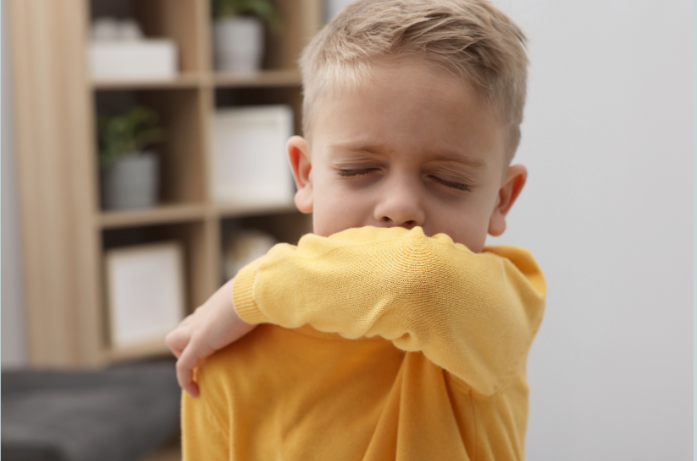
Common Causes of a Persistent Cough Without Other Symptoms
The cause of a persistent cough in child with no other symptoms often becomes clearer when parents observe its timing, sound, and possible triggers.
1. Post-Infectious or Post-Viral Cough
A post-infectious cough is one of the most common reasons a child continues coughing after appearing to recover from a cold.
Viruses can temporarily make the airways more sensitive. Cold air, laughing, running, talking, or lying down may then trigger coughing even though the original infection has passed.
Most uncomplicated viral coughs gradually improve without antibiotics. The American Academy of Pediatrics notes that coughing after a cold can sometimes continue for up to four weeks.
You may notice that:
- The cough began during or shortly after a cold
- Your child otherwise feels well
- The cough is gradually becoming less frequent
- There is no breathing difficulty
- There is no new or returning high fever
Antibiotics do not treat viral infections. They may be prescribed only when a clinician identifies a separate bacterial illness, such as bacterial pneumonia or another infection.
Arrange an appointment if the cough is worsening, not gradually improving, or continues beyond four weeks.
When a persistent cough in child with no other symptoms begins after a recent cold and slowly improves, lingering airway sensitivity may be responsible.
2. Allergies and Postnasal Drip
Allergies can cause nasal mucus to drain down the back of the throat. This may lead to throat clearing or a dry, tickly cough, particularly after your child lies down.
Other possible allergy clues include:
- Frequent sneezing
- Clear nasal discharge
- An itchy nose or throat
- Watery or itchy eyes
- Mouth breathing
- Symptoms that appear in a particular room or season
- No fever
Dust mites, pollen, mold, pet dander, smoke, and strong fragrances are possible triggers.
However, not every nighttime cough is caused by allergies. A pediatrician may consider the timing of symptoms, your child’s medical history, the home environment, and whether allergy treatment improves the symptoms.
Allergies may be considered when a persistent cough in child with no other symptoms becomes noticeable around dust, pets, pollen, mold, or certain rooms.
3. Asthma
Asthma can cause coughing at night or early in the morning. Some children also experience wheezing, breathlessness, chest tightness, or coughing during exercise.
Possible asthma patterns include:
- A cough that returns repeatedly
- Coughing after running, laughing, crying, or active play
- Symptoms triggered by cold air, pets, pollen, dust, or smoke
- Coughing that wakes your child
- Wheezing or shortness of breath
- A history of allergies or eczema
- A close family history of asthma or allergic conditions
A cough alone does not automatically mean asthma. Your child’s doctor may evaluate the symptom pattern, listen to the lungs, consider allergy history, and perform breathing tests when the child is old enough to complete them reliably.
Asthma diagnosis should be based on the overall symptom pattern and, when age-appropriate, objective testing rather than cough alone.
A nighttime cough in a child who already has asthma may indicate that the condition is not fully controlled.
4. Acid Reflux
Acid reflux occurs when stomach contents move upward toward the oesophagus or throat. In some children, symptoms may become more noticeable after eating or lying down.
Possible accompanying signs include:
- A sour taste in the mouth
- Heartburn or upper-abdominal discomfort
- Frequent burping
- Regurgitation or vomiting
- Hoarseness
- Throat clearing
- Coughing after meals
- Feeding difficulties
Reflux is sometimes blamed for an unexplained cough too quickly. NICE guidance notes that a child with no visible regurgitation and only one symptom, such as a chronic cough, should not automatically be investigated or treated for reflux disease.
In other words, coughing by itself does not prove that acid reflux is the cause. A healthcare professional should look at the full symptom pattern before recommending reflux medication.
5. Environmental Irritation
A child’s airways may react to irritants even when the child does not have an infection.
Common irritants include:
- Cigarette or vape smoke
- Wood smoke
- Incense
- Scented candles
- Aerosol sprays
- Strong perfumes
- Cleaning fumes
- Dust
- Mold
- Outdoor air pollution
Notice whether the cough improves when your child leaves a particular room or environment. Keeping the bedroom free from smoke, fragrances, and visible dampness may help.
6. Habit Cough or Repetitive Throat Clearing
A habit cough is a persistent cough without an underlying physical illness. It is more common in school-aged children and often sounds dry, harsh, repetitive, or like frequent throat clearing.
A habit cough often becomes less noticeable or disappears during sleep, although a clinician should exclude physical causes before making this diagnosis.
Because habit cough should be considered only after medical causes have been evaluated, do not assume that a persistent cough is behavioral without first discussing it with your child’s healthcare professional.
7. Whooping Cough
Whooping cough, or pertussis, can begin with symptoms similar to a mild cold. Later, the child may develop repeated, forceful coughing fits that continue for weeks.
Possible signs include:
- Rapid coughing fits
- Vomiting after coughing
- Exhaustion after an episode
- Difficulty catching a breath
- A high-pitched “whoop” after coughing
- Symptoms that are worse at night
Babies do not always make the classic whooping sound. Some may have difficulty breathing or pauses in breathing instead.
Contact a healthcare professional promptly if you suspect whooping cough, particularly when an infant is affected or your child has been exposed to someone with a prolonged cough.
8. An Inhaled Foreign Object
A cough that began suddenly while your child was eating or playing with small objects needs special attention, even if the child appears comfortable afterward.
Possible clues include:
- Sudden coughing or choking
- Wheezing that begins unexpectedly
- No preceding cold symptoms
- A cough that does not settle
- Noisy breathing
- Wheezing that appears stronger on one side
Young children can inhale foods such as nuts or seeds, as well as small toy pieces. Sudden coughing and choking are important warning signs of an airway foreign object.
Seek urgent medical assessment when foreign-object inhalation is possible. Do not wait several weeks to see whether the cough disappears.
Persistent Wet Cough in a Child
A wet cough sounds chesty, rattly, or as though mucus is present. Young children often swallow mucus rather than spitting it out, so you may not see any phlegm.
A short-lived wet cough can occur during an ordinary viral infection. However, a daily wet cough that continues for several weeks deserves medical evaluation.
Possible causes include:
- A lingering respiratory infection
- Repeated viral infections
- Nasal drainage
- Bronchitis
- Pneumonia
- Protracted bacterial bronchitis
- An underlying airway or lung condition
If a daily wet cough continues beyond four weeks, arrange a medical assessment.
Do not start leftover antibiotics. The correct treatment depends on the cause, and some wet coughs are viral rather than bacterial.
Persistent Dry Cough in a Child
A dry cough does not sound as though mucus is being cleared. It may be tickly, repetitive, hacking, or triggered by activity.
Possible explanations include:
- Post-viral airway sensitivity
- Asthma
- Allergies or postnasal drip
- Dry indoor air
- Smoke or fragrance exposure
- Habit cough
- Whooping cough
- An inhaled foreign object
Pay attention to the timing. A dry cough associated with running, laughing, cold air, wheezing, or nighttime waking should be discussed with a doctor because it may fit an asthma pattern.
A sudden dry cough following choking should be treated differently from a gradual cough following a cold.
Keep a Simple Cough Diary
Before the appointment, note:
- When the cough started
- Whether it is wet or dry
- Whether it happens during sleep
- Triggers such as exercise, meals, cold air, pets, or particular rooms
- Any wheezing, vomiting, fever, or breathing changes
- Whether the cough began after choking
- Medicines or home remedies already tried
A short audio or video recording may also help the clinician understand the cough pattern.
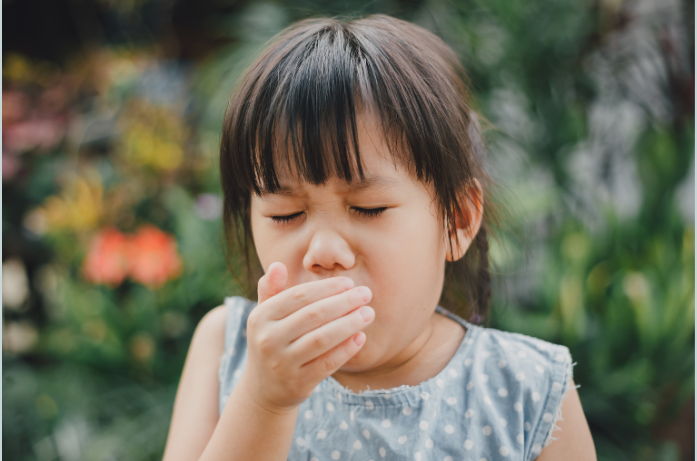
What to Do When a Child With Asthma Is Coughing
When your child has a confirmed asthma diagnosis, follow the written asthma action plan provided by their healthcare professional.
Prescribed treatment may include a quick-relief inhaler, a daily controller medicine, or both. The correct number of puffs and how often medicine should be used depends on the child and the plan.
Do not begin albuterol, inhaled steroids, oral steroids, or someone else’s asthma medication based only on an online article.
Alongside the prescribed plan, parents can:
Remove Known Triggers
Keep cigarette smoke, vape aerosol, strong fragrances, dust, and pet dander away from your child’s sleeping space.
Keep the Room Comfortable
Sudden temperature changes may trigger symptoms in some children. Aim for a comfortable room rather than making it very cold or overly warm.
Help Your Child Stay Calm
Coughing and breathing difficulty can feel frightening. Sit with your child, speak calmly, and help them follow the breathing or inhaler steps in their action plan.
Check Inhaler Technique
Incorrect inhaler or spacer technique may prevent the medicine from reaching the lungs effectively. Ask your pediatrician, asthma nurse, or pharmacist to watch your child use the device.
Contact your child’s asthma clinician if the cough keeps waking them, symptoms are occurring more often, or quick-relief medicine is not working as expected.
Seek emergency help when your child is struggling to breathe, cannot speak normally, becomes blue or grey around the lips, or does not improve after following the emergency instructions in the asthma action plan.
Home Remedies to Help Stop a Child’s Cough at Night
Supportive care may help when your child is otherwise well, breathing normally, and has no emergency warning signs.
Offer Plenty of Fluids
Regular fluids keep the throat moist and may help thin mucus.
Offer breast milk or formula normally to babies. Older children can have water, soup, broth, or a comfortably warm drink.
Give Honey to Children Over One Year
For children aged one year and older, a small amount of honey may soothe the throat and reduce nighttime coughing. Never give honey to a baby younger than 12 months.
Give honey before toothbrushing rather than after it.
Clear a Blocked Nose
Saline nose drops or spray can loosen dried mucus. Older children can gently blow their nose, while babies may need careful suction with a bulb syringe or nasal aspirator.
Clearing the nose shortly before sleep may reduce coughing caused by postnasal drainage.
Use a Clean Cool-Mist Humidifier When the Air Is Dry
A cool-mist humidifier may relieve dry nasal passages and throat irritation. Clean and dry it according to the manufacturer’s directions because poorly maintained humidifiers can develop mold or bacteria.
A humidifier is not essential for every cough. Stop using it if the room becomes damp or your child’s asthma or allergy symptoms appear worse.
Reduce Bedroom Irritants
Avoid smoke, incense, scented sprays, strong cleaners, and perfume near bedtime. Wash bedding regularly and check the room for damp patches or visible mold.
Keep Babies on a Safe, Flat Sleep Surface
Do not raise an infant’s mattress or place babies on pillows, wedges, sleep positioners, or folded towels to treat coughing or reflux. The American Academy of Pediatrics advises that inclined sleep arrangements are unsafe for babies.
Older children may choose a comfortable pillow according to their normal age-appropriate sleep setup, but elevation should not replace medical care for breathing difficulty.
Should I Give My Child Cough Medicine?
Over-the-counter cough and cold medicines are not recommended for babies and children under four. For children aged four to six, the American Academy of Pediatrics advises using them only when recommended by the child’s doctor.
Guidance can vary by country and product, so always check with a pediatrician or pharmacist.
Combination medicines can contain several ingredients. Giving more than one product may accidentally duplicate an ingredient or lead to an incorrect dose.
Never give:
- Adult cough medicine to a child
- Medicine prescribed for another person
- More than the labeled or prescribed dose
- Antibiotics left over from a previous illness
Treat the cause of the cough rather than trying to silence every cough. Coughing is one of the body’s ways of clearing mucus and airway irritation.
When to Call the Doctor About a Persistent Cough
Book a medical appointment when:
- The cough continues beyond four weeks
- It is becoming worse instead of gradually improving
- A wet cough occurs every day
- The cough repeatedly wakes your child
- It is triggered by exercise, laughing, or cold air
- Your child has recurring wheezing
- Coughing regularly causes vomiting
- Your child has poor appetite, low energy, or reduced growth
- Fever returns after your child seemed to recover
- Your child already has asthma and is coughing more at night
- You are worried about the sound or pattern of the cough
A short video or audio recording may help your doctor understand what the cough sounds like at home. You can also note when it occurs, what triggers it, and whether it disappears during sleep.
If a persistent cough in child with no other symptoms continues beyond four weeks, becomes worse, or repeatedly interrupts sleep, your child should be evaluated by a healthcare professional.
When Is a Child’s Cough an Emergency?
Seek urgent or emergency medical help when your child:
- Is struggling or working hard to breathe
- Has skin pulling in around or beneath the ribs
- Is breathing much faster than usual
- Has blue, grey, or unusually pale lips or skin
- Cannot speak, cry, drink, or feed normally
- Has pauses in breathing
- Makes a harsh noise while breathing in
- Is difficult to wake or unusually unresponsive
- Coughs up blood
- Has severe chest pain
- Developed the cough suddenly after choking
- Appears to have an object stuck in the airway
Do not wait for additional symptoms when your child is having trouble breathing.
Frequently Asked Questions
Can a child have a persistent cough without being sick?
Yes. The cough may continue after a viral illness or be associated with allergies, postnasal drainage, asthma, environmental irritation, or another cause. The duration and pattern help determine whether medical evaluation is needed.
How long is too long for a child to have a cough?
Many viral coughs improve within three to four weeks. If your child’s daily cough continues beyond four weeks, becomes worse, or appears with breathing difficulty or other warning signs, arrange a medical review.
Why does my child cough only at night?
Lying down may increase throat irritation from nasal drainage. Allergies, asthma, bedroom irritants, dry air, and sometimes reflux symptoms can also become more noticeable at night.
Can allergies cause coughing without a runny nose?
Yes, although many children also have sneezing, itchy eyes, nasal congestion, or throat clearing. A healthcare professional can help distinguish allergies from asthma, viral illness, and other causes.
Does a nighttime cough always mean asthma?
No. Nighttime coughing can also result from a recent infection, nasal drainage, allergies, dry air, or irritation. However, coughing that repeatedly occurs at night or after exercise should be discussed with a doctor.
Is a wet cough more serious than a dry cough?
Not necessarily. Either type can be mild or significant. A daily wet cough that lasts several weeks generally deserves medical assessment, while a dry cough associated with wheezing, breathlessness, sudden choking, or nighttime waking also needs attention.
Can teething cause a persistent cough?
Teething may increase drooling and cause occasional coughing or gagging on saliva. It should not be assumed to cause a persistent cough, breathing difficulty, fever, or a child appearing unwell.
Final Thoughts
A persistent cough in a child with no other symptoms is often caused by lingering airway sensitivity after a virus, allergies, nasal drainage, or environmental irritation. When your child is active, comfortable, drinking normally, and breathing easily, careful observation and gentle supportive care may be appropriate for a short time.
Still, duration matters. Arrange a pediatric appointment if the cough continues beyond four weeks, becomes persistently wet, repeatedly interrupts sleep, or follows a recurring pattern with exercise or cold air.
, repeatedly interrupts sleep, or follows a recurring pattern with exercise or cold air.
Seek immediate help for breathing difficulty, blue or grey lips, unusual sleepiness, coughing up blood, or a cough that began suddenly after choking.
Your observations are valuable. You do not need to diagnose the cough yourself, notice the pattern, record any triggers, and speak with your child’s healthcare professional when something does not feel right.
Persistent cough in child with no other symptoms is often caused by lingering airway sensitivity after a viral infection, allergies, postnasal drip, or environmental irritation.
For more practical parenting guidance, child health information, and everyday tips for caring for your little one, visit Tales of Tots.
Resources and Further Reading
For more reliable information about persistent coughs, nighttime coughing, allergies, and safe cough care for children, explore these trusted medical resources: