
There comes a phase in almost every home when it feels like your sweet little child has learned just one powerful word, and uses it all day long. If your toddler says no to everything, from brushing teeth to wearing shoes, you’re not alone. It can feel frustrating, confusing, and even a little disheartening. But here’s the gentle truth: this phase, though challenging, is actually a sign of healthy growth.
Written with love by a caring mom who understands this phase deeply, this guide is here to help you, this guide is here to help you understand what’s really going on behind all those “no’s” and how you can respond with calm, connection, and confidence.
Understanding why your toddler says no to everything can help you respond with more patience and confidence.
Why Does My Toddler Say No to Everything?
If your little one seems to say “no” to almost everything these days, it can feel confusing, and honestly, a bit exhausting too. One minute they happily agree, and the next, even the simplest request turns into a firm refusal. It’s easy to wonder, “Why are they being so difficult?”
But most of the time, your toddler isn’t trying to challenge you. There’s something much deeper and completely normal happening beneath those tiny but powerful “no’s.”
1. They’re Discovering Their Independence
This is one of the most beautiful (and tricky) stages of toddlerhood. Around the age of 1.5 to 3 years, your child starts realizing they are their own person, separate from you.
And guess what?
“No” becomes their favorite tool to express that.
It’s their way of saying:
“I can choose.”
“I have my own thoughts.”
So when they refuse to wear those shoes or eat that snack, it’s not rebellion, it’s growth. They’re learning how to have a voice, even if it comes out in the simplest way.
2. It’s Easier Than Explaining Big Feelings
Toddlers feel a lot, but they don’t yet have the words to explain those feelings clearly.
Maybe they’re tired.
Maybe they’re overwhelmed.
Maybe they’re just not ready to stop playing.
But instead of saying all that, what comes out is a quick and easy… “NO.”
It’s not always about what you asked.
Sometimes, it’s just their way of expressing everything they don’t know how to say yet.
3. They’re Testing Boundaries
This one can feel the hardest as a parent, but it’s actually very important for their development.
Toddlers test limits to understand how the world works. They’re quietly asking questions like:
“What happens if I say no?”
“Will mama still respond the same way?”
“Are the rules always the same?”
It’s not about being naughty. It’s about feeling safe.
When you respond calmly and consistently, it teaches them something powerful, that their world is predictable, and they are secure in it.
At the heart of it all, your toddler isn’t trying to push you away, they’re learning who they are. And even though it can feel overwhelming in the moment, this phase is a sign that your little one is growing just the way they should.
When Your Toddler Laughs When You Say No
There are moments in parenting that can leave you completely puzzled, and this is definitely one of them. You say “no” firmly, expecting your toddler to pause… but instead, they giggle or laugh.
If you’ve ever thought, “Why does my toddler laugh when I say no?”, you’re not alone. It can feel like they’re not taking you seriously, or even making fun of you. And honestly, in that moment, it can be really frustrating.
But here’s a gentle reminder, mama, this behavior usually isn’t what it looks like on the surface.
Why Do Toddlers Laugh in These Moments?
That little laugh often has nothing to do with disrespect. In fact, it’s usually a sign that your toddler is still learning how to handle emotions and reactions.
They’re unsure how to respond
Sometimes, laughter is just a release of nervous energy. Your toddler may feel confused or unsure about what’s happening, and laughing becomes their way of coping with that feeling.
They’re watching your reaction
Toddlers are curious little observers. When they laugh after you say no, they might simply be wondering, “What will mama do now?” It’s part of how they learn cause and effect.
They enjoy the attention
Even a serious tone from you can feel engaging to them. Your response, whether calm or firm, still means connection, and toddlers naturally seek that.
What Helps in These Moments?
It’s not always easy, especially when you’re tired, but your response makes a big difference here.
Stay calm and grounded
Your calmness is your strength. When you stay steady, it helps your toddler feel secure and understand that you mean what you say.
Avoid reacting too strongly
Big reactions can sometimes turn this into a “game” for them. The calmer you are, the less interesting the behavior becomes.
Use a gentle but firm tone
You don’t need to be harsh to be clear. A soft but steady voice works beautifully.
You can say something like:
“I know it feels funny, but this is important. We need to listen.”
At the end of the day, remember this, your toddler isn’t laughing at you. They’re still learning how to respond, how to understand boundaries, and how to handle emotions they can’t yet explain.
And as hard as it may feel in the moment, your consistency, patience, and calm guidance are quietly teaching them everything they need to learn.
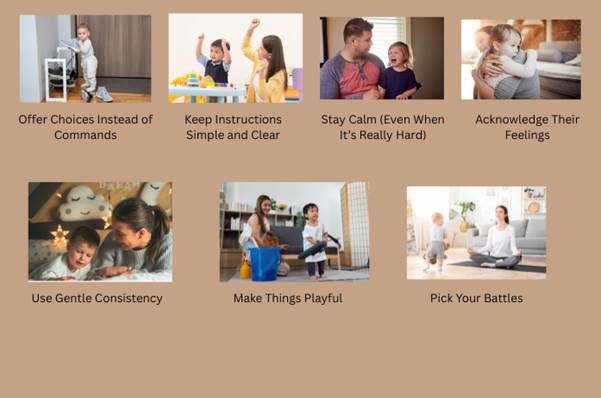
How to Respond When Your Toddler Says No to Everything
When your toddler says no to everything, small changes in how you respond can make a big difference
This phase can really stretch your patience in ways you never imagined. Some days, it might feel like every little thing turns into a struggle, from getting dressed to simply leaving the room.
But here’s the comforting part: with a few gentle shifts in how you respond, these everyday battles can slowly turn into calmer, more connected moments between you and your little one.
1. Offer Choices Instead of Commands
Toddlers have a strong need to feel in control. When everything is decided for them, “no” becomes their only way to push back.
A small change can make a big difference.
Instead of saying,
“Put on your shoes,”
you can try,
“Do you want the red shoes or the blue ones?”
They’re still doing what needs to be done, but now, they feel like they had a say in it. And that sense of control often reduces resistance.
2. Keep Instructions Simple and Clear
It’s natural to want to explain things fully, but toddlers can easily feel overwhelmed by too many words.
Simple works best.
“Time to clean up.”
“Let’s brush teeth now.”
Short, calm, and clear instructions help your toddler understand what’s expected without confusion. When things feel easy to follow, they’re more likely to cooperate.
3. Stay Calm (Even When It’s Really Hard)
Let’s be honest, when your toddler says “no” again and again, it can push your patience to the edge.
But reacting with frustration usually adds more fuel to the fire.
Instead, take a small pause.
Breathe.
Lower your voice.
Your calm response sends a powerful message: this situation is safe and under control. Over time, your child learns how to manage emotions by watching you.
4. Acknowledge Their Feelings
Sometimes, what your toddler needs most isn’t correction, it’s understanding.
You might say,
“I see you don’t want to stop playing. That’s really hard.”
In that moment, you’re not giving in, you’re connecting. And when a child feels seen and heard, their resistance often softens naturally.
5. Use Gentle Consistency
Toddlers feel secure when they know what to expect. If rules change every time they say “no,” they’ll keep testing to see where the limit really is.
It’s okay to be kind and firm at the same time.
“Yes, you don’t want to. But it’s still time for bed.”
When you stay consistent, your toddler slowly learns that your words can be trusted, and that brings a deep sense of security.
6. Make Things Playful
Toddlers live in a world of imagination and play. When things feel like a game, cooperation comes much more easily.
You can turn everyday tasks into something fun:
“Let’s see who can clean up faster!”
“Can your toothbrush chase away the sugar bugs?”
A little playfulness can turn resistance into laughter, and make your day feel lighter too.
7. Pick Your Battles
This one is important, especially on long days.
Not every “no” needs a response or a correction. Sometimes, it’s okay to step back and ask yourself:
“Is this really worth the struggle right now?”
If it’s not about safety, health, or an important routine, letting small things go can save your energy, and your peace.
At the end of the day, responding to a toddler who says “no” to everything isn’t about being perfect. It’s about being present, patient, and gentle, with them and with yourself.
You’re learning together, one moment at a time.
What NOT to Do (Even When You’re Tired)
Let’s be real, there are days when you’re running low on sleep, patience, and energy. And on those days, constant “no’s” from your toddler can feel even harder to handle.
While no parent gets it right all the time (and that’s completely okay), being aware of a few common reactions can help make this phase a little smoother for both of you.
Don’t Take It Personally
It can sting when your toddler pushes back on everything you say. It might feel like they’re rejecting you, but they’re really not.
Your child isn’t saying “no” to you.
They’re learning about themselves.
This phase is about independence, not disconnection. And your love and bond are still very much safe and strong.
Avoid Power Struggles
It’s so tempting to try and “win” in the moment, especially when you’re already frustrated. But turning things into a battle often leads to even more resistance.
The more pressure your toddler feels, the more they’ll push back.
Instead of trying to win, try to guide.
Sometimes stepping back, redirecting, or staying calm can shift the entire situation.
Don’t Over-Explain
As parents, we want our children to understand why something matters. But long explanations can actually overwhelm toddlers.
They’re still learning how to process language and emotions.
Keeping things simple and clear works much better:
“It’s time to go.”
“We need to clean up now.”
Fewer words, calmer tone, that’s what helps it sink in.
Avoid Yelling
We all lose our cool sometimes, it happens. But yelling usually stops behavior only for a moment, not in a lasting way.
What it can do instead is create fear or confusion.
A calm, steady voice teaches much more. It shows your toddler how to handle big emotions, and that’s a lesson they’ll carry for years.
At the end of the day, you’re human too. Some moments will be messy, and that’s okay. What matters most is the love, patience, and effort you keep showing, especially on the hard days.
Gentle Scripts You Can Use Daily
Some moments with toddlers can catch you off guard, especially when emotions are running high and “no” is the only answer you’re getting. In those times, having a few simple, gentle phrases ready can make things feel a little easier for both of you.
You don’t need perfect words. Just calm, loving ones.
Simple Phrases That Really Help
These are small, everyday sentences, but they carry a lot of warmth and guidance:
- “I hear your no. But this is something we need to do.”
- “You can be upset, and I’m still here with you.”
- “Let’s do it together.”
- “First this, then we can play.”
Why These Words Work
When you speak this way, you’re doing two important things at once, you’re setting a boundary, and you’re staying connected.
Instead of making your toddler feel controlled or dismissed, your words help them feel seen and supported even when they’re not getting their way.
For example, saying “You can be upset, and I’m still here” teaches them that big feelings are okay, and that they’re not alone in them.
And something as simple as “Let’s do it together” can turn resistance into cooperation, because now it feels like teamwork instead of pressure.
When Should You Be Concerned?
Most of the time, this phase of constant “no” is just a normal part of growing up. It can feel intense, yes, but it usually passes as your toddler learns new ways to communicate and express themselves.
Still, as a parent, it’s natural to wonder “Is this normal, or should I be worried?”
Here’s a gentle way to look at it.
Signs You May Want a Little Extra Support
While every child is different, there are a few situations where it might help to talk to a pediatrician or child specialist:
- If your toddler shows frequent or intense aggression, like hitting, biting, or hurting others often
- If they rarely respond to their name, voice, or simple communication
- If you notice delays in speech or difficulty expressing basic needs
These don’t always mean something is wrong, but they can be worth exploring with a professional, just for reassurance and guidance.
Trust That Inner Voice
As a parent, you know your child in a way no one else does. If something feels off, even slightly, it’s okay to ask questions and seek support.
You’re not overthinking, you’re being attentive and caring.
At the same time, remember this: most toddlers go through challenging phases like this, and they come out of it beautifully with time, patience, and love.
You’re not alone in this journey, and you’re doing a wonderful job guiding your little one through it. Top of Form
A Gentle Reminder for You, Mama
If your toddler says “no” to everything right now, please don’t let it make you doubt yourself. It doesn’t mean you’re doing anything wrong.
It simply means your little one is growing
learning
and slowly becoming their own tiny person with thoughts, feelings, and opinions.
And yes, this stage can feel messy. Some days are overwhelming. Some moments test your patience more than you ever expected. You might even question yourself, and that’s okay.
But this phase? It’s not forever.
One day, the constant “no’s” will soften into conversations. The struggles will turn into understanding. And you’ll look back and realize this was just one small part of a much bigger, beautiful journey.
For now, take it one moment at a time. Be gentle with your child, but also with yourself.
You’re doing more than enough, mama.
FAQs About Toddler Saying No to Everything
1. Why does my toddler say no to everything?
It’s usually a sign of growing independence and learning to express themselves.
2. Is it normal for toddlers to refuse everything?
Yes, this phase is very common between ages 1.5 to 3 years.
3. How should I respond when my toddler says no?
Stay calm, offer choices, and keep your instructions simple and consistent.
4. Should I punish my toddler for saying no?
No, it’s better to guide them gently and help them learn boundaries.
5. When should I be concerned?
If refusal comes with aggression, delays, or lack of communication, consult a specialist.
Conclusion: You’re Doing Better Than You Think
This phase of constant “no” can feel really overwhelming, especially on those long days when your patience feels stretched thin. But if you look a little deeper, you’ll see something important happening beneath all that resistance.
Your child is learning how to think.
How to choose.
How to express who they are.
And that’s a big, meaningful step in their growth.
So when your toddler says no to everything, try to gently shift the way you see it. It’s not just defiance, it’s development. It’s your little one figuring out their voice in this big world.
Stay calm when you can.
Stay consistent, even when it’s hard.
And most importantly, stay connected.
On the tough days, remind yourself of this truth:
You’re not just managing behavior, you’re guiding your child through something important. And you’re doing it with love.
If your toddler says no to everything, remember this phase is temporary and part of healthy development.
And that matters so much more than getting everything “perfect.”
Want more gentle parenting tips, real mom advice, and simple ways to make everyday moments easier?
Come join us at Tales of Tots, a cozy space created just for moms like you, where you’ll find support, understanding, and practical guidance for every stage of your little one’s journey.
Trusted Toddler Behavior & Parenting Resources
Positive Discipline & Toddler Behavior Guidance – KidsHealth