Watching your baby grow is filled with tiny, magical milestones, and teething is one of those moments that feels both exciting and just a little overwhelming. If you’ve been wondering when do babies start teething, you’re definitely not alone. Almost every parent reaches this stage and begins noticing small changes, extra drooling, a need for more cuddles, or those little fingers constantly exploring their gums.
Some babies move through this phase with barely a fuss, while others need a bit more comfort, patience, and reassurance along the way. And the honest truth is, there’s no perfect timeline that fits every child. Each baby follows their own gentle rhythm.
What really helps is understanding what’s happening behind those sweet little smiles. Teething isn’t just about new teeth appearing, it’s a whole new experience for your baby. Their body is changing, sensations are new, and they’re learning how to cope with it all for the first time.
When you begin to recognize the signs and know what to expect, this phase starts to feel less confusing and more manageable. You’ll feel more confident in comforting your little one, and your baby will feel safe knowing you’re right there.
So take a deep breath, mama, you’re doing beautifully. Let’s walk through this stage together, step by step, just like one mom gently guiding another
When Do Babies Start Teething?
Most babies begin teething somewhere between 4 to 7 months of age, but it doesn’t always follow a fixed schedule, and that’s completely okay. If you’ve been wondering what age do babies start teething, you’ll find that the answer can vary quite a bit from one baby to another.
Some little ones start showing early teething signs as soon as 3 months, with extra drooling and a desire to chew on everything they can hold. Others may take their time and not get their very first tooth until closer to their first birthday. And honestly, both situations can be perfectly normal and healthy.
So if that question keeps popping into your mind, “when do babies start getting teeth?”, here’s the gentle, reassuring truth:
Most babies get their first tooth around 6 months, but anywhere between 3 to 12 months falls within a normal range.
It can feel a little confusing when your baby doesn’t match what you’ve heard from others, but try not to worry too much. Babies don’t follow strict timelines, they grow and develop in their own unique way.
From one mom to another, I’ve learned that trusting your baby’s rhythm makes this journey feel a lot more peaceful. Some milestones come early, some take their time… but they all arrive when your little one is ready
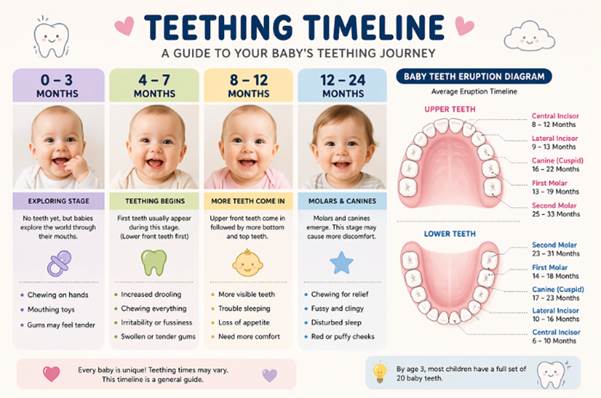
Teething Timeline: What to Expect
Understanding the teething timeline doesn’t mean predicting it perfectly, it simply helps you feel a little more prepared for what might come next. Every baby moves through these stages in their own sweet time, but having a gentle idea can bring a lot of reassurance.
0–3 Months
At this stage, there are no teeth yet, but your baby is already discovering their tiny world. You might notice them bringing their hands to their mouth more often or making little chewing motions. It’s less about teething and more about early exploration, but it’s still such a special phase to watch.
4–7 Months
This is when teething usually begins for most babies. You may start to see signs like drooling, gum rubbing, or a sudden urge to chew on anything within reach. The bottom front teeth (lower central incisors) are often the first to make their appearance. It can feel like a big moment, your baby’s very first tooth is on its way
8–12 Months
Around this time, the top front teeth begin to come in, and you may notice more visible changes in your baby’s gums. Some days might feel a little fussier than others, and your baby may want extra cuddles and comfort. It’s all part of the process, and your presence makes a bigger difference than you realize.
12–24 Months
Now come the molars and canines, and this stage can feel a bit more intense. These teeth are larger, so your baby might experience more discomfort at times. You may notice changes in sleep or appetite, but with patience, soothing, and lots of love, this phase will pass too.
By Age 3
By the time your little one turns three, most children have their full set of 20 baby teeth. It’s amazing to look back and realize how far they’ve come, from those early gummy smiles to a complete little grin.
Just remember, mama, this timeline is a gentle guide, not a strict rulebook. Your baby’s journey will be uniquely theirs, and that’s exactly how it’s meant to be
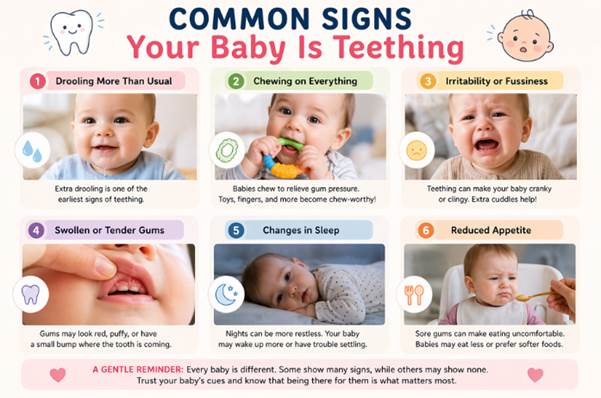
Common Signs Your Baby Is Teething
Sometimes, it’s not the tiny tooth that gives it away first, it’s the little changes in your baby’s behavior. Babies can’t tell us what they’re feeling, but they have their own quiet ways of showing that something new is happening inside their bodies.
1. Drooling More Than Usual
You may find yourself changing bibs and outfits more often than usual. That constant drool? It’s often one of the earliest signs that teething has begun. It might feel messy, but it’s completely normal.
2. Chewing on Everything
Suddenly, everything becomes chew-worthy, tiny fingers, soft toys, even your shoulder during cuddles. This is your baby’s way of easing the pressure they feel in their gums. It may look a little funny at times, but it’s actually helping them cope.
3. Irritability or Fussiness
If your usually content baby seems a bit more cranky or clingy, teething discomfort could be the reason. It’s not just a mood change, it’s their way of saying, “Something doesn’t feel quite right.” Extra cuddles and patience go a long way here.
4. Swollen or Tender Gums
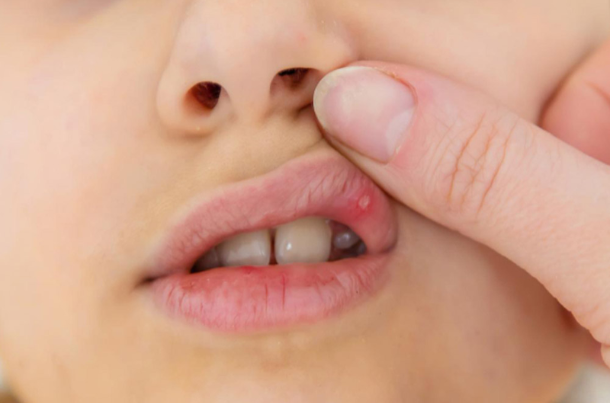
You might notice slight redness or swelling in your baby’s gums, especially in the spot where a tooth is about to appear. Sometimes you can even feel a tiny bump if you gently run your finger over it.
5. Changes in Sleep
Teething can make nights a little more restless. Your baby may wake up more often or have trouble settling down. It can feel tiring, but this phase usually passes with time and comfort.
6. Reduced Appetite
When gums feel sore, even feeding can become uncomfortable. Some babies may eat a little less during this time, preferring softer foods or shorter feeds.
A gentle reminder: Every baby is different. Some will show many of these signs, while others may surprise you with hardly any at all. Trust what you see, follow your baby’s cues, and know that you’re doing exactly what your little one needs, being there.
Does Teething Cause Fever or Diarrhea?
This is one of those questions that almost every parent wonders about, and it’s completely understandable to feel concerned.
Teething can sometimes cause a slight rise in your baby’s temperature, but it usually stays mild. It shouldn’t lead to a high fever. In the same way, you might notice small changes in your baby’s stool, but persistent diarrhea isn’t typically caused by teething.
It can get a little confusing, especially when teething and minor illnesses happen around the same time. Babies are growing, exploring, and their immune systems are still developing, so not every symptom is linked to teething, even if it seems that way.
If your baby feels warmer than usual but is still playful and feeding okay, it’s often just part of the teething phase. But if you notice a high fever, frequent loose stools, unusual tiredness, or anything that doesn’t feel right, it’s always best to listen to that inner voice.
From one parent to another, your instinct matters more than anything. If something feels off, don’t hesitate to check with a doctor for peace of mind. You know your baby better than anyon
How to Soothe a Teething Baby
Watching your baby feel uncomfortable can be really hard on your heart. You wish you could take that discomfort away in an instant. The comforting part is, there are a few simple, gentle ways to help ease this phase and make your little one feel better.
Offer a Teething Toy
Sometimes, the simplest things work best. A soft, baby-safe teething toy gives your baby something safe to chew on, helping relieve the pressure building in their gums. You’ll probably notice how naturally they reach for it when they need comfort.
Use a Clean Finger
There’s something incredibly soothing about a parent’s touch. Gently massaging your baby’s gums with a clean finger can help ease the discomfort. It’s a small act, but it often brings big relief, and a quiet moment of connection between you and your baby.
Try a Cold Washcloth
A cool (not frozen) washcloth can work wonders. Let your baby chew on it or gently press it against their gums. The coolness helps calm the soreness and gives them a bit of relief during those fussy moments.
Extra Cuddles
Sometimes, what your baby needs most isn’t a remedy, it’s you. Being held close, hearing your heartbeat, and feeling your warmth can instantly make them feel safe and comforted. Never underestimate the power of cuddles during this stage
Maintain Routine
Teething can bring small disruptions, but keeping your baby’s daily routine as consistent as possible helps them feel secure. Familiar feeding times, naps, and bedtime rituals create a sense of comfort, even when everything else feels a little off.
Through it all, remember, you don’t need to do anything complicated. Your love, your presence, and these gentle little steps are more than enough to help your baby through this phase.
Pediatric guidance from the American Academy of Pediatrics also shares gentle approaches for soothing teething discomfort and caring for developing baby teeth.
When to Start Brushing Baby Teeth
One of the most common questions parents ask during this stage is when to start brushing baby teeth. And the answer is actually simpler than it seems:
Start as soon as the first tooth appears.
It might feel early, especially when it’s just one tiny tooth peeking through, but this is the perfect time to begin building a gentle routine.
How to Start
You don’t need anything complicated, just a few small, mindful steps:
• Use a soft baby toothbrush that’s gentle on those tiny gums
• Apply a tiny smear of fluoride toothpaste, about the size of a grain of rice
• Brush gently twice a day, especially before bedtime
At first, it may feel more like a learning experience than an actual brushing routine, and that’s okay. Your baby is slowly getting used to the sensation, the routine, and your touch.
Even though they’re called “baby teeth,” they’re more important than many people realize. These little teeth help your baby learn how to chew, support early speech sounds, and even guide the proper placement of permanent teeth later on.
Oral health resources from the National Institute of Dental and Craniofacial Research also emphasize the importance of early dental care habits to support healthy teeth and gums throughout childhood.
So think of this not just as brushing, but as the beginning of a lifelong habit. And like everything else in parenting, it doesn’t have to be perfect… just consistent, gentle, and filled with care
Teething Myths You Can Ignore
When it comes to teething, you’ll hear all kinds of advice, from family, friends, and the internet. Some of it can be helpful, but some of it… not so much. It’s easy to feel confused, especially when everyone seems to have a different opinion.
Let’s gently clear up a few common myths, so you can feel more confident in what truly matters.
“All babies get teeth at 6 months exactly”
This is one of the most common things you’ll hear, but it’s not true. While many babies do start teething around 6 months, others may begin earlier or much later. And all of that can still be completely normal. Your baby isn’t “late” or “early”, they’re just following their own timeline.
“Teething causes high fever”
Teething can make your baby a little uncomfortable and may even cause a slight rise in temperature. But it shouldn’t lead to a high fever or serious illness. If your baby has a high temperature or seems truly unwell, it’s important to look beyond teething and check with a doctor.
“Amber necklaces are safe”
You might have seen these recommended for teething pain, but they’re actually not considered safe. There’s a risk of choking or strangulation, especially for young babies. It’s always better to stick with safer, pediatrician-approved methods to soothe your little one.
As moms, we’re surrounded by advice, some of it well-meaning, some of it overwhelming. It’s okay to pause, take a breath, and choose what feels safe and right for your baby.
At the end of the day, you don’t need to follow every tip you hear. Trust your instincts, they’re more powerful than you think
What If My Baby Isn’t Teething Yet?
If your baby hasn’t started teething and you’re wondering at what age do babies start teething, take a deep breath.
Some babies simply take longer.
If there are no teeth by 12–15 months, you can mention it to your pediatrician, but in most cases, it’s just a natural delay.
Your baby isn’t “late.” They’re just on their own timeline.
Emotional Side of Teething (For You, Mama)
Teething isn’t just something your baby goes through, it’s something you feel too. The interrupted sleep, the unexpected fussiness, the constant wondering “What does my baby need right now?” it can quietly wear you down.
Some days, you might feel a little more tired than usual.
Some nights may feel longer than they should.
And in between, there’s that gentle pressure of wanting to do everything just right.
If you’re in that space right now, pause for a moment and hear this, softly, without any doubt:
You’re doing better than you think.
Your baby feels your love, even on the hardest days.
It’s okay if not every moment feels calm or perfect. Your baby doesn’t need perfection, they just need you. Your presence, your warmth, your comforting voice… that’s what truly soothes them.
Some days will feel light and manageable.
Others might feel slow and a bit heavy.
But this phase? It won’t last forever.
One day soon, you’ll look at your baby’s little grin and notice those tiny teeth shining through, and all of this will feel like a memory that passed more quickly than you expected.
Until then, be gentle with yourself, mama. You’re showing up, loving deeply, and that is more than enough
FAQs
1. When do babies start teething?
Most babies start teething between 4 to 7 months, but it can vary for each child.
2. What are the first signs of teething?
Common signs include drooling, chewing on objects, irritability, and swollen gums.
3. Does teething cause fever?
Teething may cause a slight rise in temperature, but not a high fever.
4. How can I soothe my teething baby?
You can use teething toys, a cold washcloth, gentle gum massage, and extra cuddles.
5. When should I start brushing my baby’s teeth?
Start brushing as soon as the first tooth appears using a soft baby toothbrush.
Final Thoughts: This Phase Is Temporary, But the Love Lasts Forever
Teething is one of those small yet meaningful chapters in your baby’s journey. It may bring a few sleepless nights and fussy moments, but it also marks growth, your baby changing, learning, and becoming a little more independent every day.
So if you’ve been wondering when do babies start teething, remember, it’s not about the exact timing. It’s about understanding your baby, supporting them, and trusting yourself through it.
You don’t need to do everything perfectly.
You just need to show up, with love, patience, and care.
And you already are
Because to your baby…
You are comfort.
You are safety.
You are home.
If you’d like more gentle parenting tips, baby care guides, and real-mom support, you can explore more here: talesoftots